Leadership1 publisher3 min readPublished Updated
A staged supermajority hands Putin cover to escalate through the winter
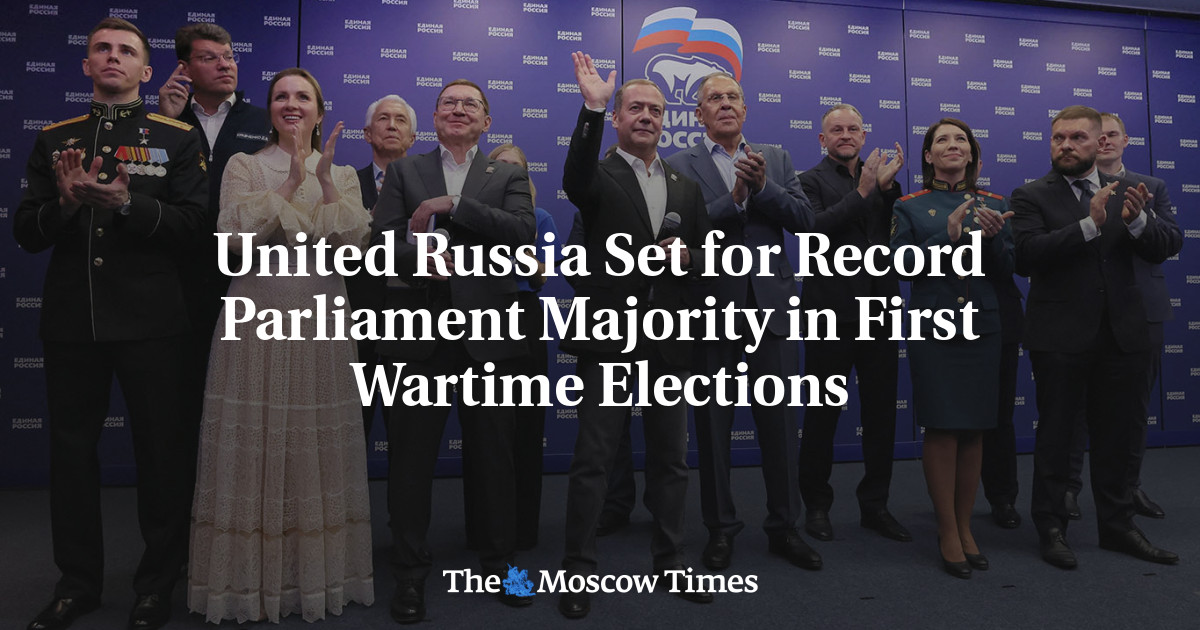
Foreign Affairs argues last weekend's United Russia landslide was organised in advance to display total commitment to the war, while the Levada Center's own numbers show approval and public morale falling underneath it.
The Board Room · Leadership desk
What happened
- United Russia's supermajority was assembled through compulsory voting in budget-dependent organisations, standardised voting in the military and the so-called new territories, and the pre-election removal of Yabloko.
- In Levada's August surveys, two-thirds of respondents reported problems with mobile Internet access, messaging apps and petrol supply, with fuel shortages seriously disrupting one in three.
- Putin has rejected a new U.S. diplomatic push and increased the pace and nature of attacks in Ukraine, with pro-Kremlin experts discussing nonnuclear and nuclear escalation for the coming winter.
Compiled by The Board RoomSomething wrong?How this is made
Why it matters
- decision Anyone budgeting European energy, logistics or insurance exposure for the next two quarters has to set the base case against strikes on Ukraine's power grid this winter rather than a ceasefire timetable.
- constraint A Kremlin that avoids a general call-up to preserve the appearance of normal life cannot add manpower quickly. The front can only be widened so fast without a visible political decision.
- contradiction The engineered result and the Levada series point in opposite directions, so treating the election as a measure of Russian war support will misprice both the escalation risk and the domestic strain behind it.
- cost Russian households absorb the escalation bill first, through fuel-driven inflation and the October utility increase, and a longer war keeps adding to that pressure.
The useful question about an engineered result is what it was built to authorise. Foreign Affairs describes the outcome as renewed legitimacy for the "special military operation." It also describes the result as a message that Russia is in a position of strength and ready to pursue its military objectives with even more abandon [4]. The same essay says the Kremlin's aim is the illusion of a total commanding majority regardless of the actual situation [5]. Since 2022, it argues, Russian elections have redefined citizenship as support for the war [6].
The numbers underneath the mandate run the other way. The independent Levada Center found in July that 50 percent of respondents considered the special operation a success, down nearly 20 percentage points from a year earlier, so the prior-year figure was around 70 percent [7][10]. The share who thought the country was moving in the right direction fell ten points to 54 percent [8]. Putin's own approval declined 12 percent between July 2025 and July 2026, a drop the essay calls very significant in a personalist autocracy [9]. Polling since April has consistently signalled that things are not going well for the government [20].
The household bill is the part a planner can price. In August, two-thirds of Levada's respondents reported problems with mobile Internet access, messaging apps and petrol [11]. Petrol shortages seriously disrupted the lives of one in three, and Internet restrictions affected one in five [12]. Military spending and rising fuel prices have been major drivers of inflation, and a spike in utility rates begins in October [13].
Manpower is the other constraint. Many Russians expect another mobilisation after the vote, but the Kremlin appears to prefer selective and covert call-ups. It is wary of breaking the appearance of a somewhat normal life in a war that has reached the heart of Russia through drone attacks [14]. Covert mobilisation is slower than a general one.
The record in this essay points away from a deal. Putin has rejected a new U.S. diplomatic push and stepped up the pace and nature of attacks in Ukraine [15]. Pro-Kremlin foreign policy experts discuss both nonnuclear and nuclear escalation for the coming winter, when the Kremlin plans to freeze Ukraine by striking its power grid [16]. For Putin, the essay concludes, escalation has become a principal means for maintaining power [17].
The late Russian political scientist Gleb Pavlovsky called this machinery the "Russian conflict conveyor belt," a machine that must never be allowed to stop [18]. The essay's evidence for the next stage concerns Ukraine and domestic control inside Russia; it does not set out a case for strikes on NATO territory. So the base case a European-exposed business can defend from this record is another winter of attacks on Ukrainian energy infrastructure, plus tighter restrictions on Russian communications and fuel. No negotiated timetable in the near term.
The distinction that matters for a planning cycle is between this winter and this decade. The source specifies this winter: grid strikes, fuel and utility pressure, covert mobilisation. It does not specify the decade, and its own conditional is that Putin continues as long as he believes time is on his side and the public will bear the burden [19].
What to watch
- Whether Levada's autumn readings show the success and right-direction numbers stabilising after the election or continuing to fall.
- Whether a general mobilisation decree follows the vote. Such a decree would break the Kremlin's stated preference for selective and covert call-ups.
- Whether the rejected U.S. diplomatic push is revived in any form before the winter strike campaign on Ukraine's grid begins.