Invest1 publisher3 min readPublished
Yum's best AI result is a pizza that waits for the driver
Yum Brands rebuilt Pizza Hut's order sequencing so cooks start when a driver is nearly certain to be free. The payoff is hotter food, and a lesson in where enterprise AI money actually returns.
The Investor · Invest desk
Drafted by a language model from the sources cited here and checked against its claim ledger before publication. How we use AISend a correction
What happened
- Jim Dausch joined Yum Brands in December 2024 as global chief digital and technology officer of Pizza Hut.
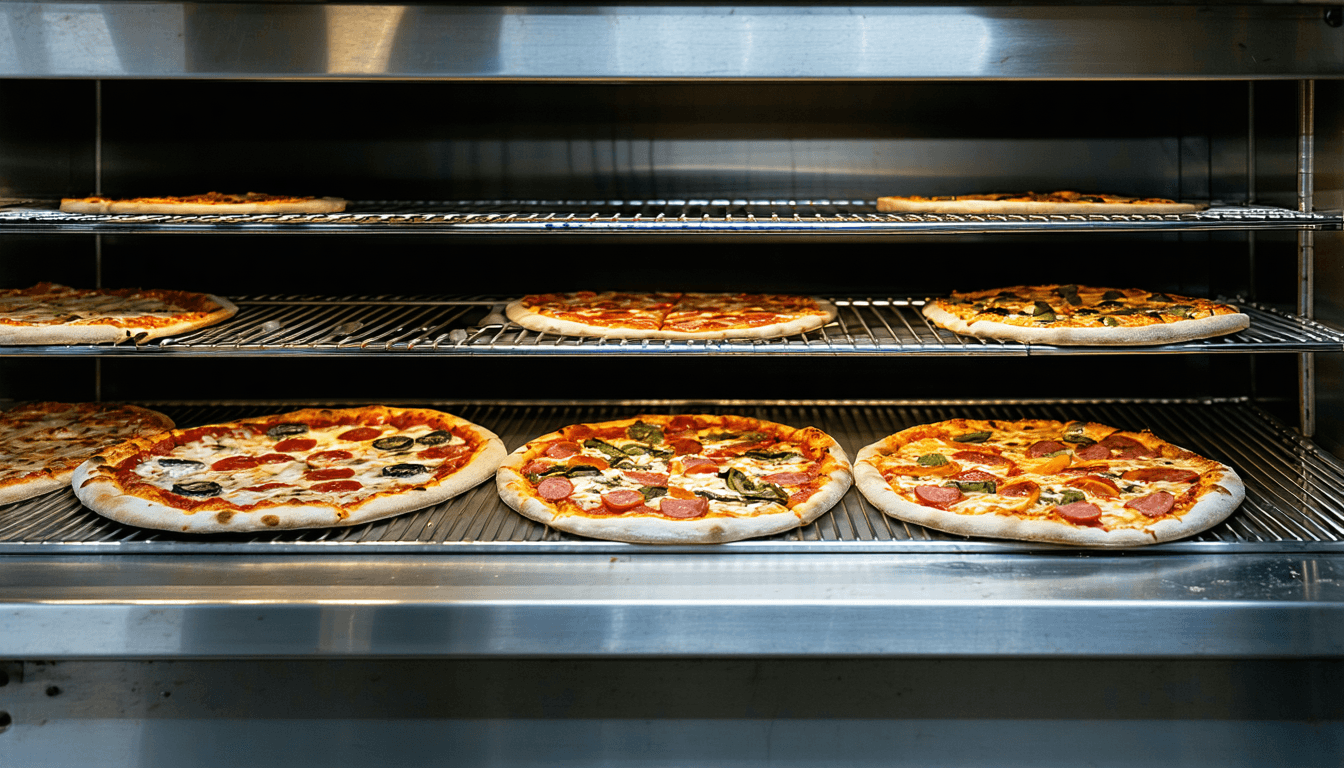
- Previously, the software connecting Pizza Hut's kitchen and fleet systems processed orders in a rudimentary first in, first out flow: an order came in, a ticket was immediately generated telling the kitchen to put the pizza in the oven, and there were plenty of times the order sat idle waiting for an available driver.
- Dausch and his team created a data-forward automation layer that changed the workflow, telling cooks not to make the pizza until the system knew with greater certainty that a driver would be available for pickup.
- According to Dausch, the change led to hotter food deliveries and a "meaningful" increase in customer satisfaction scores.
- Dausch was promoted 11 months after joining to hold the title of global chief digital and technology officer across the entire Yum enterprise, which includes the Taco Bell and KFC brands.
Compiled by The InvestorSomething wrong?How this is made
Why it matters
Yum Brands rewired how Pizza Hut sequences its kitchens: cooks are now told not to start the pizza until the system knows with greater certainty that a driver will be available to collect it [3]. According to Jim Dausch, Yum's global chief digital and technology officer, the change produced hotter deliveries and a "meaningful" increase in customer satisfaction scores [4].
That is the shape of the near-term return. The system it replaced was a rudimentary first-in, first-out flow: an order arrived, a ticket fired, the oven ran, and the finished pizza sat waiting for a driver who might not be there [2]. No new customer-facing product was launched. A queue was reordered.
Dausch joined Yum in December 2024 as Pizza Hut's digital and technology chief and was promoted 11 months later to the same title across the enterprise, which includes Taco Bell and KFC [1][5]. His remit covers websites and apps, digital ordering, corporate systems, AI and data, and restaurant technology across 63,000 global locations run by roughly 1,500 franchisees [6], an average of about 42 restaurants per franchisee [3]. Yum is his first restaurant job after 20 years at Marriott [20]. "We are sort of step-by-step going through what it takes to run our restaurant and finding every way we possibly can to automate those things," he says [21].
The discipline comes from who pays. Food and labor have traditionally been franchisees' largest costs, and technology spend has been climbing on top of them, which is why operators will not absorb every new tool without a demonstrated return [8]. Dausch's framing is blunt: unless a deployment either lifts same-store sales through customer experience or cuts food waste enough to pay for itself, "obviously the franchisee is going to kind of resist" [9].
So the no list matters as much as the yes list. Robotics has generated franchisee buzz, but Yum has not found a single prominent use case worth chasing [10]. Dausch is also wary of AI features bundled into software-as-a-service contracts, saying higher chip costs and other infrastructure expenses have made that pricing too frothy [11]. That is a buyer telling vendors their AI surcharge is not underwritten by a result.
What has gone in is unglamorous and measurable. Kiosks are live in about two-thirds of locations globally, roughly 42,000 restaurants [12][1], and Dausch says they consistently produce higher check averages than counter orders [12]; he has added a loyalty sign-in step so kiosks can personalize offers from past order data [15]. Voice AI ordering is in more than 900 Taco Bell locations in the United States [13], about 1.4% of the global estate [2], and Dausch calls it a "learning journey" that required tweaks to smooth the handoff between the AI and human staff [14]. Ordering software scales faster than a machine that has to be bolted to a floor.
Underneath sits Byte, Yum's proprietary platform consolidating online and app ordering, point of sale, kitchen and delivery, menu, inventory and labor tools [16]. It is internal today, with the intent that Pizza Hut becomes an external customer after Yum agreed in June to sell the chain for $2.7 billion [16][17].
Watch whether Byte holds up as a commercial product once Pizza Hut is a customer rather than a division [16][17], and whether voice AI expands past 900 Taco Bell stores [13]. Yum, ranked #474 on the Fortune 500, has also taken a sales hit from a cyclospora outbreak [18][7], which sharpens franchisee scrutiny of every dollar of technology spend.