Leadership1 publisher2 min readPublished
Labor economist says subtle heat effects on workers cost the economy trillions of dollars a year
R. Jisung Park says the damage from warming shows up as more on-the-job injuries, delayed trains and lost productivity on days too ordinary to make the news, and some of those injuries happen indoors.
The Board Room · Leadership desk
What happened
- Penn economist R. Jisung Park says hot days bring more on-the-job injuries, more train delays and flight cancellations, and lower labor productivity.
- His example of a costly day is a 92 or 93 degree one, ordinary enough that nobody writes about it, and he says there are many more of those days.
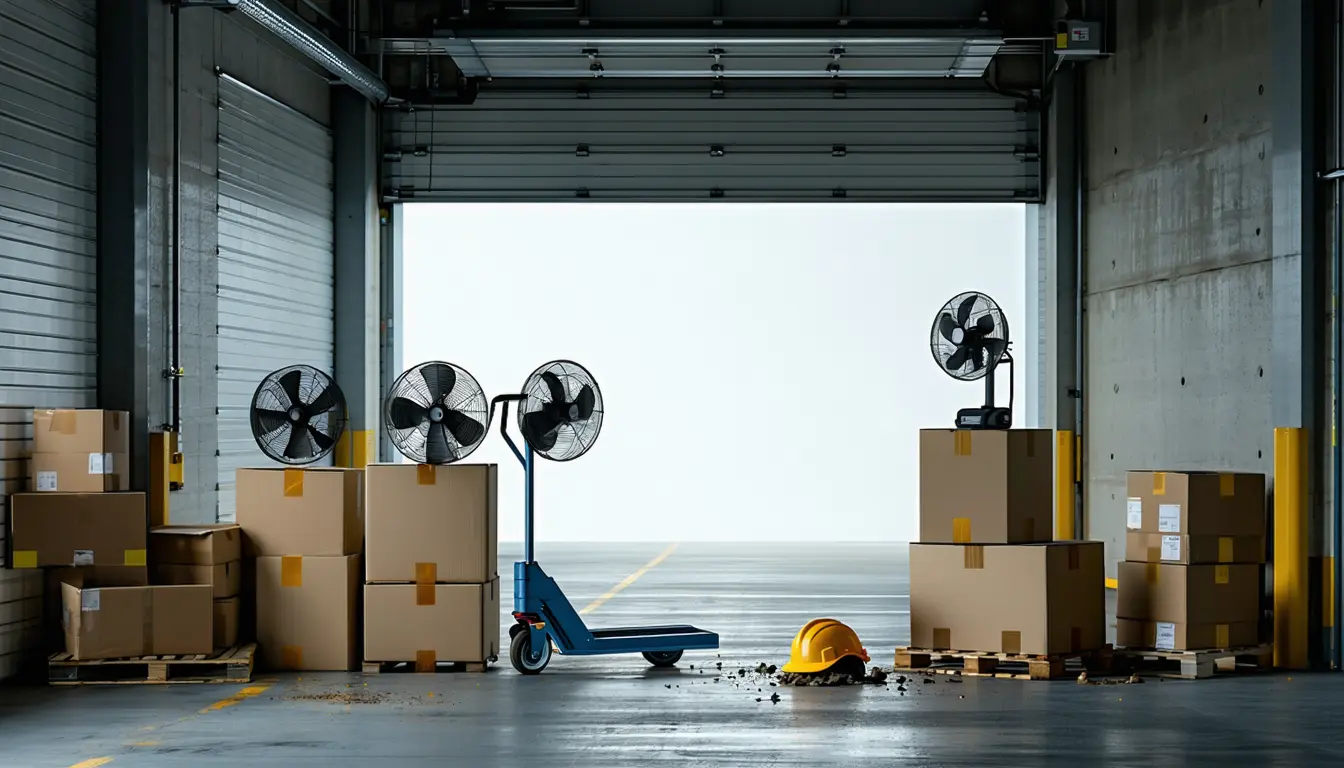
- The injuries that rise with heat include falls from ladders, workers struck by cranes and dropped machinery, incidents that on paper look unrelated to temperature.
Compiled by The Board RoomSomething wrong?How this is made
Why it matters
- constraint A heat protocol that switches on with an official advisory leaves the low-90s days uncovered, and those are the days Park says have multiplied.
- exposure Warehouse and factory floors sit inside this exposure, so an employer that scoped heat risk to outdoor crews has scoped it narrower than Park's indoor finding.
- decision The choice it touches is a scheduling one held by supervisors: whether crane picks, roof work and ladder jobs get moved off warm afternoons.
- cost The loss arrives in small increments, a late train or a slower shift or one fall, and reaches operating accounts with no heat label attached to it.
The only dose-response figure in Park's account concerns students. He examined more than four million New York City public school test scores and found that a student sitting an exam on a 90 degree day was roughly 10% less likely to pass the subject than on a 70 degree day [8]. Put a hundred students who would have passed in 70 degree weather into a 90 degree room, and about ninety pass [12]. Park said the subtle hazards he studies do trillions of dollars of damage every year [7]. That figure comes without a breakdown [16].
For an operator, the useful detail is the temperature. Park said nobody is going to write about a 92 or 93 degree day, but that there are many more of these days [5]. A policy that activates on a heat advisory is keyed to the days that do get written about. He also said both hot and cold temperatures can negatively affect worker productivity [13], so a summer-only plan covers only one side of that.
Park described more people falling off ladders, more workers getting hit by cranes, and more workers dropping big pieces of machinery on someone else [9]. Those are coded as ordinary industrial accidents. He also said accidents appear to rise on hot days indoors, and on the reason, he said: "We're not sure." [10]
An employer that scoped heat risk by job title, outdoor crews first, drew a line the injury pattern Park describes does not follow, and drew it without knowing what the indoor pathway is [10].
This is one economist in a university interview, with no per-degree injury estimate and no firm-level cost, and a shift roster cannot be rebuilt on that. What survives is narrower: on Park's evidence the risk is not confined to advisory days [5][6], and it is not confined to outdoor work [10]. Both propositions are testable against data most employers already hold, since incident dates and site temperatures both exist.
The decade question here is capital. Air conditioning, shade, where work physically happens: Park tied exam outcomes partly to whether a student's home and school have air conditioning [15], and buildings are slow and expensive to change. The quarter question is smaller and comes due in June. Which crane picks, roof work and ladder jobs land on the warm afternoons, and whether a supervisor has any authority to move them. Park said fewer people are aware of these effects than of the headline disasters [11].
What to watch
- Park's interview cites his injury research without a published per-degree injury estimate, and a scheduler needs that number for an actual trigger temperature.
- Explain the indoor effect and employers learn whether the fix is cooling, hydration, pacing, or task sequencing.
- Logistics teams could price the exposure if the transport effects Park mentions, train delays and flight cancellations, came with figures.