Invest1 publisher3 min readPublished
A senior House Republican says the payroll tax cap, now $184,500, is on the table, but he wants a higher retirement age and means-testing in the same package, which is the actual price of the trade.
The Investor · Invest desk

Follow any of these and your For You feed starts watching them — no settings page required.
Compiled by The InvestorSomething wrong?How this is made
What makes this interesting is not the 22% [3] itself but the base it applies to. Payroll tax is 6.2% from the employee and 6.2% from the employer on the first $184,500 of earned income in 2026, indexed to inflation each year [6]. So the marginal Social Security levy on a dollar earned at $184,501 is zero, and on a dollar earned at $80,000 it is 12.4% counting both halves [7]. Every proposal on the table is a decision about where to restart that 12.4%: at $250,000 in one bill, at $400,000 in another, or immediately above the cap with no gap at all, which is what Moreno and Warren argued for in their June New York Times column [8][5].
The gap between those three matters more than the shared direction. A restart at $400,000 leaves the entire $184,500-to-$400,000 band untaxed, which is where a large share of the missing wage base actually sits; a restart at the cap taxes it all. The bills are not variants of one policy so much as three different revenue numbers wearing the same label, and the source does not put a dollar figure on any of them, so anyone claiming these close the shortfall is asserting something the material here does not show.
Smucker did not offer a cap-raise on its own. He said a combination is needed, including probably raising the retirement age, currently 67 for anyone born in 1960 or later, to reflect longer lifespans, and expanding means-testing so fewer benefits flow to the wealthy [9][10][11]. The trade being priced is revenue from the top of the wage distribution bought with benefit reductions elsewhere, a different bargain from the Democratic position of raising taxes to fund and expand benefits [12].
This reads three ways. One, the shift is real and a 2027-28 package emerges with a cap increase and a higher retirement age. Two, Smucker is a single member speaking without detail, told reporters only that "you'll probably have to do something on the payroll half" [2], and Moreno drew flak from his own side for the Warren bill [5], so the openness is talk that dies in committee. Three, and this is the version I would put weight on, the cap becomes negotiable precisely because it is the only lever with a plausible Democratic co-sponsor, and the price of that co-sponsorship is that means-testing and the retirement age come along.
The Tax Foundation's objection is the one to hold onto, because it is structural rather than partisan: raising the cap could reduce growth, sever the link between taxes paid and benefits received, and still not make the system solvent long term [13]. That third point is the one that matters most. If a cap increase buys a few years of trust-fund runway and nothing else, then the political capital spent on breaking a Republican taboo bought a delay, not a fix, and the same conversation returns with a worse demographic base.
What would prove the shift illusory: no Republican House Budget leadership candidate other than Smucker [1] endorsing the cap in the next Congress, or a leadership-blessed bill that touches only the retirement age.
Ranked by verification strength, evidence, and original report placement.
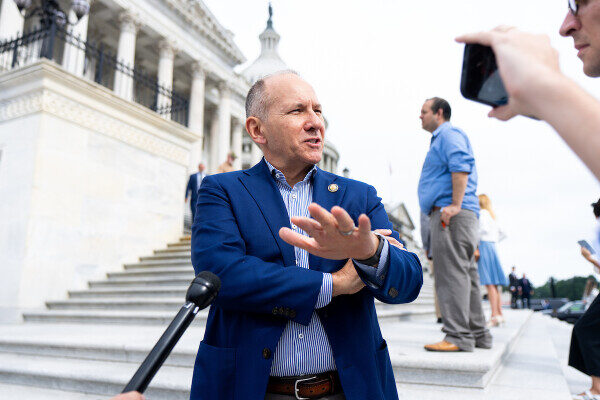
Rep. Lloyd K. Smucker of Pennsylvania, described as a top candidate to lead House Budget Committee Republicans in the next Congress, said raising the cap on income subject to Social Security payroll taxes could be part of the solution to avoid cutting benefits.
Smucker told reporters, "You'll probably have to do something on the payroll half of the money being paid into the system," without providing further details on raising the payroll tax cap.
Without a fix, benefits would need to be cut by 22% in 2032, according to projections from the Social Security Board of Trustees.
Smucker said of a benefits cut in six years, "We can't allow that to happen, and the only way you address that is to start being serious and realistic about the math problem and the demographics."
Sen. Bernie Moreno, R-Ohio, drew flak from fellow Republicans after he and Sen. Elizabeth Warren, D-Mass., proposed lifting the cap so the tax would apply to all earned income; they made the case in a New York Times op-ed in June.
The payroll tax is 6.2% paid by employees and 6.2% paid by employers, imposed only on the first $184,500 of earned income in 2026, and adjusted each year for inflation.
Evidence-backed comparisons of source perspectives and observed adoption signals. Read the methodology
Which Builder, Operator, and Investor concerns the observed source mix emphasized—not a truth score.
Evidence, demonstrated adoption, hype gap, incentives, and confidence are assessed independently, each on its own current evidence. How these are measured.
Public arithmetic, one reporters' scrum
Every number in this story can be checked against a public document: the trustees' projected 22% cut in 2032, the $184,500 wage base for 2026, the two 6.2% halves, age 67 for anyone born in 1960 or later. The political layer on top has a single origin. Smucker's openness comes from one exchange with CQ-Roll Call's reporters, and the only other Republican named as holding the position, Bernie Moreno, is described as having drawn flak from his own side for it.
Nothing filed, nothing counted
There is no legislative footprint in this reporting to measure. Smucker has introduced nothing and named no threshold; the $250,000 and $400,000 bills appear without numbers, sponsors or cosponsor counts; the Moreno-Warren proposal exists as an opinion column. Whether any of it has support beyond the people quoted is outside what these sources show.
Framing runs ahead of the quote
The headline says higher payroll taxes are no longer taboo for Republicans. The quotes support something smaller: one member who may chair Budget Republicans saying "something" will "probably" be needed on the revenue side, plus a senator who was criticised by his own party for going further. Smucker also attaches conditions the framing skips, since he wants the retirement age raised and means-testing expanded in the same package.
Every voice wants to shape the fix
Smucker is described as a contender to lead Budget Committee Republicans, and floating a revenue idea without a number costs a candidate for that job very little. The case for lifting the cap reaches readers through its own authors' op-ed. The single named critic, the Tax Foundation, opposes tax increases as a standing position rather than as a reaction to this proposal. None of that makes the figures wrong; it does mean no disinterested party is quoted on what the trade should be.
Solid quotes, single origin
The quotes are direct, dated and attributed, and the arithmetic around them is public, so the factual core is unlikely to move. Confidence stops short of high because one wire story is doing all the work, the claim about a party-wide change of heart is an inference from two members, and the proposals said to be circulating are described too vaguely to look up.
invest
Banking's 2026 problem is less the Senate majority than the Banking Committee roster1 publisher
invest
Congress Loses Its Two Social Security Reformers Six Years Before the Cut1 publisher
invest
Three windfall bills and a $495bn pot: tax risk overtakes price in energy positions1 publisher
invest
The carried-interest fight is worth $16.3 billion, which is to say almost nothing1 publisher
Publishers with included, body-backed reporting in this cluster.
1 article · September 7, 2026