Invest1 publisher3 min readPublished
Congress Loses Its Two Social Security Reformers Six Years Before the Cut
John Larson and Bill Cassidy both lost primaries and exit Congress in four months, with the trust fund set to empty in 2032 and benefits scheduled to fall 22.5 percent.
The Investor · Invest desk
Drafted by a language model from the sources cited here and checked against its claim ledger before publication. How we use AISend a correction
What happened
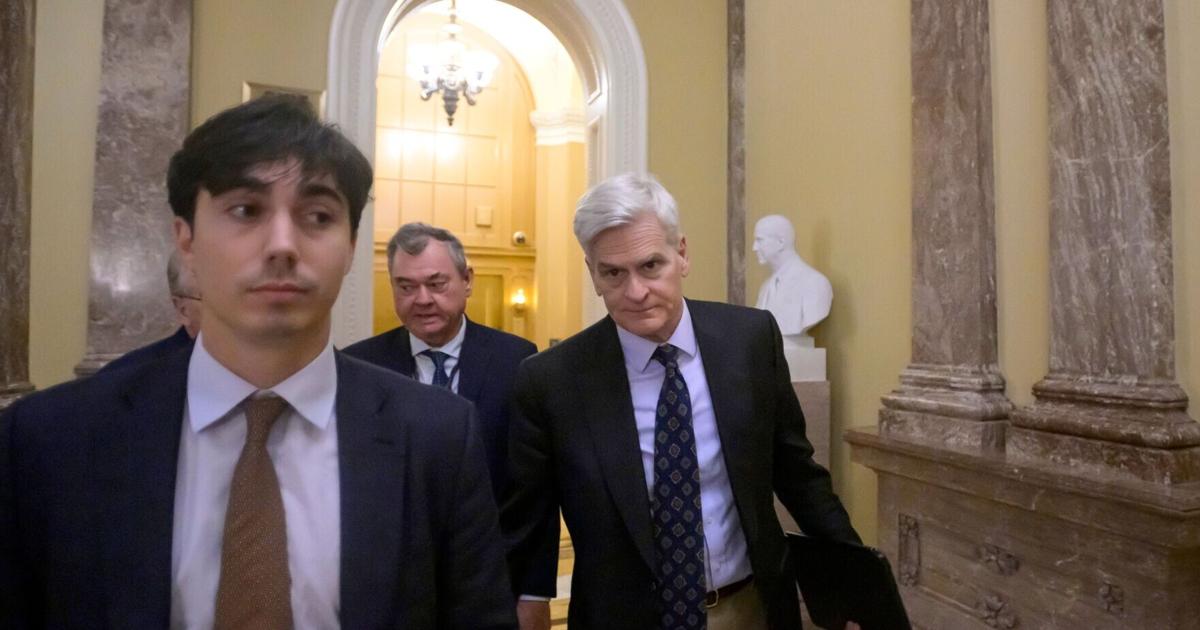
- With the primary loss of Democratic Connecticut Rep. John Larson on Tuesday and Louisiana Republican Sen. Bill Cassidy in May, two of the top agitators for fixing Social Security will be out of Congress in four months.
- Social Security is expected to run out of money in six years, with the trust fund running out in 2032.
- Once the trust fund is empty, benefits will be reduced by 22.5% on average, according to estimates by the program's actuaries.
- Social Security benefits generally are paid out of taxes collected on a share of each worker's paycheck.
- For workers making more than $184,500 annually, payroll tax collections end once that share is reached.
Compiled by The InvestorSomething wrong?How this is made
Why it matters
Two of the most persistent members of Congress on Social Security are on their way out. Rep. John Larson, a Connecticut Democrat, lost his primary on Tuesday, and Sen. Bill Cassidy, a Louisiana Republican, lost his in May; both will be gone in four months [1]. That is worth noticing because the program's trust fund is expected to run out of money in 2032, about six years away, after which benefits are projected to fall by an average of 22.5 percent according to the actuaries the program relies on [2][3].
The arithmetic is not abstract. Benefits are paid mostly from payroll taxes on a share of each worker's paycheck, and those collections stop once a worker earns more than $184,500 [4][5]. A separate trust fund covers what the payroll taxes cannot, and it is that fund set to empty in 2032 [6]. On an average check of about $2,400 a month, the cut would run roughly $450 to $500 unless Congress acts first [7].
Cassidy has framed the exit in those terms. "I got limited time left," he said on the Senate floor on Aug. 7, before a five-week recess [8]. He has been in Congress since 2009, serving in the House and then two Senate terms, and lost the May 16 Republican primary after President Trump endorsed Rep. Julia Letlow [9]. Larson, an insurance agent who entered Congress in 1999, lost his Democratic primary on Tuesday amid arguments that at 78 he was too old [10].
For years the two ran a kind of traveling show for competing fixes [11]. There is no shortage of ideas still on the table. Sens. Elizabeth Warren and Bernie Moreno are working on a package that would keep collecting payroll taxes past the $184,500 cap [12]. Cassidy and Sen. Tim Kaine have a plan for a sovereign wealth fund whose profits would feed the trust fund [13]. Another proposal would create a commission to recommend solutions, an approach AARP's Nancy LeaMond dismissed on Aug. 5, telling a Senate committee that "the history of special commissions is littered with very good intentions and failed results" [14][15].
The procedural clock is the real constraint. The 119th Congress adjourns in a little more than four months, the 120th takes office without Cassidy or Larson, and every bill has to start over once the new Congress is seated [16]. Cassidy and Sen. Dick Durbin, an Illinois Democrat also leaving on Jan. 3, tried to jump-start debate with a resolution to bypass some Senate rules; "It doesn't pick a solution," Durbin said, "it just says don't waste any time" [17][18]. Even that met resistance. Sen. Ron Wyden called it "a wolf in sheep's clothing" and noted that because only the House can originate tax bills, lifting the cap is off the table in the Senate anyway [19][20].
History suggests the timeline is tight regardless of who is in the room. The last significant solvency effort began in 1981 and took two years [21]. Friday marked the 91st anniversary of the law creating Social Security, and Maya MacGuineas of the Committee for a Responsible Federal Budget said policymakers "are doing far too little to ensure its continued longevity" [22][23].
What to watch: whether Durbin's process resolution moves before the recess ends, and whether any of the competing plans attracts a sponsor willing to carry it into the next Congress from scratch.