Product1 publisher3 min readPublished
Nuclearn and GSE put prompt-built scenarios in reactor simulators; validation is the open item
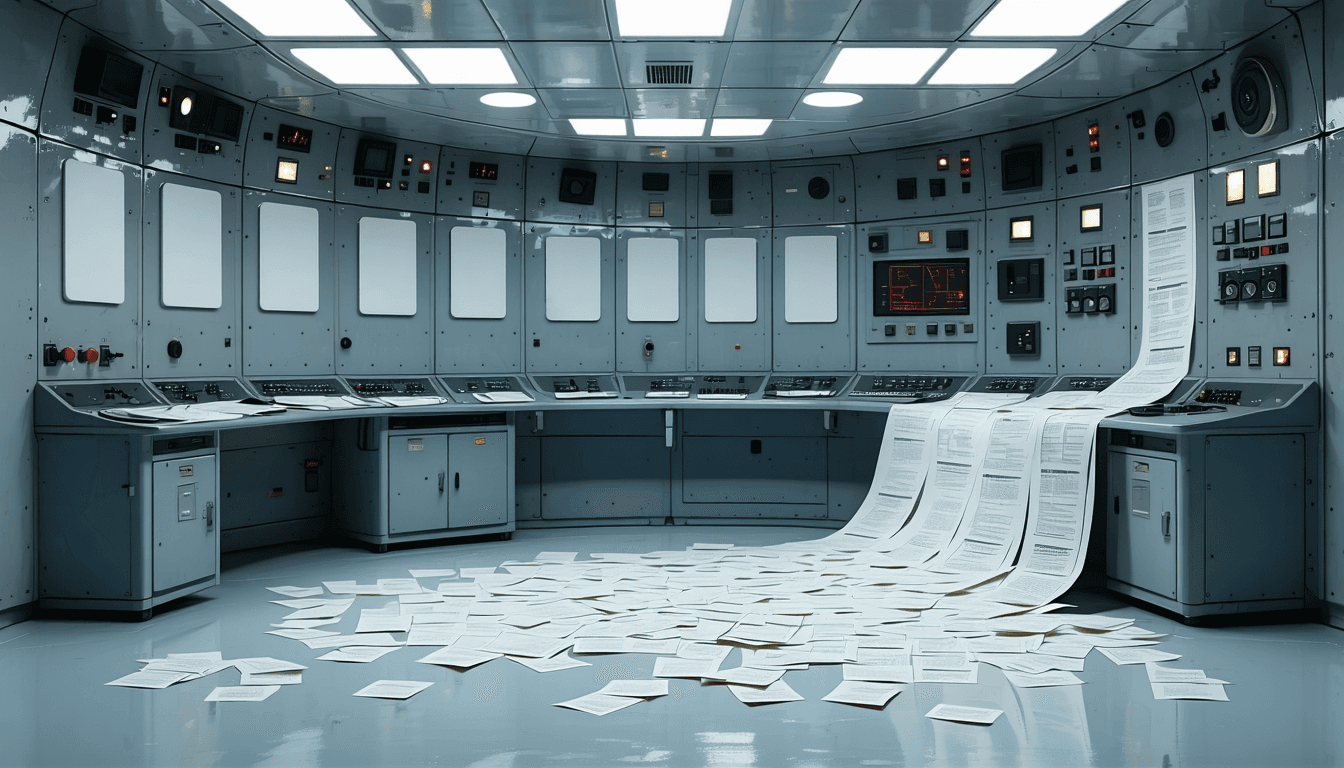
The collaboration promises instructor prompts, adaptive assessments and post-exercise summaries. The announcement does not say who approves a scenario a model invented.
The Product Desk · Product desk
Drafted by a language model from the sources cited here and checked against its claim ledger before publication. How we use AISend a correction
What happened
- Nuclearn and GSE Solutions announced a strategic collaboration that connects machine intelligence tools with high-fidelity nuclear plant simulators.
- Under the collaboration, instructors could use natural-language prompts to create training scenarios.
- GSE plans to add Nuclearn's capabilities to its simulation products.
- Nuclearn will use simulator data and access to develop new engineering and operator support tools.
- The software could generate summaries after each exercise, and those reports could help instructors review how trainees responded to changing plant conditions.
Compiled by The Product DeskSomething wrong?How this is made
Why it matters
Nuclearn and GSE Solutions have announced a strategic collaboration that connects machine intelligence tools to GSE's high-fidelity nuclear plant simulators [1]. The headline feature is an instructor typing a natural-language prompt and getting a training scenario back [2], which shifts the hard part of the work from generation to sign-off.
The shape of the deal is two-way. GSE plans to embed Nuclearn's capabilities in its simulation products [3], and Nuclearn gets simulator data and access to build its own engineering and operator support tools [4]. On the training side, the planned features are scenario authoring by prompt [2], automatic post-exercise summaries for instructors reviewing how trainees responded to changing plant conditions [5], quizzes that adapt to an individual operator's performance [6], and plant-specific physics explanations surfaced during a session [7].
Ravi Khanna, GSE's president and CEO, said the partnership is "an important next step" and that "Safety remains priority number one" [8]. He also said GSE intends to keep its training systems validated, repeatable, traceable, and aligned with approved plant procedures [9], and the company emphasised that approved procedures stay central [10]. Those four adjectives are the entire engineering problem in one line. A repeatable, traceable scenario is one where a qualified person can state which approved procedure it exercises and what the correct crew response is. A generated scenario has neither property until someone with a licence and a signature gives it both, and the announcement does not describe that workflow, name a regulator, name a utility customer, or give a date [20].
The only governance mechanism disclosed is a joint steering committee of technical and executive leaders overseeing the collaboration [11]. That is a commercial body, and nothing in the announcement says it reviews individual scenarios. Counted plainly, the material describes eight planned capabilities against one named oversight structure [21].
The engineering half compounds the same question. Nuclearn plans to let engineers rapidly explore large numbers of simulated scenarios for risk and design analysis [12], test proposed plant modifications in a digital sandbox before physical changes [13], and run pattern recognition to catch early signs of equipment drift or procedural change [14]. Simulator-informed models are also meant to support technical evaluations of emerging reactor concepts, including small modular reactors [15]. Once a machine is producing thousands of candidate scenarios, the screening criteria become part of the safety case, not an afterthought to it.
Both companies are clear about what simulators are for. Jerrold Vincent, Nuclearn's co-founder and CFO, said "Simulators are where nuclear operators build the judgment they rely on every day" [16], and operators have long used them to prepare crews for both routine operations and unusual plant conditions [18]. The source itself notes that adding advanced automation raises questions about validation and oversight [17]. A separate planned capability, operator decision support [19], puts model output closer to the control room than the classroom.
Watch for which feature ships first and whether it carries an explicit human approval gate; whether GSE publishes how a generated scenario enters an approved training library; and whether any licensee puts its name to the pilot rather than leaving both vendors to describe it.