Science1 publisher2 min readPublished
Weill Cornell team catalogs the configurations mGluRs form with beta-arrestins
Two Nature Communications papers describe mGluR receptors binding beta-arrestins in varying numbers and orientations. The authors say that variety, plus a first structure of an active complex, points to why earlier drugs disappointed.
The Scientist · Science desk
What happened
- Two studies led by Weill Cornell Medicine investigators report that mGluRs couple with their main regulatory proteins, the beta-arrestins, in far more varied ways than the field assumed.
- Both papers appeared on Sept. 10 in Nature Communications.
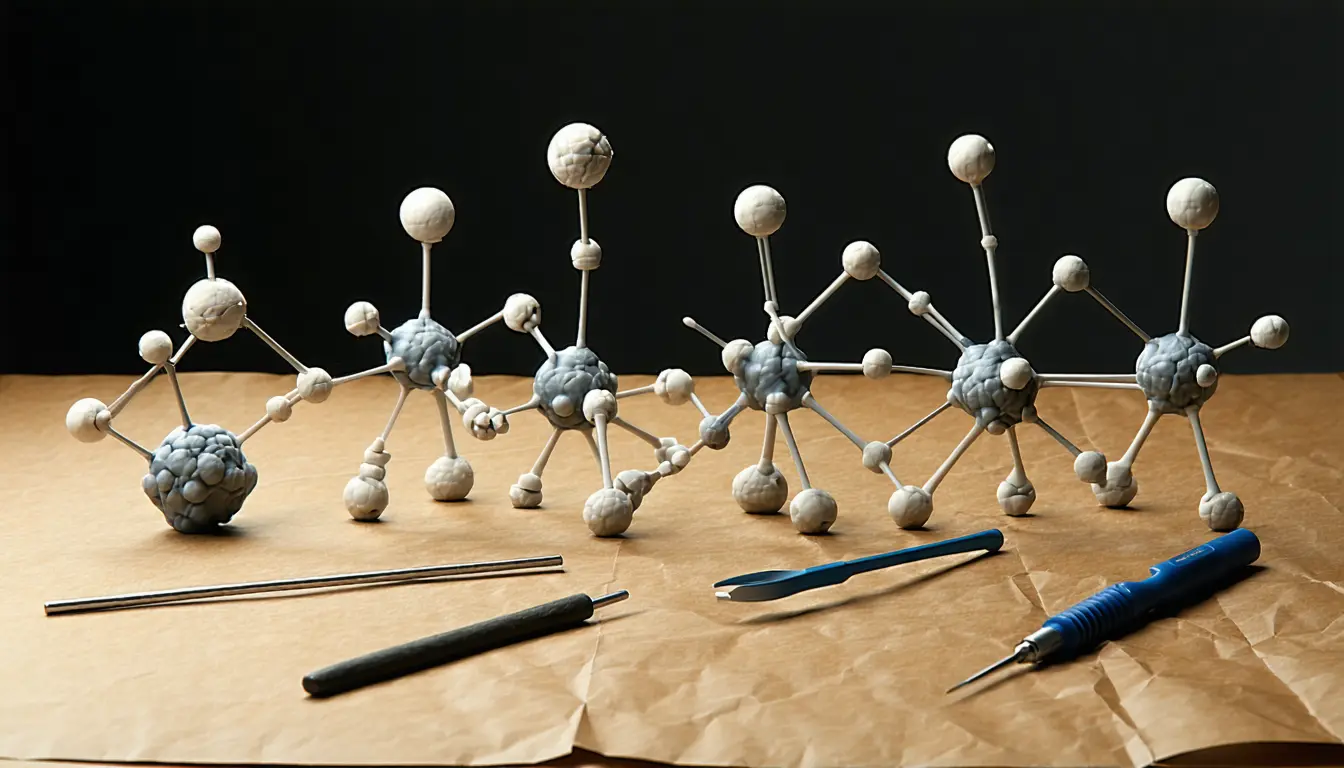
- Complexes differed by receptor subtype in the number of beta-arrestin subtypes involved, in their orientation, and in the kinds of contacts between the two molecules.
- The team combined electron microscopy, molecular dynamics simulations and a new single-molecule capture method to find the couplings.
- A three-dimensional structure of mGluR8, a subtype tied to the brain's normal regulation of anxiety, gave the first high-resolution view of an active receptor-arrestin complex.
Compiled by The ScientistSomething wrong?How this is made
Why it matters
- capability An active complex resolved at high resolution gives chemists a specific interface to design a molecule against.
- constraint With no configuration matched to a shelved compound, these papers cannot rehabilitate any particular mGluR candidate, and the explanation for past failures stays an interpretation of structure.
- contradiction The same account presents subtype-to-subtype variety as the headline finding and calls mGluR8 broadly representative; which of those holds decides whether one structure can guide work on the whole family.
- decision Companies that stepped back from mGluRs have to decide whether chemistry that avoids provoking arrestin binding is worth reopening on the strength of one subtype's structure.
Textbooks long treated beta-arrestins as a fairly uniform brake on G protein-coupled receptor signaling, working in much the same way across the class [5]. mGluRs belong to that class [22], and they sit on cells throughout the body while mattering most as modulators of synapses in the brain [3]. For a substantial share of GPCRs, mGluRs among them, the physical details of arrestin coupling and its effects on cells remain unresolved [6].
Desensitization is the practical stake. Drug developers would like to target mGluRs without triggering increases in beta-arrestin binding, because those increases desensitize the receptor to the drug [13].
The phys.org account attributes the shortfall of past mGluR programs partly to how poorly that regulation was understood [4], and says the new results should help explain why some previous drugs failed and how future ones could aim better [19]. It does not tie a particular configuration to a particular compound or trial [20]. Structural work shows which complexes are possible; pinning a clinical failure on one of them needs a molecule, a dose and a measured outcome.
The researchers consider mGluR8's structure broadly representative of the mGluR family [11]. That judgment has to sit beside the companion paper, titled "Configurational diversity of metabotropic glutamate receptor complexes with beta-arrestins" [18], and beside a plain count: high-resolution coverage of the active receptor-arrestin state stands at one subtype [21]. A structure from a second subtype would test the extrapolation.
The single-molecule capture method behind much of the catalog was developed in the same laboratory that reported the finding [8]. That is ordinary in structural biology, and I would still want the configurations reproduced with another group's reagents. Senior author Joshua Levitz, a professor of biochemistry and biophysics at Weill Cornell Medicine [16], said, "Essentially we cataloged the molecular diversity of these complexes, because if you don't know what complexes are possible, you can't possibly know how to target them" [14]. Dagan Marx, a former postdoctoral researcher in Levitz's laboratory, was first author of both papers [17].
What a medicinal chemist gets from this is a template to design against. Levitz said, "The structures we determined in these studies suggest that this approach would be possible" [15].
What to watch
- An active-state structure from a second mGluR subtype: it would test whether mGluR8 stands in for the family.
- Any published attempt to match one of the catalogued configurations to a specific shelved mGluR compound.
- Whether labs outside Weill Cornell reproduce the configurations using their own single-molecule capture reagents.