Product1 publisher2 min readPublished
FAA clears six daylight runs past Mach 1 for Hermeus's Quarterhorse Mk 2.2
The authorization names one test aircraft, two blocks of restricted airspace over White Sands and an expiry in August 2027, and the Ramjet-X flight test service Hermeus wants to sell on top of it still needs its own paperwork.
The Product Desk · Product desk
What happened
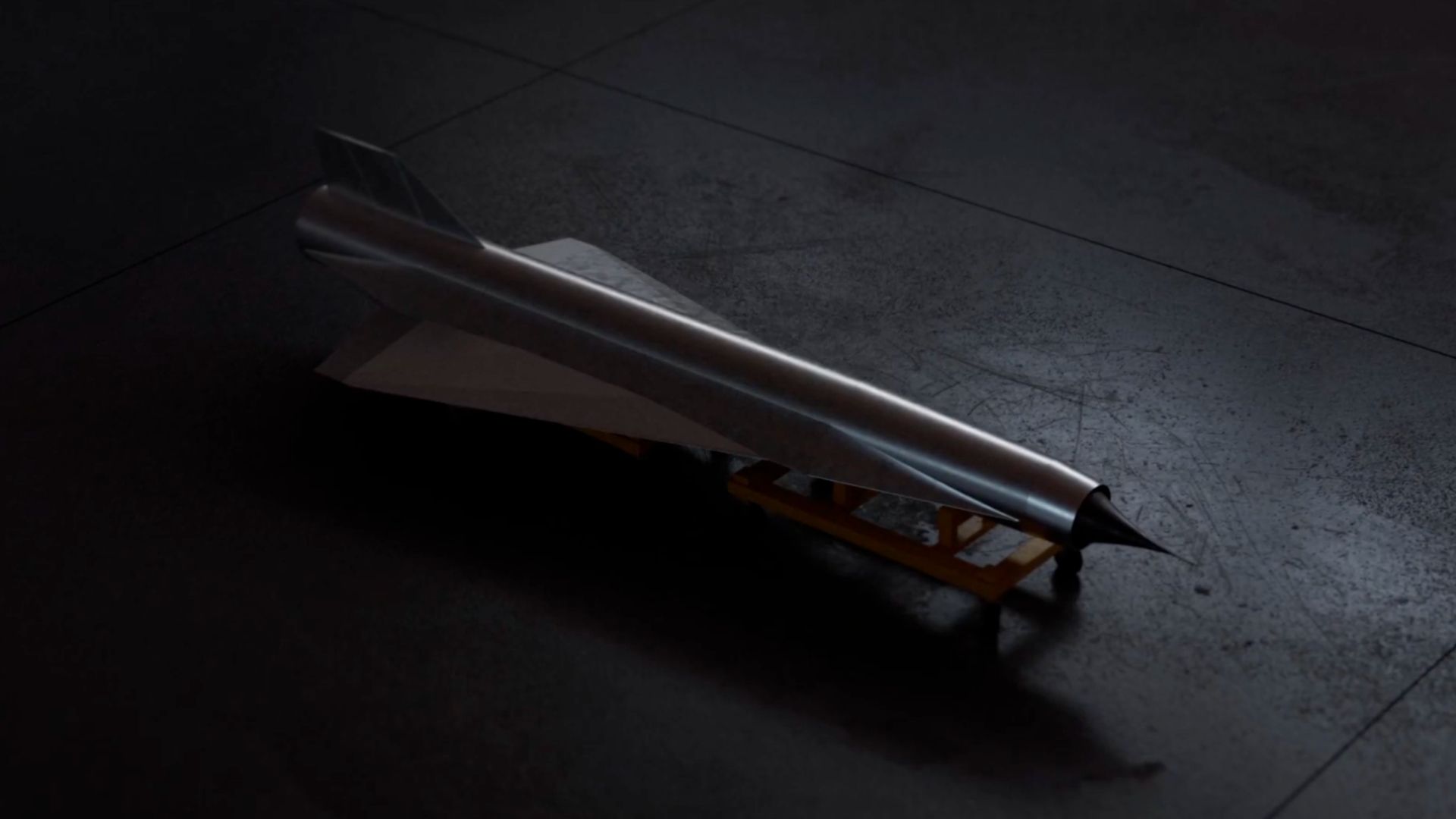
- The FAA has authorized Hermeus to fly its unmanned Quarterhorse Mk 2.2 beyond Mach 1 on up to six flights over the White Sands Missile Range in New Mexico, with the permission expiring on August 20, 2027.
- Each of those flights has to be flown in daylight hours, at or above 24,000 feet, and inside the restricted areas R-5111 A-D and R-5107.
- Hermeus first petitioned the FAA on May 22, 2026, then filed several revisions, and the agency received the final version of the request on August 20.
- For environmental review the FAA adopted the U.S. Army's categorical exclusion for Quarterhorse operations at White Sands and found the flights would not significantly affect the human environment.
- The campaign supports Ramjet-X, an expendable ramjet vehicle designed to be dropped from a reusable Quarterhorse, which Hermeus plans to sell as high-Mach Flight Test as a Service to customers with payloads.
Compiled by The Product DeskSomething wrong?How this is made
Why it matters
- capability If the carrier aircraft works as intended, the cost of a high-Mach data run stops including a one-off expendable booster, which is what a customer needing a single flight's worth of data has been paying for.
- constraint The permission covers one airframe, so putting a customer payload past Mach 1 on a release flight takes a fresh petition and another round of revisions before anyone can be manifested.
- decision A payload owner now chooses between waiting for a slot on someone else's short manifest and funding a test campaign it controls end to end.
- precedent The cheapest route to the next private supersonic authorization runs through a range where the military has already filed the environmental determination the FAA can adopt.
Ninety days of drafting stand between Hermeus's first petition and the version the FAA accepted [1]. The agency found the request within the intent of 14 CFR 91.818, the rule covering civil supersonic flight testing [8], and it wrote that Hermeus may exceed Mach 1 only under the conditions and limitations set out in the special flight authorization [9].
Six supersonic flights have to fit between the day the FAA logged the final revision and the 2027 cutoff, a span of twelve months [2]. One flight roughly every two months is the cadence a program office would plan a payload around, and it assumes nothing slips: any unplanned repair after flight three comes out of the same six.
The engineering case for a carrier aircraft is straightforward. Ramjets need considerable forward speed before they work at all, and high-speed test vehicles have traditionally reached those conditions on large, expensive boosters [10]. Quarterhorse is meant to take Ramjet-X to speed and altitude, release it, and come back for the next mission [11]. "High-speed flight testing is extremely expensive, and you don't get many shots at it," said Zach Shore, CEO of Hermeus [14]. Shore also said Ramjet-X "gives us a way to put new systems into sustained high-Mach environments without building an expensive one-off test program every time" [15].
The buyer this is aimed at is a program with one payload that needs representative high-Mach conditions and no budget for a dedicated campaign to get them [13].
The record here shows a single authorization to a single operator, covering one aircraft over one range [19]. It does not report other operators holding similar permissions, so a reader looking for a pattern of grants has a single data point.
For anyone pricing a flight-test-as-a-service pitch, these are separate things: an engine running on a stand, a flight vehicle, a permit that names that vehicle, and a slot a payload can be booked into. Hermeus is testing the Ramjet-X engine at its High Enthalpy Air-Breathing Test facility in Jacksonville, Florida, and developing high-temperature structures at its El Segundo, California headquarters [16]. The permit exists, for the Mk 2.2 campaign. The slot waits on integrated vehicle testing, planned for 2027 [17].
What to watch
- A separate Hermeus petition covering Ramjet-X release flights, and whether it names White Sands or a different range.
- Whether integrated vehicle testing holds to 2027 after the Jacksonville engine runs and the El Segundo structures work.
- A second private operator winning a 14 CFR 91.818 authorization on a military range's existing environmental determination.