Invest1 publisher3 min readPublished
The round is led by Vsquared, but the interesting cheque is Florian Seibel's personal one, sitting beside a corporate stake from Quantum Systems in a laser the reporting says may one day compete with its own products.
The Investor · Invest desk

Compiled by The InvestorSomething wrong?How this is made
Nine point one million euros across 25 employees is about 364,000 per head [1], and the figure reflects how fast a pre-seed empties when the same pot has to fund both prototype work and the first machines reaching a customer [11] rather than anything about German engineering salaries. A company founded in January that moved the GA 1000 from prototype to testing and validation in seven months [8] is burning at a rate that makes the follow-on structural rather than opportunistic.
The deal term worth turning over is Seibel's personal cheque sitting next to a corporate one from Quantum Systems [1][3]. Tech Funding News frames this as a co-founder backing a laser that might someday compete with his own company's products [4], and that read is available; the weaker part of it is that the company invested alongside the man, which looks like buying the other side of a trade the house already understands. Brune's own framing is the cat-and-mouse one, in which drones keep getting cheaper and more autonomous, so countermeasures never stop having to get cheaper too [5]. Asked about competitors, he says he is glad several companies are in it, because at the moment there is no viable, scalable solution [16]. Holding both ends of that means the countermeasure cycle pays the syndicate regardless of which side gets procured first.
Brune draws the line by market tier rather than by laser power. He puts the heavy tier at 50 to more than 100 kilowatts, Rheinmetall and MBDA's HoWiSM among them, and calls it a right to play in the market but a totally different system, while placing his own product in the lighter, software-integrated category [9].
Against the market the round is small. The European counter-drone market is put at 9.17 billion dollars in 2026 and 29.70 billion by 2031 [13], which compounds at roughly 26.5% a year [3], and the entire pre-seed is about a tenth of a percent of that 2026 figure on the printed numbers [5]; DroneShield's listed value is something like 120 times the round, before any currency adjustment [4][10].
Ground A has not sold a single system [12], so what the syndicate bought is execution speed against a forecast, which is also what Vsquared's Benedikt von Schoeler praised when he called cost-efficient counter-drone capability a key technology for Europe's security [14]. The thesis breaks if radio-frequency interference turns out to be good enough against the cheap Category 1 FPV drones whose videos pushed Brune out of corporate engineering [15], in which case high-energy lasers are procured as a niche and the growth accrues to jamming. It breaks a second way if the heavy tier lands earlier and cheaper than its own schedule implies and absorbs the integration work. Until a buyer signs, 9.1 million euros is only a price; the value comes later.
Ranked by verification strength, evidence, and original report placement.
German startup Ground A raised a 9.1 million euro pre-seed round for its GA 1000 counter-drone system, led by Vsquared Ventures, with Quantum Systems joining as a corporate investor and further backing from GRIF, Robin Capital, ABACON, Leblon Capital and OVNI Capital.
Ground A's team grew from five members in March to 25 by September.
Florian Seibel, a co-founder of Quantum Systems, made a personal investment in the round, along with co-CEO Sven Kruck and Andreas Nauerz from J14 Capital, and Marlon Braumann and Stefan Roebel from ARX Robotics.
Co-founder and CEO Tobias Brune said of Seibel's investment, "I hope that my smile convinced him," adding that the struggle between drones and countermeasures will always be a cat-and-mouse game as drones become cheaper and more autonomous.
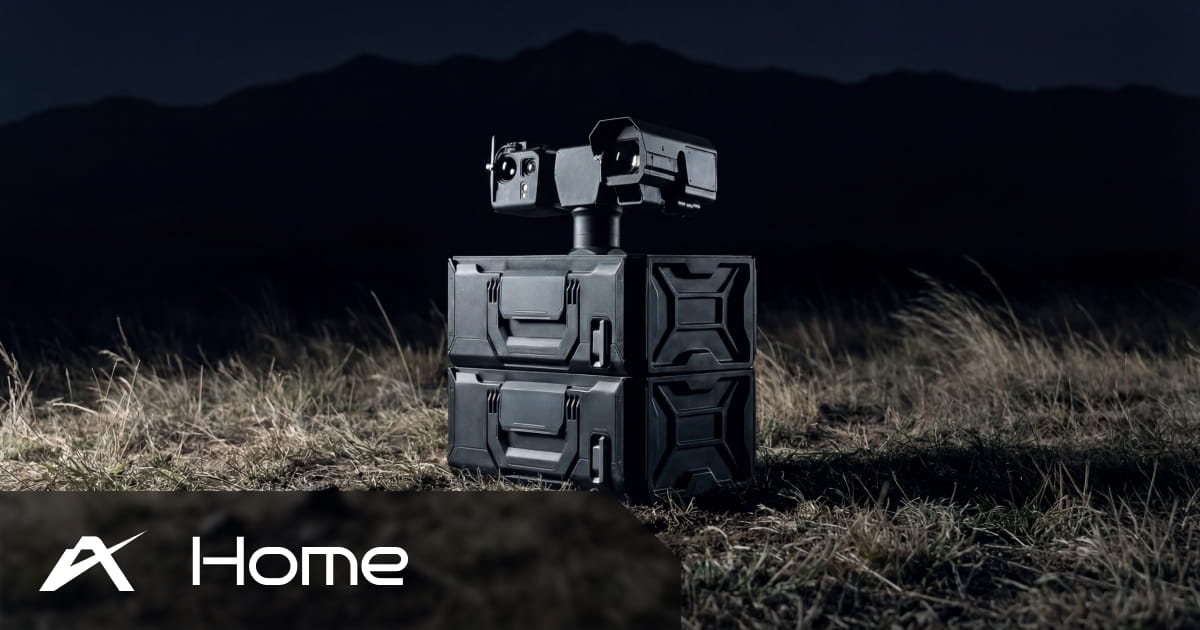
The GA 1000 fits on a standard Euro pallet, can be carried by four people, and comprises detection of small fast-moving drones, autonomous targeting that Brune calls the brain of the system, and a high-energy laser to destroy threats.
The GA 1000 is designed to integrate with existing NATO command-and-control systems and with platforms such as tanks and unmanned ground vehicles.
Follow any of these and your For You feed starts watching them — no settings page required.
Evidence-backed comparisons of source perspectives and observed adoption signals. Read the methodology
Which Builder, Operator, and Investor concerns the observed source mix emphasized—not a truth score.
Evidence, demonstrated adoption, hype gap, incentives, and confidence are assessed independently, each on its own current evidence. How these are measured.
One interview, no instrument readings
Everything here comes through a single Tech Funding News sitting with the CEO and a quote from the lead investor. The investor list and the founding dates are the kind of detail a company can be held to later, so they are firm enough. The performance of the actual product is not evidenced at all: no output rating, no range, no test result, no third party that has watched the GA 1000 shoot at anything. The market totals arrive without a research house behind them.
Pre-revenue, pre-delivery
The only progress markers on offer are internal: prototype to testing and validation in seven months, and headcount up to 25. No unit has been sold, no trial customer or test range is named, and the NATO command-and-control integration is described as design intent rather than something completed. Money and hiring are moving; hardware is not yet reaching users.
Category promise ahead of product proof
Brune undercuts his own genre by admitting there is currently no viable, scalable solution anywhere in counter-drone lasers, and Tech Funding News says outright that nothing has been sold, which pulls the gap down. What pushes it back up is the framing around those admissions: a $9.17 billion 2026 market growing to $29.70 billion, DroneShield's $1.1 billion valuation for comparison, and a laser whose power output is never printed while rivals are graded in kilowatts. The round is roughly a tenth of a percent of the market figure it is placed against.
Both quoted voices are invested
The two people speaking on the record are the CEO raising the money and the general partner who led the round. Quantum Systems holds a corporate stake while its co-founder holds a personal one, and Tech Funding News makes that dual position the hook without asking what Quantum gains from funding an adjacent laser. The 2027 round is already signposted, which gives everyone quoted a reason for this write-up to read well.
Names and dates solid, capability unknown
We can be reasonably sure who funded what and when, because those details are specific, attributable and checkable against a cap table later. We can say almost nothing about whether the GA 1000 destroys drones, and the numbers wobble in two places: the headcount is given as five in March in one line and three-to-five by March in another, and a September 2026 market value is quoted in reporting filed on 8 September 2026.
build
Quantum Systems reached CIA and FBI buyers through the investor the CIA created2 publishers
product
The Army's first AMP-HEL lasers arrive mounted on GM Defense squad vehicles1 publisher
invest
Counter-drone graduates from demo to production line: ACS says 10 a week is going to thousands a month1 publisher
product
L3Harris mounted its passive drone sensor on ARX's robot to move the antenna away from soldiers1 publisher
Publishers with included, body-backed reporting in this cluster.
1 article · September 8, 2026