Invest1 publisher3 min readPublished
GC Biopharma bets its Curevo cash on Ochang with 521.8 billion won of debt due within a year
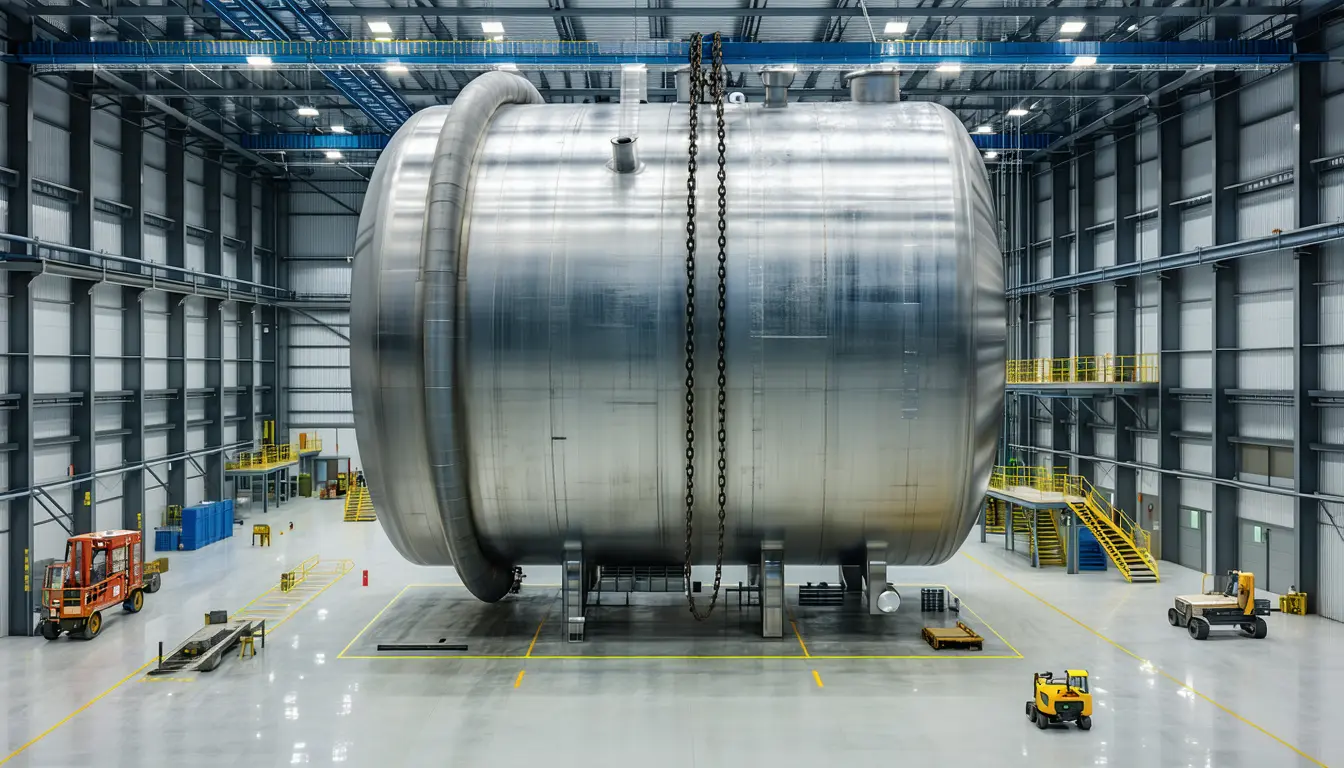
GC Biopharma's second-quarter operating profit fell 93.7% to 1.7 billion won as it readies a 140 billion won production line at its Ochang plant. Even with the Curevo sale cash, it holds less than the 521.8 billion won it owes within a year, so the build depends on lenders renewing debt.
The Investor · Invest desk
What happened
- The company plans to spend 530 billion won on Ochang and other facilities over eight years through 2033.
- GC Biopharma blames the weak half on flu vaccine bulk revenue slipping into the third quarter and the removal of GC Wellbeing from its consolidated accounts.
- Inventories of 886.9 billion won make up 65.3% of current assets, while cash is just 3.1%.
Compiled by The InvestorSomething wrong?How this is made
Why it matters
- decision Putting the Curevo proceeds into capacity leaves 832.3 billion won of total borrowings to be served by a business that did not cover its interest in the first half.
- constraint Facility spending averaging about 66 billion won a year through 2033 has to come from asset sales, new borrowing or released inventory until operations produce cash after interest.
- contradiction The company's timing explanation fits the profit line, because implied first-quarter profit rose, but timing does not explain cash from operations falling short of interest.
Split the half into quarters and almost all of the damage sits in the second. First-half revenue of 856.7 billion won [3], less the second quarter's 421.2 billion won [2], leaves 435.5 billion won for January to March. That is about 13.5% above the 383.7 billion won implied for the same quarter of 2025 [1]. Implied first-quarter operating profit rose to 11.8 billion won from 7.9 billion won [2]. The pattern fits the company's account that delays in securing WHO reference standards for flu strains pushed vaccine bulk revenue into the third quarter [7]. "Deferred flu vaccine revenue will be reflected in second-half results," a company official said [8].
Delayed revenue can show up in a later quarter's profit. Cash takes longer to recover. In the first half GC Biopharma generated 17.9 billion won from operations and paid 18.5 billion won in interest [6], a shortfall of 0.6 billion won before any capital spending [3]. It then spent 47.2 billion won acquiring tangible assets [15]. The net operating outflow did narrow, to 4.8 billion won from 89.6 billion won a year earlier [5].
The Curevo sale is what eased the squeeze. At the end of June the company held 41.7 billion won of cash [9]. Against that it had 521.8 billion won of borrowings due within a year: 331.5 billion won of short-term debt and 190.3 billion won of long-term loans coming due [10]. Adding July's 286.8 billion won of Curevo proceeds [13] gives about 328.5 billion won, before any other July flows [4]. That still leaves roughly 193.3 billion won of near-term maturities uncovered [5]. The new Ochang line alone equals about 49% of the Curevo money [6].
The company plans to put much of that cash into large-scale investment [19]. Every won spent at Ochang is a won not used against total borrowings of 832.3 billion won, on which the net debt ratio was 59.4% [12]. The 530 billion won planned for Ochang and other facilities through 2033 [16] works out to about 66 billion won a year [7]. In the first half, the core business did not generate enough cash to cover its interest [3]. ABO Holdings, the U.S. plasma collection unit, lost 6.3 billion won on 54.3 billion won of first-half revenue [17]. "This is essential investment to expand our portfolio beyond intravenous immunoglobulin into subcutaneous formulations and other products," a company official said [18].
There are three places where the balance sheet has more room than the cash line suggests. The flu bulk revenue could arrive on schedule and lift second-half operating cash. Lenders could renew the short-term lines, as the spending plan assumes; the reporting does not say whether any renewal has been agreed. And inventories of 886.9 billion won, 65.3% of current assets [11], become cash if they sell. Each tenth released is about 88.7 billion won, so two tenths would cover about 177 billion won of the 193.3 billion won gap [8].
I think funding is the real risk here, specifically refinancing. The plant plan works only if banks keep renewing debt that the cash on hand cannot meet. If the inventory line falls while revenue recovers in the second half, the company will have funded itself from inventory and this view will have been wrong.
What to watch
- GC Biopharma's third-quarter filing, which will show whether cash generated from operations exceeds interest paid once the deferred flu bulk revenue is booked.
- Any renewal, new loan or bond issue covering the 331.5 billion won of short-term debt on the June balance sheet.
- How fast tangible-asset purchases run against the 47.2 billion won first-half pace as the 140 billion won Ochang line gets underway.