Product1 publisher3 min readPublished Updated
Framework built the repairable premium laptop buyers asked for. Then memory repriced it.
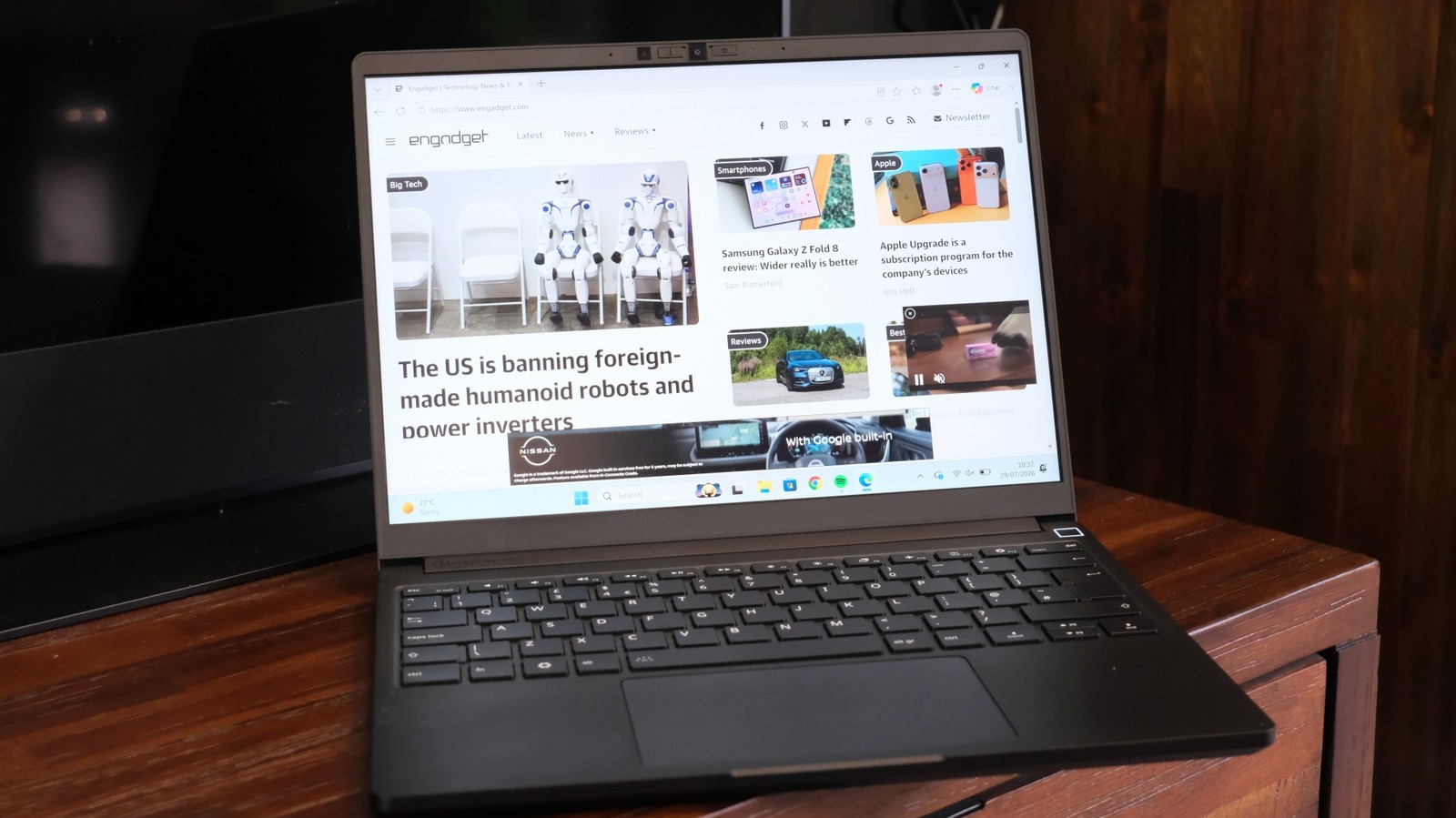
The Laptop 13 Pro answers years of user feedback with a sleeker chassis and better battery. It also arrives with a price rise and smaller RAM on orders already placed.
The Product Desk · Product desk
Drafted by a language model from the sources cited here and checked against its claim ledger before publication. How we use AISend a correction
What happened
- Framework announced the Laptop 13 Pro in April 2026.
- CEO and founder Nirav Patel called the Laptop 13 Pro the "MacBook Pro for Linux users", highlighting its thin and light form factor as much as its performance.
- ZDNET's reviewer wrote that the Laptop 13 Pro has the most crowd appeal of any Framework device to date, citing a dramatically sleeker build, a larger 74Wh battery, a haptic touchpad and the latest Intel Series 3 processors.
- The Laptop 13 Pro remains fully DIY, with Framework's customization across selectable CPU, RAM, storage and four expansion card slots.
- Windows can be purchased, but the Laptop 13 Pro is "Linux first": it has Ubuntu certification and comes pre-loaded with Fedora 4.4 or Ubuntu 26.04 LTS, with community support for Fedora, Bazzite, NixOS, Linux Mint, CachyOS and more.
Compiled by The Product DeskSomething wrong?How this is made
Why it matters
Framework announced the Laptop 13 Pro in April 2026, with CEO and founder Nirav Patel describing it as the "MacBook Pro for Linux users" [1][2]. Before the machine shipped, RAM shortages pushed Framework into raising its price and cutting the memory allocations on orders customers had already placed [7][9].
Take the hardware on its own and the product does what the company's buyers have been asking for. ZDNET's reviewer calls it the Framework device with the broadest appeal yet, pointing to a dramatically sleeker build, a larger 74Wh battery, a haptic touchpad and the latest Intel Series 3 processors [3]. It is still fully configurable across CPU, RAM, storage and four expansion card slots [4], Windows is available but the default posture is Linux first, with Ubuntu certification and Fedora 4.4 or Ubuntu 26.04 LTS pre-loaded, plus community support for Bazzite, NixOS, Linux Mint and CachyOS among others [5]. The mainboard is backwards-compatible with the non-Pro Laptop 13, so existing owners can upgrade rather than replace [6]. The build quality argument has also moved on: the reviewer's Laptop 16 from last year had a multi-plate keyboard unit with visible asymmetry and gaps, while the Pro's CNC aluminum chassis is described as sleek and airtight [11].
The problem is the line item that modular hardware is supposed to make cheap over time. In a blog post, Patel attributed the increases to LPCAMM2 RAM pricing that "goes far beyond anything we had predicted" [8], and Framework responded by downgrading RAM amounts on orders already in the system [9]. That is two hits in the same direction for anyone who committed early: a higher price and less memory than the configuration they chose [13]. ZDNET's reviewer reports that customers are not happy [10]. The review does not quantify how large the increase was or how much memory came out of each order [15].
The consequence is narrower than a general complaint about component costs. The upgrade-later pitch for a machine like this runs through the same LPCAMM2 modules whose pricing Framework says blew past its forecasts, so buying a thin configuration now and adding memory in two years is exposed to exactly the shortage that just repriced the laptop [14]. Modularity insulates a buyer against a soldered dead end. It does not insulate them against the spot price of the part, and when a vendor holds an order book at fixed prices, it either eats the difference or moves the specification. Framework moved the specification.
Watch whether Framework restores the original memory configurations when LPCAMM2 supply eases, and whether it offers anything to the customers whose orders were cut, because that is the test of whether a retroactive spec change is a one-off or a tool. Watch the standalone price of LPCAMM2 modules in Framework's own marketplace, since that number, not the laptop's sticker, decides whether the total-cost case for a repairable machine still holds. And note ZDNET's disclosure that it may earn affiliate commissions on purchases made through its links, while stating that neither the publication nor the author is compensated for its independent reviews [12].