Product1 publisher3 min readPublished
US Strategic Metals and Ionic Rare Earths signed a non-binding term sheet to recycle NdFeB and SmCo magnets in Missouri, a $100m plan that names a site, a process and a purity spec while leaving out annual throughput.
The Product Desk · Product desk

Compiled by The Product DeskSomething wrong?How this is made
US Strategic Metals and Ionic Rare Earths signed a term sheet aimed at a specific sourcing question: where the neodymium in a batch of rejected rotor magnets actually came from. Today the honest answer involves a shipping container. It is worth being precise about which parts of that answer the Fredericktown term sheet changes and which parts it leaves blank.
The split between the two partners is the most revealing number in the announcement. US Strategic Metals puts in $95 million toward construction [4], and a further $5 million of equity is divided equally to pay for Front-End Engineering Design and to accelerate demonstration-scale recycling [5]. That gives USSM $97.5 million of the $100 million, or 97.5 percent, and Ionic Rare Earths $2.5 million, or 2.5 percent, for an equal half of the venture [18]. Ionic's contribution is Ionic Technologies' patented process, already running in Belfast [9]. That is a normal shape for a licensor deal, and it means a cost overrun at Fredericktown lands on the miner's balance sheet rather than the technology partner's.
Then the scale. Belfast processes 30 tonnes of waste magnets and swarf a year and has produced more than 10 tonnes of separated rare earth oxides since June 2023 [12][13]. Cumulative output to date is therefore about a third of a single year's feed by mass [19]. That is a demonstration line doing what a demonstration line is for. Nothing in the announcement gives an annual throughput for the Missouri facility [17], which is the one figure a materials engineer needs before this can enter a sourcing plan. There is also no named scrap supplier and no named magnet customer [20].
The technical claims are more useful than the usual first-of-its-kind framing. Ionic says the process reaches near-complete extraction with separated products above 99.5 percent purity, and that it can take oxidized magnets along with coatings and films [10]. That last part is the part that matters for anyone who has looked inside a bin of end-of-life rotors, which arrive nickel-plated and rusted rather than clean. The route runs crush and grind, digestion and base metal separation, then a 15-stage solvent separation for neodymium, praseodymium, dysprosium and terbium before the oxides are precipitated [11]. Samarium-cobalt sits in the first tranche alongside NdFeB [3], and the November 2025 plan also listed samarium, gadolinium and holmium among the recovered heavy rare earths [8].
A term sheet like this is often read as de-risking a supply line, but what it actually does is commit capital to a site. The agreement is non-binding [3], and definitive agreements are only intended by the end of 2026, with the venture conditional on those documents and on the capital contributions being made [15]. The source dates the announcement to Sept. 3 without a year while placing it after a November 2025 memorandum signed at the Australian Embassy in Washington [21][7].
A workable sort for any domestic-supply announcement crossing your desk: does it name a volume, and does it name a counterparty obligation. Anything with both is a source. A deal with volume but no obligation is a pilot, while one with obligation but no volume is just an option you can price. Fredericktown currently has neither, which puts it in the supplier development file, next to the fully permitted 1,750-acre site it will be built on [2] and the cobalt, nickel, antimony sulfide, lithium carbonate and copper capacity USSM is already building there [16].
Ranked by verification strength, evidence, and original report placement.
US Strategic Metals and Ionic Rare Earths are building what they call the first US magnet recycling plant in Missouri, with $100 million planned for initial facilities to recover rare earth elements from spent permanent magnets.
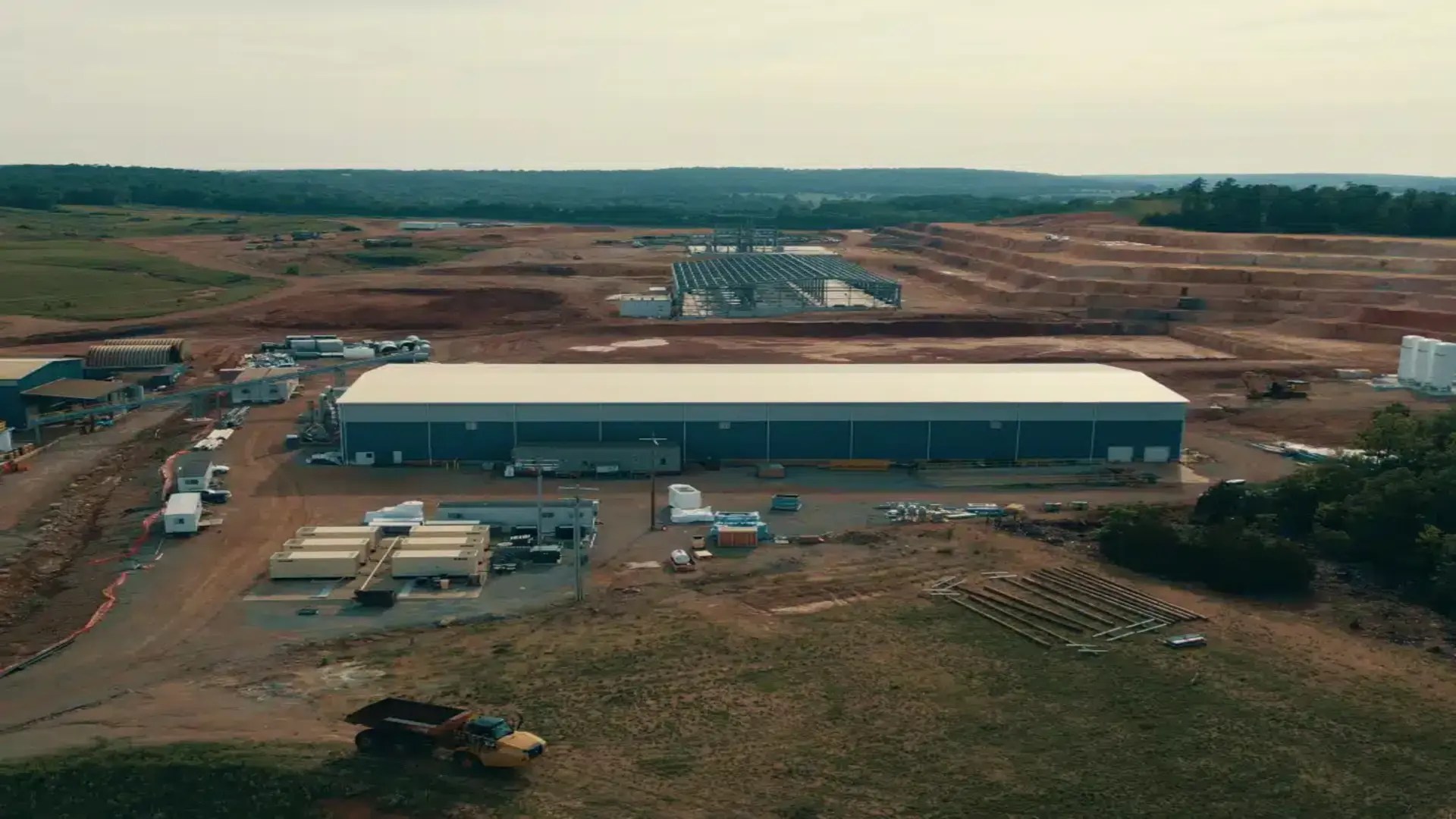
On Sept. 3 the companies announced they had signed a joint venture term sheet to develop rare-earth permanent-magnet recycling capacity at US Strategic Metals' fully permitted 1,750-acre processing site near Fredericktown, Missouri.
Under the non-binding agreement, the companies plan to establish a 50-50 joint venture and initially develop recycling facilities for neodymium-iron-boron (NdFeB) and samarium-cobalt (SmCo) magnets and magnet scrap.
US Strategic Metals will contribute $95 million toward construction.
An additional $5 million in equity contributions will be split equally between the partners to fund Front-End Engineering Design and accelerate demonstration-scale magnet recycling.
USSM Co-Founder and CEO Stacy W. Hastie said the United States will not be left behind in the race to build the industries key to national security and its economic future, and that the company looks forward to moving the JV forward as quickly as possible.
Publishers with included, body-backed reporting in this cluster.
Follow any of these and your For You feed starts watching them — no settings page required.
product
Illinois team builds the charge into the extraction molecule, and the reagent bill drops1 publisher
invest
The Bank of Korea's North Korea desk is now an economic security desk1 publisher
product
Utah terbium clears the gate that matters: a Japanese magnet maker's commercial spec1 publisher
invest
Washington takes an equity seat in Korea Zinc's $7.4 billion Tennessee smelter1 publisher
Evidence-backed comparisons of source perspectives and observed adoption signals. Read the methodology
Which Builder, Operator, and Investor concerns the observed source mix emphasized—not a truth score.
Evidence, demonstrated adoption, hype gap, incentives, and confidence are assessed independently, each on its own current evidence. How these are measured.
Single-sourced from the partners
The 1,750 acres, the $95 million and $5 million, the 30 tonnes a year and the 99.5% purity all come from the two companies, relayed by Interesting Engineering, with the element list borrowed from their own November 2025 release. Belfast is the only item with an operating history rather than an intention behind it, and even that tonnage is self-reported. Nothing in this reporting has passed through a third party.
One demonstration line
What exists today is a Belfast demonstration plant turning 30 tonnes of magnet waste and swarf a year into oxides, with a shade over 10 tonnes of separated product accumulated since mid-2023. In Missouri nothing is built and nothing is owed: the term sheet is non-binding, definitive agreements are a 2026 target, and no scrap supplier or oxide buyer has been identified.
Headline outruns the term sheet
"First US magnet recycling plant" and "$100 million" are asked to carry a document that binds nobody. The money in near-term motion is the $5 million of shared equity for engineering design; the $95 million is construction spending on a facility with no stated capacity, on a site whose permits predate the deal. The chemistry and the Belfast record are the sturdiest things here, and the framing spends them on a plant that does not yet exist.
Both sides gain from the announcement
The announcement pays both partners before either spends much. USSM becomes the American answer to Chinese magnet supply, Ionic Rare Earths gets a US home for a process it has so far run at demonstration scale, and the term sheet obliges neither. The national-security line comes from the party putting up the construction capital, the fastest-and-cheapest-pathway line from the party supplying the technology. Interesting Engineering reproduces both without a counterweight.
Solid facts, open outcome
The underlying facts are simple and hard to get wrong about themselves: a term sheet was signed, and the dollar division is arithmetic on disclosed numbers. The uncertainty lies past the reporting's reach, in whether the plant is built, at what capacity, and whether Belfast chemistry holds at commercial feed rates. One outlet, no second account, and a dateline missing its year.