Invest1 publisher2 min readPublished
Fed and Bank of England review bank exposure to trading firms after Jane Street's $15bn month
Jane Street's year absorbed the July loss. The Federal Reserve and the Bank of England are both using it to look again at what banks have lent to, cleared for and are owed by non-bank trading firms.
The Investor · Invest desk
What happened
- Jane Street posted a trading loss of roughly $15 billion in July 2026, its first month of negative trading revenue since 2016.
- The July losses came from investments linked to Situational Awareness, an AI-focused hedge fund, and from sizable positions in AI-related equities caught in a broader tech selloff.
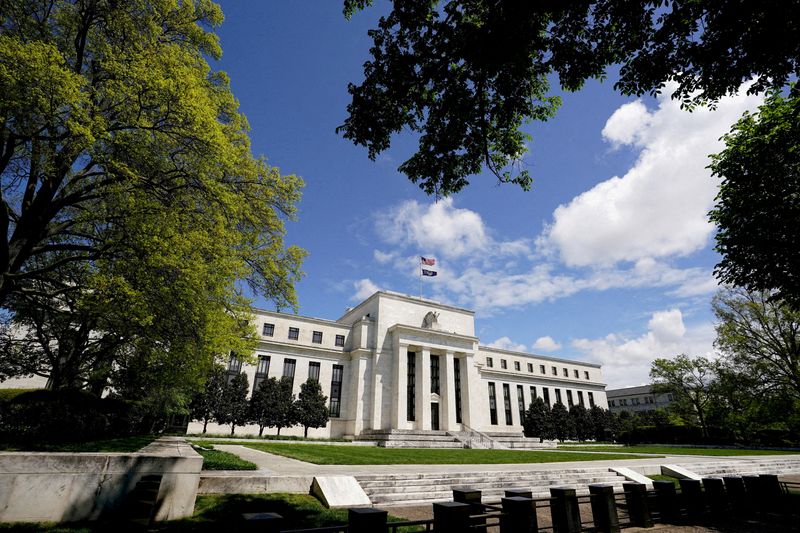
- The Federal Reserve is running a parallel review of how US banks manage counterparty risk from major trading firms.
Compiled by The InvestorSomething wrong?How this is made
Why it matters
- constraint Anyone arguing inside the Bank of England for easing capital requirements on trading firms now has to make that case against a live $15bn drawdown.
- exposure S&P's trillions is a category total, and it is as far as public filings take an outside investor: every bank that has lent to, cleared for or faced a large trading firm sits inside that one number.
- contradiction The event cited as the trigger is one the firm absorbed inside its own year, and that loss is what the reviews have in front of them.
- precedent Treating a private trading firm's monthly P&L as a supervisory trigger invites the same review of the next non-bank that reports a bad month, whether or not a bank is hurt by it.
A $15bn loss in one month alongside more than $40bn of net trading revenue by mid-August implies the rest of the period produced roughly $55bn [1][2][12]. Take July out and that is about $8.5bn a month across the six and a half remaining months, against the $3.3bn monthly average implied by 2025's roughly $39.6bn full year [14][13][3]. July cost about 27% of what the firm made in the other months [16]. Measured against last year's pace, the loss is four and a half months of revenue [15].
All of it comes from a single account, published by Crypto Briefing, which does not name any individual bank's exposure to Jane Street or the size of its credit lines [20].
The Fed's review covers how US banks manage counterparty risk from major trading firms [10]. The Bank of England's July 2026 Financial Stability Report pointed at banks' interlinkages with non-bank financial institutions, a category that reaches banks through lending, clearing and counterparty relationships [7][8]. S&P Global Ratings has put banks' aggregate exposures to hedge funds and trading firms in the trillions, and described the situation as carrying "inherent fragility" driven by leverage and concentration risks [9].
Bank of England officials warned in April 2026 against proposals to ease capital requirements for trading firms, on the argument that loosening could threaten financial stability, three months before the July loss [6][17]. Crypto Briefing reports that the Fed and the BoE are "using the episode as a catalyst to take a harder look at the risks banks face from their deep financial ties to firms like Jane Street" [11].
Most paths from here leave the rulebook as it stands. The reviews may find that margin and collateral held through a month in which some corners of memory and semiconductors fell nearly 50%, and close [5]. A second path: the easing proposals stall and stay unwritten. Stalling is the tighter outcome, because April's proposal was loosening [6]. The third is a Fed data request or a concentration limit that names exposures to individual trading firms. I would expect the second, since a review costs a supervisor almost nothing and the April position is already on the record. Evidence against it would be a bank disclosing a loss on facilities extended to Jane Street, or a rule text with a named-counterparty limit in it.
What to watch
- Whether the Fed's review produces a supervisory data request on individual trading-firm exposures or stops at a stocktake.
- Whether the proposals to ease capital requirements for trading firms reappear after the July 2026 Financial Stability Report.
- Whether any bank discloses an exposure to Jane Street, or a loss on facilities extended to it.