Product1 publisher3 min readPublished
Rafael and Lockheed begin qualifying an Israeli 1,000-pound munition for the F-35
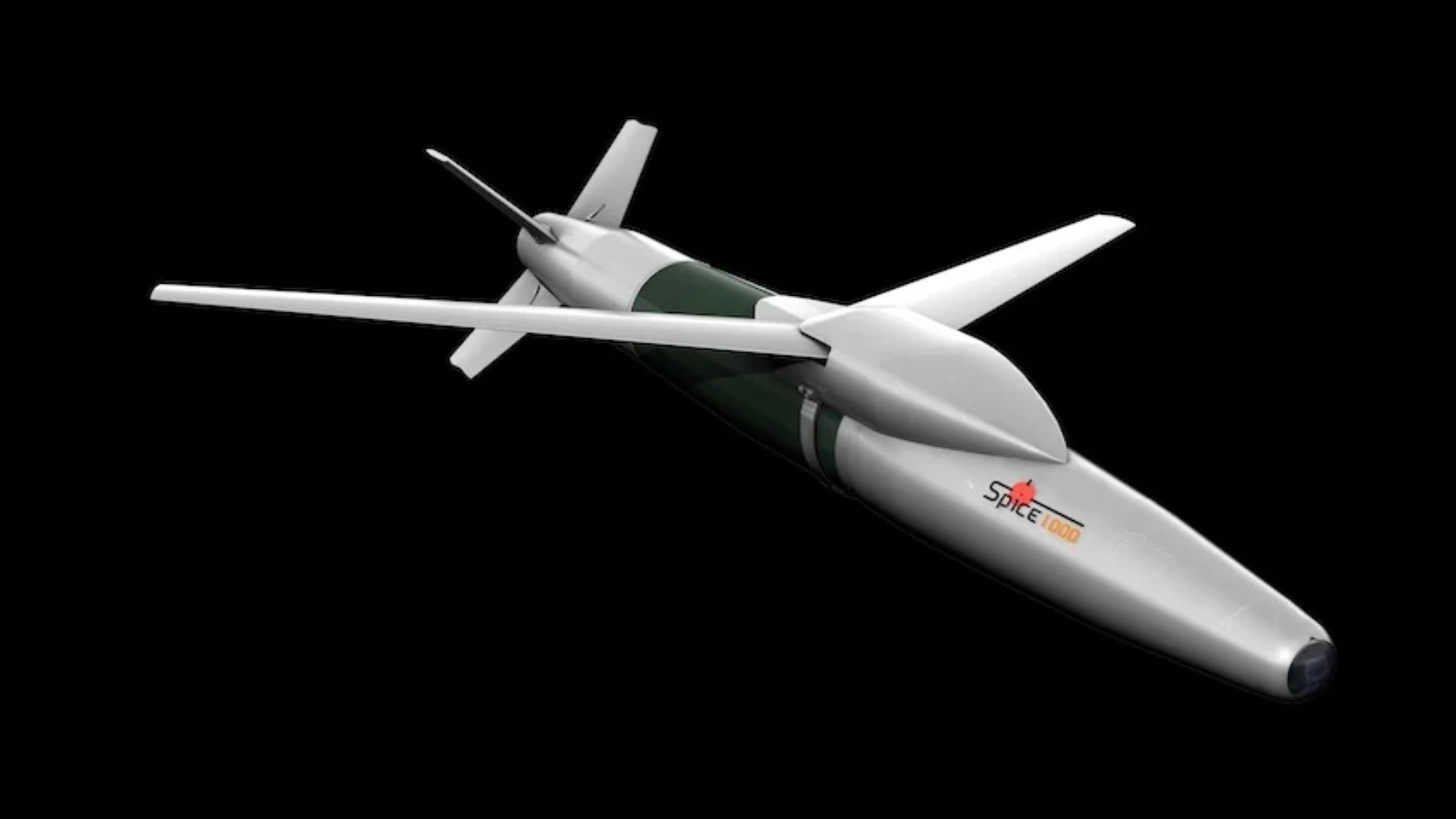
The SPICE 1000 has flown from Israeli F-15s and F-16s since 2017. Putting it on the F-35I means several months of joint work with Lockheed Martin in the United States before any other operator can field it.
The Product Desk · Product desk
What happened
- Rafael Advanced Defense Systems said on September 15 that it has begun integrating its SPICE 1000 air-to-surface munition with the F-35, working with Lockheed Martin at facilities in the United States.
- The companies are working to qualify the munition for carriage and employment from the aircraft, in what Rafael describes as the first effort to qualify it for the fifth-generation fighter.
- Rafael said the initial integration will support Israeli F-35I aircraft, bringing the weapon to the Adir fleet, with wider availability planned for a later stage.
- The SPICE line is built for stand-off strikes of more than 75 miles, and the numbers in SPICE 2000, SPICE 1000 and SPICE 250 refer to approximate weapon weight in pounds.
Compiled by The Product DeskSomething wrong?How this is made
Why it matters
- constraint A non-American munition for the F-35 still comes on an American schedule: the qualification runs through Lockheed Martin's people and US facilities, so the airframe manufacturer sets the pace for anyone who wants the weapon.
- decision Procurement staff in other F-35 countries cannot build a stock plan around SPICE 1000 while the only committed sequence puts Israel first and everyone else at an unnamed later stage.
- capability Once employment is cleared, Israeli planners can send the F-35I against fixed and high-value targets at extended range without moving the task to a different airframe.
- precedent A joint Rafael-Lockheed sales channel already exists for SPICE 250 in the United States and Poland, so a European route to the heavier munition would likely run through the same teaming agreement rather than a direct Israeli sale.
Rafael says SPICE 1000 has been used extensively during long-range operations, and until now those missions have needed an F-15 or an F-16 [5]. The next several months of work in the United States are about adding one more aircraft type to that list [2][22].
Qualification is a narrow word with a specific scope. The two companies say they are working to qualify SPICE 1000 for carriage and employment from the aircraft [3]. Carriage covers flying with the store attached. Employment covers releasing it and guiding it. Rafael said SPICE is "equipped with an electro-optical seeker. The munition homes in on its target using advanced scene-matching algorithms and is optimized for the challenges of the modern battlefield." [16] Rafael has not said when Israeli operational use begins.
Who owns the process matters more to the other F-35 operators than the seeker does. An Israeli munition is going onto an American airframe, and the integration is being done by the American manufacturer at American facilities [2]. Rafael called the effort a "significant step" toward making the weapon available to other F-35 operators worldwide [12], and set the sequence out plainly: "At a later stage, F-35 operators worldwide will be able to field SPICE 1000," the company said [11].
The diversification here only goes so far: an operator gains a 1,000-pound class standoff munition from a supplier outside the United States [21], but the integration schedule belongs to Lockheed Martin [2]. Rafael's claim to a first is scoped to this munition on this airframe [3].
The Pentagon has an interest in the pace: a report published in April and cleared for public release in August said SPICE integration on F-35 aircraft "continues to progress with a strategy to accelerate the implementation via a SPICE Lite process" [9]. The report did not explain what that process involves [10], and four months separated publication from public clearance [19].
Israel is the near-term customer, and it ordered 25 more F-35s to take its planned fleet to 75, up from 50 before that order [7][18]. It was also the first country to use the type in combat, starting in 2018 [8]. SPICE 1000 entered Israeli service a year before that [20].
Rafael and Lockheed Martin were selling together before the F-35 work began. They signed a teaming agreement in 2019 to jointly develop, market and manufacture SPICE guidance kits for potential US sales [13]. Yuval Miller, executive vice president and general manager of Rafael's Air and C4ISR Division, said at the time: "Finalizing this exclusive agreement sets the scene for our two companies to provide unmatched mid-range guided air-to-surface weapon systems to enhance mission flexibility and success." [14] In 2021 they expanded it to jointly develop SPICE 250 "for sale in the United States and in Poland" [15].
A line like "available to operators worldwide" in a supplier release can be planned around only once you know which organisation controls the qualification schedule and whose configuration it lands in first. Here that is Lockheed Martin, and Israel [2][4].
What to watch
- Any explanation from the Pentagon or the F-35 program office of what the SPICE Lite process actually shortens.
- Which aircraft software configuration the SPICE 1000 carriage and employment clearance lands in.
- A third country naming SPICE 1000 in a budget request or letter of request, which would show the worldwide availability line has substance.