Invest1 publisher3 min readPublished
One in three U.S. workers is 'disposable' - and the biggest slice sits inside your own headcount
A labor economist's survey puts just under 57 million people in jobs with no career track and no security. The largest category is not contractors or gig drivers but ordinary employees.
The Investor · Invest desk
Drafted by a language model from the sources cited here and checked against its claim ledger before publication. How we use AISend a correction
What happened
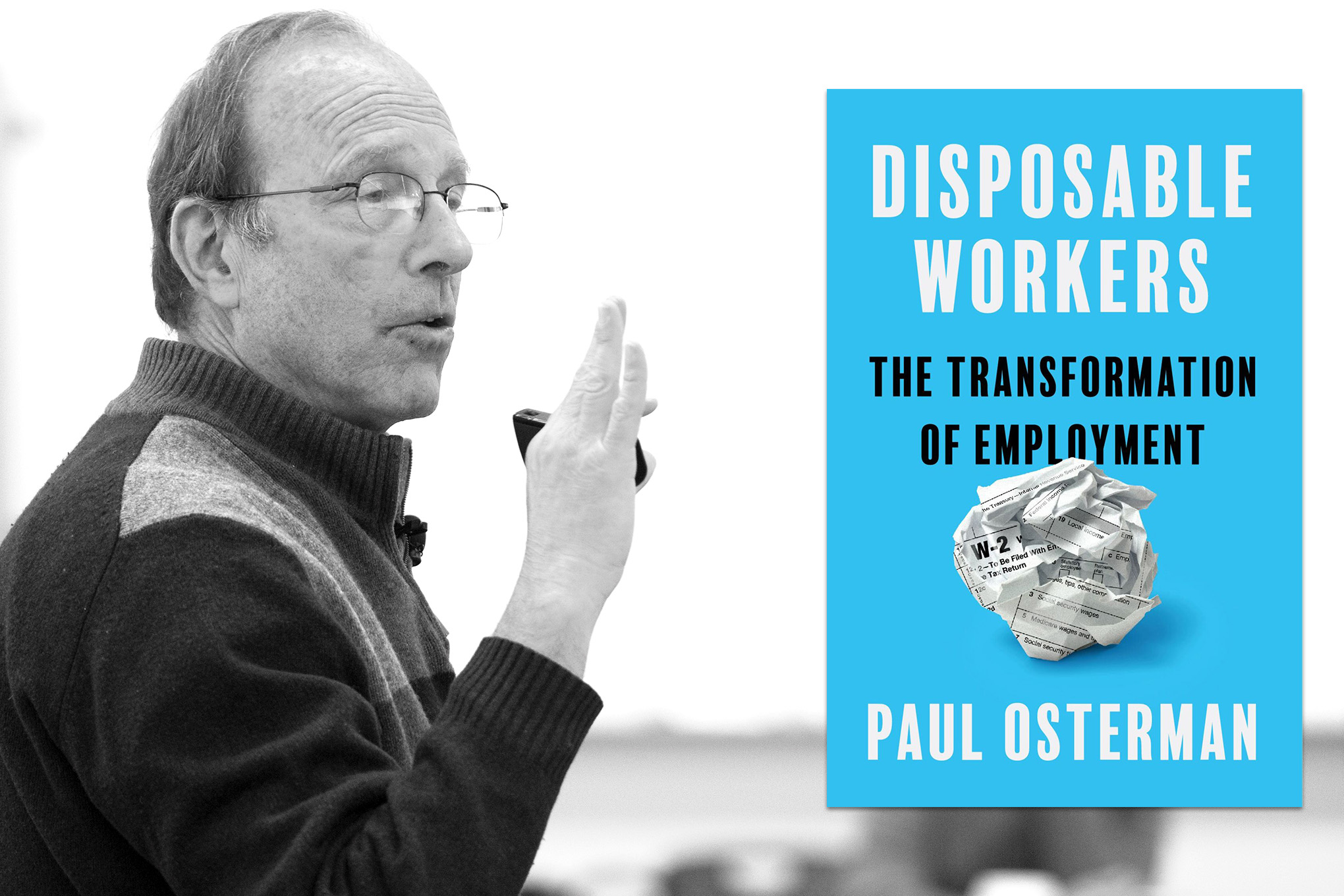
- The Fortune essay's author identifies as a labor economist and says the argument comes from a new book, "Disposable Workers: The Transformation of Employment," explaining why the shift is happening, what forms it takes, how common it is, the consequences, and what can be done.
- The author defines "disposable jobs" as jobs where people work at an employer's site but the employer makes no commitment to them regarding career prospects or job security.
- The author's research shows employers treat more than 1 in 3 U.S. workers as disposable, coming to just under 57 million full- or part-time workers out of a national workforce of 162 million.
- The findings rest on a commissioned nationally representative survey of over 6,000 people in late 2022, plus interviews with nearly 100 workers, employers and policymakers.
- Category one: contractors employed by a staffing firm but working at a client's site, such as temporary office workers, building cleaners and security guards, with some like travel nurses highly compensated; the survey puts them at 13% of the workforce.
Compiled by The InvestorSomething wrong?How this is made
Why it matters
A labor economist writing in Fortune says employers now treat more than one in three American workers as disposable: just under 57 million full- and part-time people out of a workforce of 162 million [3]. That figure matters less as a headline than as an accounting problem, because the largest component of it never appears on a vendor invoice [7].
The author, whose book "Disposable Workers: The Transformation of Employment" is the basis for the essay, defines a disposable job as one where the person works at an employer's site but the employer makes no commitment on career prospects or job security [1][2]. The estimate rests on a commissioned nationally representative survey of more than 6,000 people conducted in late 2022, plus interviews with nearly 100 workers, employers and policymakers [4].
The breakdown is where the operating implications sit. Contractors employed by a staffing firm and placed at a client site - temp office staff, cleaners, security guards, and at the high-paid end travel nurses - are 13% of the workforce [5]. Freelancers working for organizations without being employees, including rideshare and delivery drivers, programmers and freelance journalists, are 5% [6]. "Marginal workers," who are actual employees of the company but have no career path and whose jobs have high turnover designed in, are 17% [7]. The three add to 35%, which against a 162 million workforce is about 56.7 million people [8]. Marginal work is roughly half the total on its own [9].
That is the part most workforce models get wrong. Contingent spend that runs through a staffing agency is visible; it has a rate card and a procurement owner. Marginal roles look standard on the org chart. The author's examples are staff attorneys hired off the partner track to do case-specific grunt work with no commitment if business lags, and adjunct and contract faculty who teach without job security or a route to tenure [10]. On the academic side the shift is documented: 73% of those teaching at U.S. colleges and universities held tenure or tenure-track posts in 1970, against 32% in 2021 [11]. The non-tenure-track share therefore went from 27% to 68%, roughly two and a half times, in five decades [12].
The cost arithmetic behind part-time marginal work is blunt. Part-time hourly pay runs nearly 20% below full-time pay after adjusting for age, education, occupation and industry, and counting benefits widens the gap by another 5 points [13]. Higher turnover is treated as a second benefit, not a cost: it lets employers resize the workforce without layoffs and avoids spending on career development [14]. A team led by professor Susan Lambert interviewed 88 low-wage employers and found many using part-time work for flexibility, with one manager saying of temps: "We don't need them. Wait a day for turnover" [15].
Read the number with its definition attached. The 57 million is one researcher's classification, built on self-reported survey data now more than three years old, and the 17% marginal category is the judgment call doing most of the work [3][4][7]. Someone using a narrower definition of contingent work would report a much smaller total.
What to watch: whether your own headcount reporting can separate career-track from marginal roles at all, because if it cannot, the churn cost is being booked as recruiting overhead rather than as the price of the flexibility it buys [14]. Also worth noting for anyone who thinks this is confined to low-wage service work: per the same author, the tasters PepsiCo hires to test its chips are contractors [16].