Product1 distinct publisher3 min readPublished
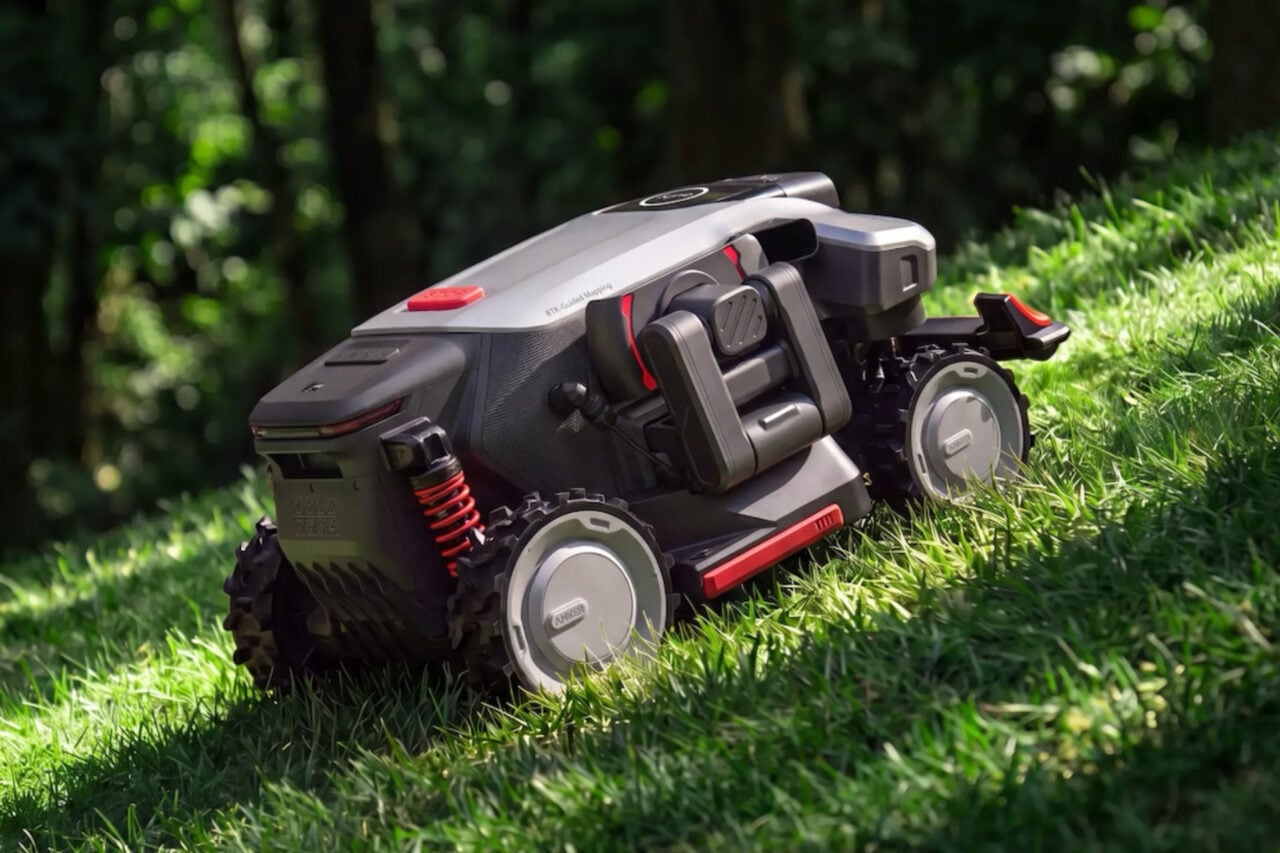
The S2 Max pairs wire-free camera navigation and 48 TOPS of onboard AI with an extending edge trimmer. Whether it earns its 3,999 euro price tag depends on the length of your perimeter, rather than your lawn's acreage.
The Product Desk · Product desk

product
An $800 Roborock outperformed machines twice its price in Gizmodo's testing1 distinct publisher
product
LiDAR frees the robot mower from the sky. At $3,200 it is still priced for the biggest lawns1 distinct publisher
product
Anker rebuilds Eufy's privacy promise as hardware you can test1 distinct publisher
product
Google pitches AI as the backbone of gaming's live-service future1 distinct publisher
Compiled by The Product DeskSomething wrong?How this is made
The test of a robot mower is whether the string trimmer stays on its hook. On the current class it does not: Gizmodo's read on sliding-deck machines like Segway's Navimow X430 and Dreame's A3 AWD Pro is that dropping the deck and shoving it sideways gets closer to the fence without ever sparing you the cleanup pass [8][9]. A horizontal blade slung under a chassis cannot reach the base of a post. Eufy's answer is mechanical rather than clever, which is the point: an arm that swings out of the side of the machine [1].
Here is what spec sheets sell. The S2 Max is rated for lawns up to 3.7 acres and runs on a 48 TOPS processor for local AI, and it drops buried wire and satellite positioning entirely [6][5][3]. Gizmodo's own hedge is the honest one, that the processor could produce very smart navigation if it is implemented well [7]. Processing power is only an input. What the owner measures is edge metres left over, and no amount of onboard inference shortens a fence line.
The arithmetic is worth doing before the demo video. At 3,999 euro against a 3.7-acre rating, that is about 1,081 euro per rated acre [13][18], and almost nobody buys at the top of the rating. Meanwhile Ecovacs already ships the mechanism: the Goat A3000 LiDAR Pro carries a built-in string trimmer the company says gets to nearly 0mm from edges [10]. The gap Eufy is actually selling into is size and terrain, since the Goat is a smaller machine that cannot take slopes as steep [11]. Dropping the wire and the satellite link also moves the failure mode rather than removing it, because vision becomes the single point of perception, and Eufy is claiming that holds on grades up to 80 percent [3][4].
None of which a US operator can act on. The S2 Max has no planned US release and would need special regulatory approval after the FCC's ban this summer on foreign-made robotic devices, robot vacuums and mowers included [12]. The ban is not retroactive for products already cleared, and the FCC said it was issued for security reasons [14]. So the buyable Eufy in the US is the Omni E35 robot vacuum with a self-cleaning dock, out September 25 at $1,100 [15][17]. Its headline differentiator is an Asthma and Allergy Friendly Certification that Eufy says makes it one of the only robot vacuums ever to get one, from a body that has had robot vacuums in its vacuum cleaner category since 2022 and currently lists none that meet the standard [16].
A tape measure settles this question. Walk your perimeter, write down the metres, then divide by the area you mow. A garden full of beds and fence line carries far more edge per acre than an open paddock, and that ratio decides whether an edge module is the only line on the sheet that changes your Saturday or a 3,999 euro fix for work you do not have [13]. If the ratio is high, edge hardware beats coverage specs every time, and the tradeoff is that you are buying an unproven mechanism sight unseen until May 2027 [13].
Ranked by verification strength, evidence, and original report placement.
At IFA 2026, Anker sub-brand Eufy announced the Robot Lawnmower S2 Max, a robotic mower with an arm that extends from its side to trim the edges of a lawn.
Eufy says the S2 Max is the first robotic mower it has developed in-house, though not its first robotic mower.
Eufy says the S2 Max is fully autonomous without buried guide wires or satellite connectivity, navigating with computer vision via built-in cameras.
Eufy says the S2 Max can handle slopes up to 80% and has a dual-blade mowing deck.
The S2 Max features a 48 TOPS processor for onboard local AI.
Eufy says the S2 Max is capable of handling up to 3.7 acres.
Distinct publishers with included, body-backed reporting in this cluster.
1 article · September 3, 2026
Follow any of these and your For You feed starts watching them — no settings page required.
Evidence-backed comparisons of source perspectives and observed adoption signals. Read the methodology
Which Builder, Operator, and Investor concerns the observed source mix emphasized—not a truth score.
Evidence, demonstrated adoption, hype gap, incentives, and confidence are assessed independently, each on its own current evidence. How these are measured.
One outlet, one spec sheet, no mow
The 80% slope, the 3.7 acres, the 48 TOPS, even the rival's 'nearly 0mm' edge — every number in this story was published by a company selling something, and relayed the same afternoon. Gizmodo's hedges are the most trustworthy sentences in it. The single claim that could be checked against an outside body, the asthma and allergy certification, does not survive the check: the foundation lists no qualifying robot vacuum.
Two dates, one of them twenty months out
Nothing here has cut a lawn. The mower is a 3,999 euro intention for May 2027 with no U.S. path at all; the only orderable product is the Omni E35, on pre-sale September 4 at $1,100 because its approval predates the FCC ban. Concrete prices and dates are real signals of intent, but there are no units, no installs, no owners.
Trade-show gloss over an uncut lawn
Eufy has aimed at the one chore robot mowers genuinely hand back to the owner, and prices the S2 Max as though the aim were already a hit. Set against that: a compute number with no demonstrated behaviour, a slope rating nobody has watched it climb, an allergy certificate its own certifying body does not acknowledge, and a launch two IFAs from now. Gizmodo flags the softest of these and lets the certification contradiction sit unweighed — which is why the overstatement here is the vendor's more than the reporter's.
Announced by the seller, on the seller's stage
Both products come from one company at its own launch event, and the buyable one routes straight to Eufy's pre-sale page. A 3,999 euro tag on a 2027 machine costs nothing to publish now, and the 'first developed in-house' framing is a positioning line about Eufy, not a fact about mowing. The rival figures fare no better — the 'nearly 0mm' edge is Ecovacs quoting itself. The only party here with no stake in the sale, the FCC, never gets to speak in its own words.
Clear on what was said, thin on what is true
What Eufy announced, at what price, on what date — that we can rely on, and it is most of what this reporting establishes. Beyond it, a single publisher, no hands-on run, and no regulator or certifier speaking directly. The sturdiest passage is the comparative one: the Segway, Dreame and Ecovacs machines exist and their edge behaviour is already known, which is what makes the arm legible as an answer to a real gap.