Loading today’s stories
Product1 distinct publisher3 min readUpdated
A rooftop collector aimed at 302F asks factories a fuel question, not a power question
An ETH Zurich prototype targets pasteurizing, drying and cleaning heat. Its inventor says the physics already exists and the cost does not, which is where the diligence sits.
The Product Desk · Product desk
What happened
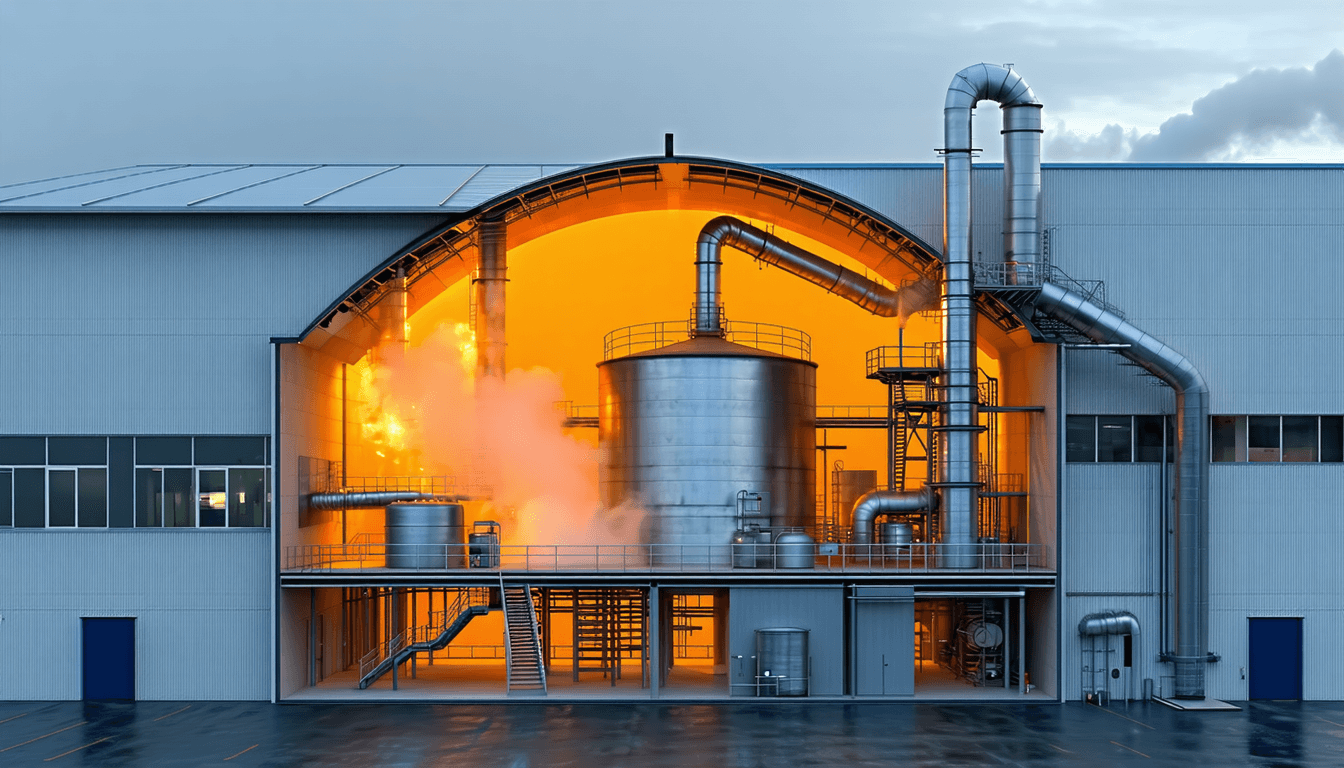
- ETH Zurich mechanical engineer and ETH Pioneer Fellow Luca Thommen is developing a solar thermal collector that concentrates sunlight and converts it directly into industrial process heat, pitched as a lower-cost alternative to burning fossil fuels.
- The collector uses reflective elements to direct sunlight toward an absorber panel, where the energy is trapped and transferred to a medium such as air or water, with insulation reducing heat losses.
- According to ETH Zurich, the system is intended for industrial processes requiring temperatures of up to around 302F.
- Named target applications include pasteurization and sterilization of dairy products, cooking and cleaning in food production, and distillation processes in the chemical and pharmaceutical industries.
- Many of these processes currently depend on natural gas or other fossil fuels to generate the required heat.
Compiled by The Product DeskSomething wrong?How this is made
Why it matters
Luca Thommen's own summary is the most useful line in ETH Zurich's account: "The technology I have further developed already exists in principle, but it is not yet cost-effective" [7]. That puts the work in procurement rather than thermodynamics. The prototype is mostly lightweight, readily available insulation material, with metal used only where it has to be [6]. Nothing about that is a performance claim. It is a bill-of-materials claim.
Which is why the missing numbers matter. The account carries no cost figure, no efficiency figure, no collector area and no description of thermal storage or backup firing [13]. A first rooftop unit has reached its target temperatures [12], roughly 150C [14], and that establishes the optics and the insulation hold up under sun. It does not tell a plant engineer what a delivered gigajoule costs against the metered natural gas those processes burn today [5].
The load list is the part electrification pitches tend to walk past: pasteurization and sterilization of dairy, cooking and cleaning in food production, distillation in chemical and pharmaceutical plants [4]. ETH Zurich describes these as moderate-heat industries that are hard to electrify directly [9], and the project's stated aim is to displace the fossil fuel used for heat rather than for electricity [17]. For a buyer, that changes which line of the utility bill the business case is written against.
Climeworks sits inside the range with room to spare. Its absorption and desorption steps for pulling CO2 from air run at around 212F, or about 100C [11][15], which is roughly 90F below the collector's ceiling [16]. ETH Zurich characterises this as interest from companies, not orders [11], and a direct air capture plant is a different customer from a dairy: fewer legacy burners, no food-safety qualification on the heat source, and a founding reason to pay for it. If early revenue comes from anywhere, that headroom is a plausible place.
The schedule is tight for a device still described as early stage. Thommen is using the ETH Pioneer Fellowship to develop the system, talk to customers and investors, and prepare for testing at a pilot facility, with a market-ready product targeted inside a year [10]. A pilot is where the two unpublished quantities finally get exposed: annual delivered heat, and the installed cost of the cheap-insulation approach once someone has to warranty it on a working roof.
Note how modestly the source frames the payoff. The claim is that operators could reduce their dependence on fossil fuels by making heat from sunlight directly [18], not that a burner comes out. On the evidence supplied, that is the right size of claim, and it is the one worth holding the project to.
Loading topic controls
Loading related stories