Science1 publisher2 min readPublished
Nurse sharks crowd into 150 meters of knee-deep Anegada shoreline to mate
Two UMass Amherst studies put numbers on shark behaviour that managers can act on, mapping a nurse shark mating ground only 150 meters long and surveying Northeast anglers who lose hooked fish to predators.
The Scientist · Science desk
What happened
- Two studies led from UMass Amherst were published in Environmental Biology of Fishes and Fisheries Research, one on where nurse sharks mate and one on anglers losing hooked fish to predators.
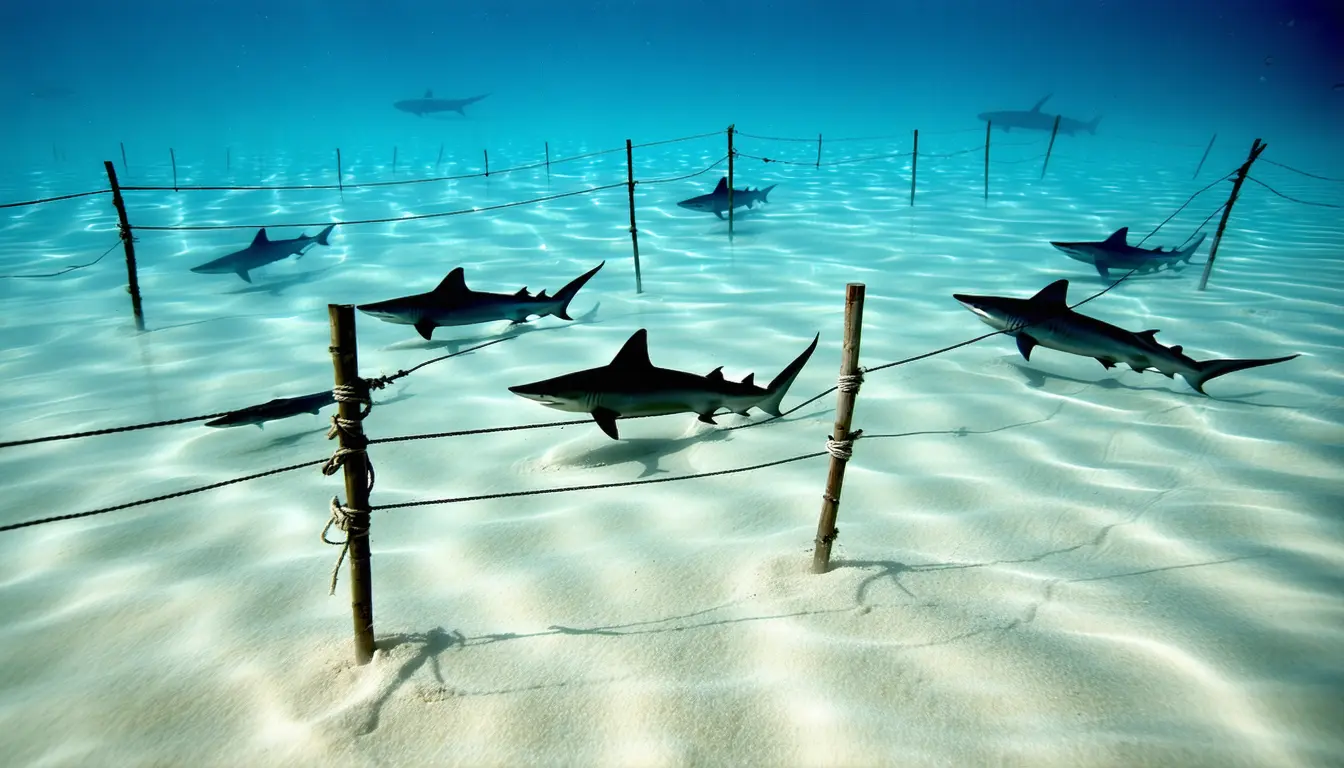
- Off Windlass Bight on Anegada in the Virgin Islands, the team counted 27 nurse sharks in tightly packed groups in shallow water on one day, with mating going on throughout the day.
- The mating is concentrated in an area about 150 meters long in knee-deep water, which the researchers describe as the first documented seasonal nurse shark breeding ground in the Virgin Islands.
- The second paper is the first survey of recreational anglers who have had a predator eat their hooked fish anywhere in the Northeast Shelf Large Marine Ecosystem, from northern Maine to North Carolina.
Compiled by The ScientistSomething wrong?How this is made
Why it matters
- constraint The whole documented mating ground fits inside the footprint of a single shoreline project, so whoever issues coastal permits on Anegada decides whether this aggregation keeps a place to breed.
- exposure The sharks reacted to being watched. Research visits and any dive tourism that follows the publication belong on the same pressure list as construction.
- decision Rebuilt predator populations and heavier angling effort now work the same water. Agencies face a choice about whether depredation becomes its own management category with its own rules.
- precedent This site was found because somebody passed on a tip. The pipeline for locating shark breeding grounds still runs on informal reports.
Nurse sharks mate infrequently, gestate for a long time and give birth to only a few pups at a time [11]. The UMass Amherst account of the work argues that for species built that way, anything that damages a preferred mating spot risks destabilising the population [12]. Sharks are also almost never observed mating in the wild, and where they do it has been largely unknown [13]. The only other place on record with comparable numbers of mating nurse sharks is the Dry Tortugas, according to lead author Grace Casselberry, a postdoctoral researcher at UMass Amherst [6].
"Knee-deep is the sweet spot," Casselberry said, and "if this stretch of shoreline were to be developed, it would erase this group of nurse sharks' mating grounds" [9]. Andy Danylchuk, a professor of fish conservation at UMass Amherst and a senior author of the paper, said, "This is the bedroom for these sharks" [10]. The count of 27 animals comes from a single day of observation [7].
The second paper is a survey of people. It asks recreational anglers on the Northeast Shelf what they have experienced when a predator takes a hooked fish [4]. Evan Prasky, the doctoral student who wrote it, said humans can do terrible things but can also learn how to coexist [14].
Prasky puts seals on that shelf at up to 27,000 now, against only several hundred a few decades ago, when bounties were paid and hunters could take as many as they wanted [15]; treating several hundred as 300 to 900, the rise is roughly 30-fold to 90-fold [20]. Over the same stretch, recreational angling became more popular and the gear more specialised and effective [18]. A survey of anglers can establish that they are losing fish off the line; it cannot divide that loss between more predators and more fishing. Striped bass are among the species that conservation-driven recoveries have turned into easy targets, the UMass account says [17], and several shark species are showing signs of recovery too, including the resident great whites off Cape Cod [19].
Prasky's headline number is about belief. He found that 50% to 60% of people do not think recreational fishing has an impact on the environment [16], which leaves 40% to 50% who do [21]. The question measures how anglers understand their own activity in general, and the phys.org account does not report how many anglers answered [22]. Prasky called the finding "a big red flag" in policy and management terms [23].
What to watch
- Whether Windlass Bight on Anegada gets a coastal designation, and whether the 150-meter stretch already falls inside a protected area.
- The sample size and per-trip depredation rates in the Fisheries Research paper when its full numbers are read.
- Whether return visits in later seasons find nurse sharks aggregating at Windlass Bight in the same weeks and the same water.