Science1 distinct publisher3 min readPublished
Kathy Liu's team photographed young and mature bonnethead sharks on both Florida coasts and found snouts rounding with age in both sexes, most in females, while carbon and nitrogen isotopes gave no dietary reason for the difference.
The Scientist · Science desk

Compiled by The ScientistSomething wrong?How this is made
The isotope half of this study contains its own control. Carbon and nitrogen signatures in muscle integrate feeding over a long period rather than reporting the last meal [10], and the assay plainly had the resolution to separate groups: sharks from Biscayne Bay and from the Tampa Bay region, included to test whether the same developmental pattern showed up on the opposite side of Florida [14], came out in distinct food webs, and diet shifted as animals grew [11]. Within a single bay, males and females drew on many of the same food sources [11]. A flat result on sex, from a measurement that was not flat on geography, carries more weight than a flat result alone.
What the isotopes cannot see is handling. They record what was assimilated, not how it was caught or crushed, so two sexes that process the same prey differently would still return the same signature. That is where a functional explanation could still sit, and this work does not reach it.
The arithmetic of the sample: 105 sharks in Biscayne Bay plus 39 in the Tampa Bay region gives 144 measured animals [15], of which 137 provided muscle for isotope analysis, about 95 percent [16]. Tampa contributed 27 percent of the total [17]. Split 39 sharks by sex and by size class and the per-cell counts get thin, and the announcement gives neither the per-sex counts nor an effect size for the curvature trend [20].
Age is the other soft spot. Sampling ran from May 2022 to May 2023, twelve months [18], and each shark was photographed against the grid board once and released quickly [8], with ImageJ used afterward to compare curvature [9]. The developmental trajectory is therefore read across individuals of different sizes rather than by following one animal through maturity. That is usually the only feasible design with free-swimming sharks, and it cannot fully separate growth from differences in which animals the longlines and the gillnets brought in [7].
The consequence for the standing story is specific. The old account came with a mechanism attached, because it placed the divergence at sexual maturity and let whatever happens at maturity do the explaining [3]. Liu reports the opposite direction of change, with young males and females both more pointed and both rounding as they matured, much more so in females [5]. If females change more, the adult difference is built mainly by female rounding rather than by males acquiring a point [19], which moves the question to a different sex and a different stretch of the life history. Bonnetheads are also the only shark known to show this kind of clear sex difference in head shape [4], so there is no sister species in which to check the pattern. Macdonald calls the result a narrowing of the drivers of the trait [13]. That is the honest verb for it.
Ranked by verification strength, evidence, and original report placement.
Results showed that bonnetheads in Biscayne Bay and Tampa Bay occupied distinct food webs and experienced dietary changes as they grew, but that males and females living within the same bay depended on many of the same local food sources.
Liu: "Our findings provided no evidence that differences in diet or foraging were driving the development of the sharks' sex-specific head shapes."
Catherine Macdonald, co-author, associate professor and director of the Shark Research and Conservation Program at the Rosenstiel School, said the study helps narrow the drivers of a trait that has puzzled scientists, that examining body shape and diet in the same animals let them assess whether the two co-occur, and that the results suggest another cause behind the head-shape difference.
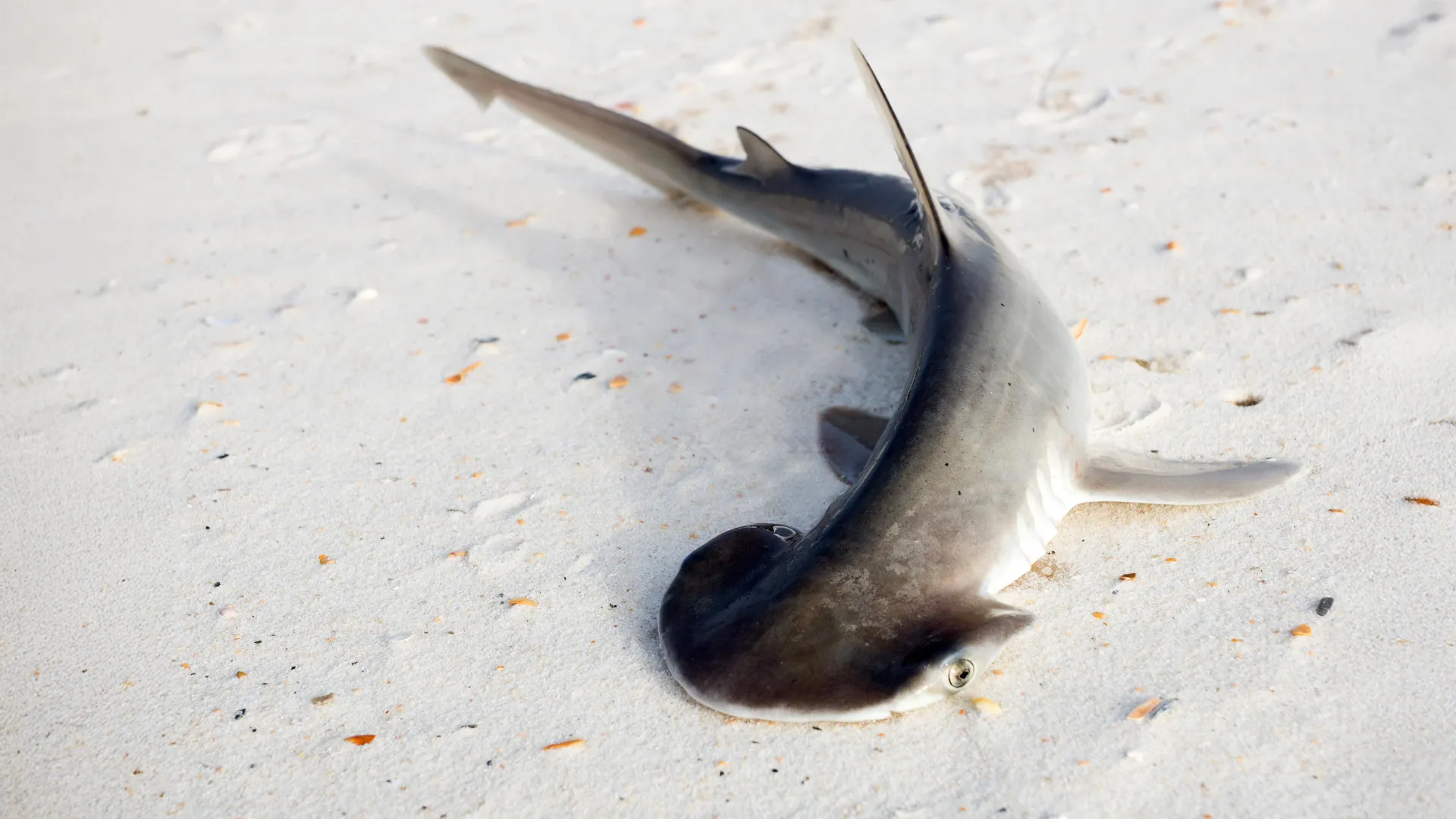
A new study of bonnethead sharks (Sphyrna tiburo) in Florida by researchers at the University of Miami Rosenstiel School of Marine, Atmospheric, and Earth Science and collaborating institutions challenges a previous explanation for how males and females develop differently shaped heads.
The researchers found that the sharks' shovel-shaped heads become more rounded as both males and females grow older, with the change especially pronounced in females.
Earlier research had suggested that male bonnetheads developed their more pointed snouts when they reached sexual maturity.
Distinct publishers with included, body-backed reporting in this cluster.
1 article · September 4, 2026
Follow any of these and your For You feed starts watching them — no settings page required.
science
ECMWF's AI and physics ensembles swap places between five days out and two1 distinct publisher
Evidence-backed comparisons of source perspectives and observed adoption signals. Read the methodology
Which Builder, Operator, and Investor concerns the observed source mix emphasized—not a truth score.
Evidence, demonstrated adoption, hype gap, incentives, and confidence are assessed independently, each on its own current evidence. How these are measured.
Detailed method, single institutional voice
Every figure in this story, 105 sharks in Biscayne Bay, 39 near Tampa Bay, 137 muscle samples, comes from the Rosenstiel School's own announcement as ScienceDaily reprints it. The design is described precisely enough to repeat, and testing shape and diet in the same animals is what makes the dietary null result meaningful rather than hand-waving. Missing is the arithmetic behind the headline: no counts by sex, no size for the curvature effect, no journal citation.
No uptake to observe
Nothing in this reporting shows the grid-board and ImageJ approach being used beyond the two Florida bays, or the finding being taken up by other researchers. The team says the photographic technique could be applied elsewhere in the species' range, which is an intention rather than something we can count.
Headline reversal, one year of sharks
'Scientists overturn a theory' sits above a study of 144 sharks caught in two bays across a single year, with the reason for the pointed head still unknown by the authors' own account. The body text is the more careful document: it offers swimming efficiency in smaller sharks as a guess and asks for work on embryonic development. The stretch is in the framing rather than in what the scientists say.
Institution reporting on itself
The copy originates with the university that employs Liu and Macdonald and hosts the shark program Macdonald directs, and it closes on the technique's value for region-specific management and further studies, which is the register of a funding case. ScienceDaily's republication adds no counterweight, so the promotional interest and the reporting interest are the same interest.
Plausible direction, unverifiable magnitude
The direction of the finding is easy to credit because the design controls for the obvious alternative and the authors state the limits of what they know. Our confidence is held down by the numbers we cannot see and by the fact that one institutional account, carried by one publisher, is the whole record.