Science1 publisher2 min readPublished
Preprint puts Jefferson at 99.96 percent likely to have fathered a son with Sally Hemings
A bioRxiv preprint puts Thomas Jefferson near 99.96 percent likely to have fathered at least one of Sally Hemings's sons, using DNA from locks of his preserved hair. A 1998 Y-chromosome test could point only to the Jefferson male line, and the analysis behind the new figure has not been peer-reviewed.
The Scientist · Science desk
Drafted by a language model from the sources cited here and checked against its claim ledger before publication. How we use AISend a correction
What happened
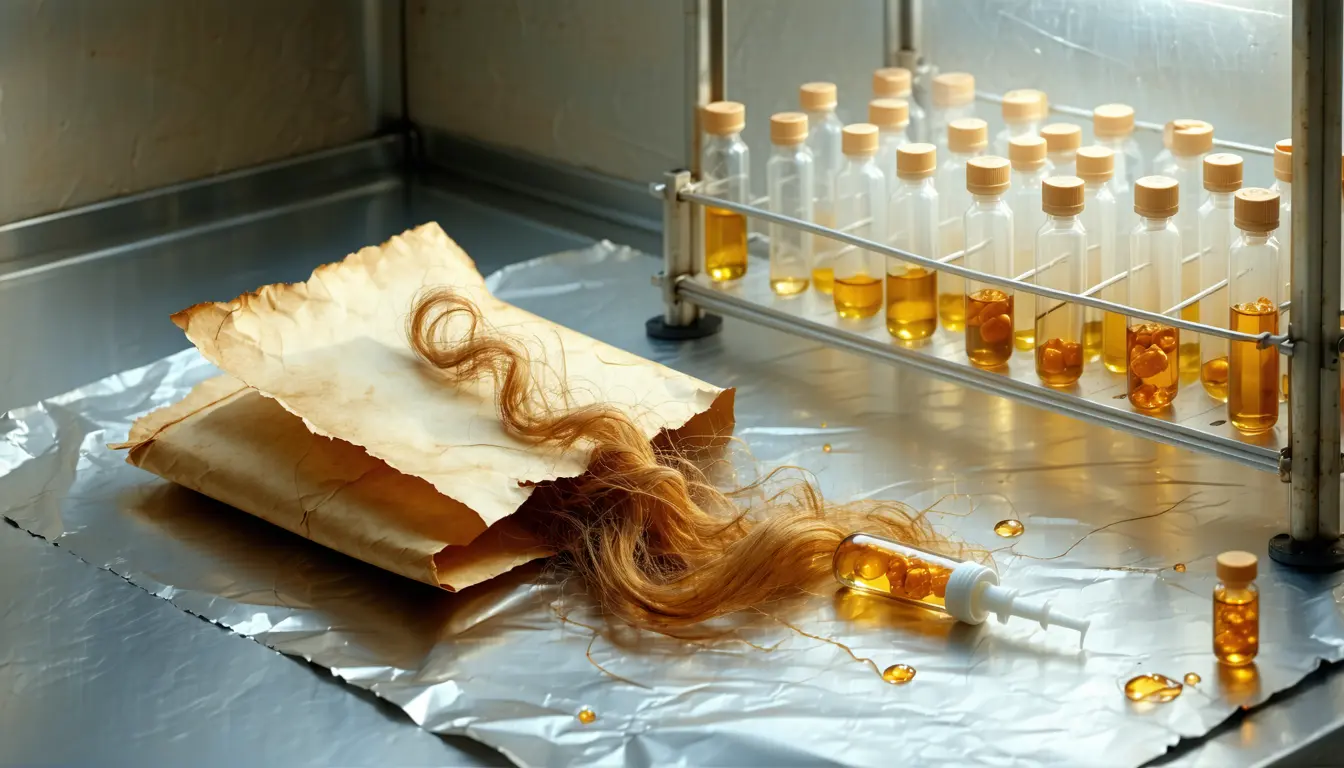
- One of the sequenced hair locks came from a Monticello packet annotated as cut by Jefferson's grandson-in-law, Nicholas P. Trist, just after Jefferson died on July 4, 1826.
- The team compared the hair DNA with saliva from 16 living members of the Jefferson and Hemings families, among them descendants of Sally Hemings's sons Eston and Madison.
- For those two sons the comparison weighed three possible fathers: Thomas Jefferson, his brother Randolph, or one of Randolph's own sons.
- The Thomas Jefferson Foundation says he is thought to have fathered at least six of Hemings's children after his wife, Martha, died in 1782, four of them surviving to adulthood.
Compiled by The ScientistSomething wrong?How this is made
Why it matters
- capability Reading the whole genome, not just the shared Y chromosome, can tell apart close male relatives who otherwise look identical on the paternal line.
- constraint That figure covers at least one of two sons, Eston and Madison. Descendants of Hemings's other recorded children, Beverly and Harriet, have not been located to test.
- contradiction Some of Jefferson's relatives had blamed his nephews Peter and Samuel Carr; the comparison instead favours Thomas over both his brother Randolph and Randolph's sons.
The 1998 test that reopened the case read only the Y chromosome, which a father passes to his sons almost unchanged. It matched a male-line descendant of Eston Hemings to the Jefferson paternal line, according to the Thomas Jefferson Heritage Society [7]. Every Jefferson man carries that chromosome, and about 25 adult male Jeffersons were living in Virginia at the time, several of them visitors to Monticello [8]. The match applied to the whole line. The researchers judged Thomas Jefferson the most plausible father, but the test could not settle it [8].
The new preprint works from the rest of the genome [3]. The hair samples all lacked follicles, but the researchers extracted, sequenced and analysed DNA from them anyway [9]. The three men in the comparison belong to the same Jefferson paternal line, so a Y-chromosome test cannot separate them; instead the authors searched for genomic segments that living Hemings and Jefferson descendants inherited from a common ancestor [3][12]. On that reading, Thomas Jefferson fits best, at about 99.96 percent for fathering at least one of Eston and Madison, ahead of the scenarios that name his brother or a nephew [3][12].
Historians had suspected the relationship for two centuries, and it drew heavy attention during Jefferson's first term and became one of the largest presidential scandals in American history [1][14]. Still, the principals left little on the record: Jefferson made no public or private comment, and Hemings left no known account of her own [5].
What to watch
- Whether the preprint clears peer review and where it is finally published.
- Whether researchers can locate living descendants of Beverly and Harriet to extend the test.
- How the Monticello foundation and the Jefferson Heritage Society respond to the whole-genome result.