Invest1 publisher3 min readPublished
Data centers lifted climate tech venture funding 55% to $26bn in the first half
Currence.ai counts $26bn of climate tech venture money in the first half of this year, 55% more than a year earlier, and the investors writing the cheques say data-center demand moved it while carbon management funding fell.
The Investor · Invest desk
What happened
- Climate tech finance tracker Currence.ai counted $26 billion of global climate tech venture investment in the first half of this year, 55% above the same period a year earlier.
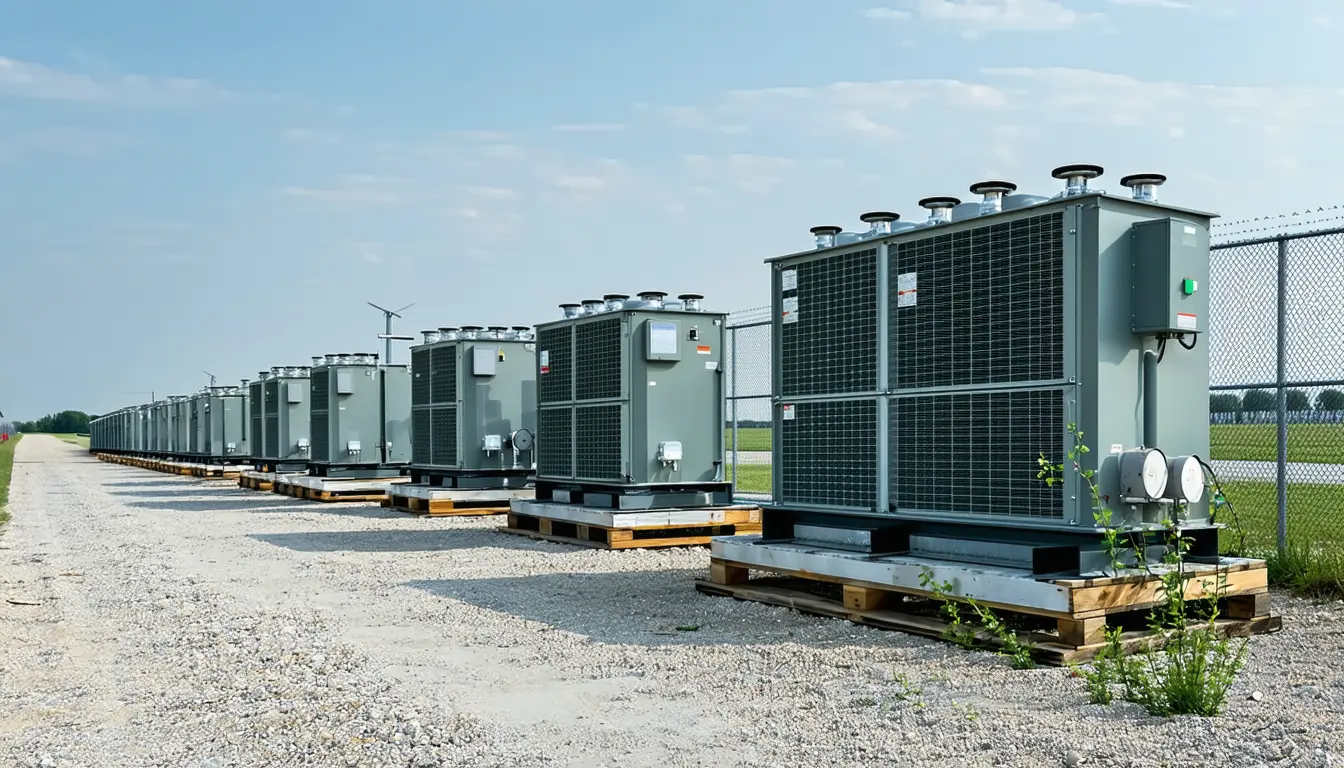
- Data centers and the products and services that help them run are in particularly high demand, with startups in that sector seeing both fundraising and valuations jump.
- Blue Energy, which builds low-cost modular components for advanced nuclear plants to cut data-center build times, has seen its pre-IPO valuation rise by orders of magnitude, its investor At One Ventures said.
- S2G Investments, whose energy practice sits in climate tech, backed Alliance North America, a maker of high-end low-emissions diesel generators used to power data centers more efficiently.
- Venture investment in carbon management technology and in low-carbon fuels both plummeted this year, according to the same tracker.
Compiled by The InvestorSomething wrong?How this is made
Why it matters
- exposure O'Sullivan's warning that the data center bubble might pop puts this year's marks on data-center order flow. If orders pause, the companies whose only committed customer is a data center get repriced by investors who arrived in the last six months.
- constraint Capital is being screened for a data-center customer, so emissions-relevant work without one competes for a shrinking pool; carbon management and low-carbon fuels are already on the wrong side of that screen.
- capability Cost pressure inside AI companies now pays for efficiency technology that policy used to fund. A founder can raise against a customer's cost curve with no subsidy behind the pitch.
- contradiction Semafor's Tim McDonnell says much, perhaps most, of the data-center energy money is going into conventional assets that are not necessarily climate-friendly, so the same buildout that lifted the clean tech tally is also funding its opposite.
Back out the growth rate and the base is small. $26bn at 55% above the year before implies about $16.8bn in the first half of last year, an increase of roughly $9.2bn in six months [1]. The composition moved more than the total. Currence.ai has carbon management and low-carbon fuels both down this year [3], so the categories attached to data-center load grew by more than the 55% headline [2].
What the marginal dollar buys has changed with it. Frank O'Sullivan, managing director for energy at S2G Investments, told Semafor that a technology facilitating fossil fuel consumption "doesn't seem like it would be in our bailiwick" [5]. But because of its use in powering data centers more efficiently, he said, "that has mushroomed into an enormous opportunity, and suddenly you're decarbonizing by stealth" relative to conventional generators [6]. The benchmark in that sentence is the generator a developer would otherwise have installed. O'Sullivan also said, "Venture capital sees the data center opportunity, and is focused on it" [7].
Tom Chi, founding partner of At One Ventures, said "It's a really weird moment because we're having a bunch of tourists come in" [10]. He described who is in the room: "We're investing alongside firms that have spent their entire history doing enterprise SaaS, and now they're sitting here trying to understand desiccants for cooling systems" [11]. Chi said that kind of valuation growth acts like a beacon to other non-energy investors, and that his companies' funding rounds are increasingly crowded [13]. He also said, "We're experiencing a very hot time for a bunch of the stuff we were already in" [9].
Chi named the failure mode too. Firms with less experience and less in-house engineering expertise can hold unrealistic expectations about the time, capital and skill a novel hard technology needs to reach scale and profitability compared with software. That, he said, could lead to disappointment and cutbacks [14]. Semafor adds that a more crowded field makes more mistakes likely, inflating the valuations of companies without a strong business model and creating conditions for spectacular failures [15].
I'd treat the $26bn as beta to data-center order flow, not as a repricing of decarbonization. The capital arrived after the Trump administration's pullback on climate policy left these startups at risk of being steamrolled [16]. O'Sullivan put the downside in one line: "The risk is that the driver of all of this ... might pop" [8]. Two other readings hold up. The buildout may carry some technologies across what Semafor calls the "valley of death" between pilot and commercial scale, leaving their costs lower after the orders slow [18]. Or the split inside the total is durable, and carbon management stays starved because no data center needs it [3]. The test that separates them is a later print from the same tracker: carbon management and low-carbon fuel funding recovering while data-center-linked rounds flatten would mean the revival was never about the buildout.
What to watch
- Currence.ai's next tally, and whether carbon management and low-carbon fuels stay down while data-center-adjacent categories keep growing.
- Whether Blue Energy's pre-IPO mark survives a listing or a slowdown in nuclear orders from data-center developers.
- Whether the enterprise SaaS funds Chi describes stay in hard-tech rounds through a second, lower-priced raise.