Science1 publisher3 min readPublished
Near-daily cannabis use tracked with more than double the convulsive seizures in a 64-patient epilepsy study
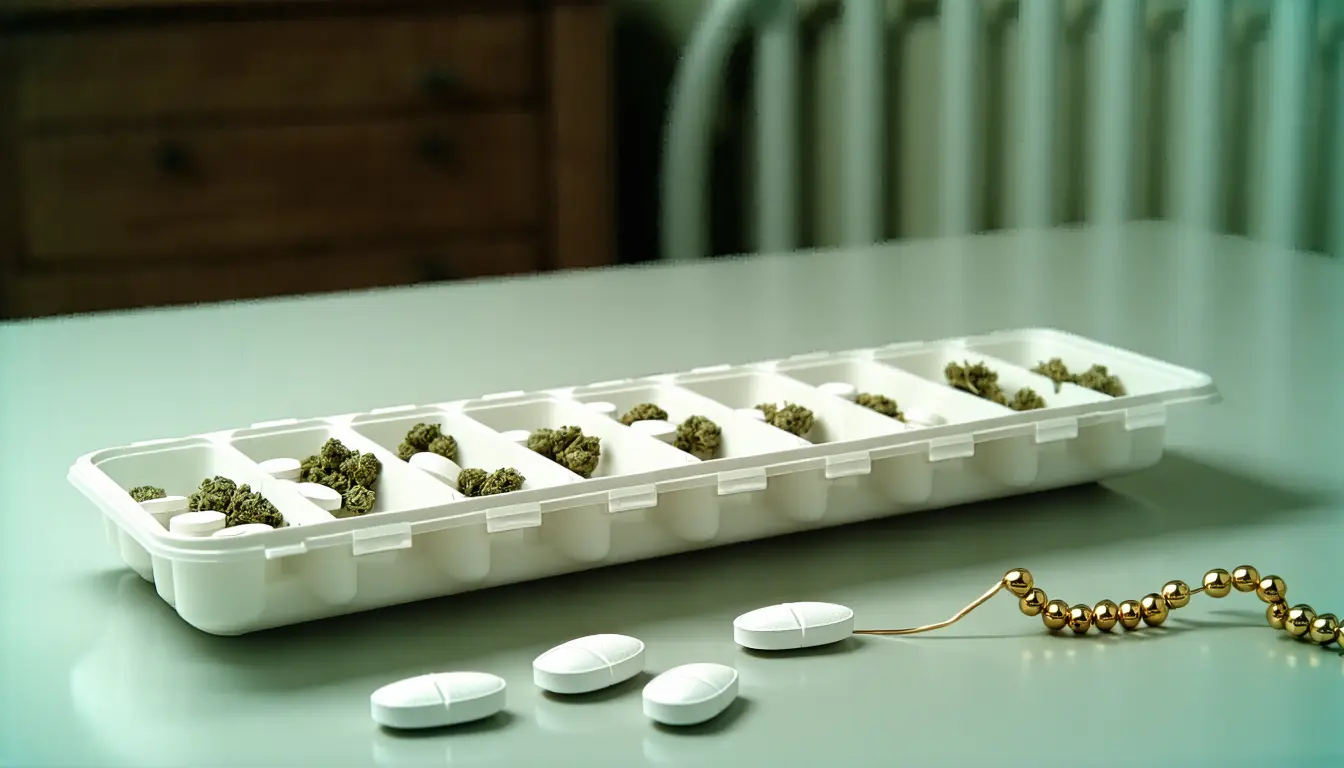
Washington University researchers found 22 near-daily cannabis users with drug-resistant epilepsy had more than twice the convulsive seizures of 42 nonusers. The chart review cannot prove cause, but it puts heavy THC use into the clinical history.
The Scientist · Science desk
What happened
- Frequent users reached a specialist inpatient monitoring unit an average of 5 years after their first seizure, while nonusers took 18 years.
- About 90% of frequent users had generalized tonic-clonic seizures, the type most tied to injury and sudden death in epilepsy, against about half of nonusers.
- Frequent users left hospital on more concurrent antiseizure drugs despite having lived with epilepsy for fewer years.
- The retrospective review, published in Epilepsia, drew on records of adults admitted to the monitoring unit between 2019 and 2024.
Compiled by The ScientistSomething wrong?How this is made
Why it matters
- constraint Because every patient had already reached a monitoring unit, the study can compare how fast patients progressed but cannot estimate how often near-daily users with epilepsy become drug-resistant.
- constraint Evidence for purified, THC-free CBD in childhood epilepsies cannot be used to reassure adults using THC products, since THC can be proconvulsant in preclinical models.
- decision Neurologists seeing adults with rapidly worsening seizures and no usual risk factors now have a reason to record how often, and how potent, their cannabis use is.
- exposure If the association holds, frequent users are overrepresented among patients with the seizure type most associated with injury and sudden unexpected death in epilepsy.
The frequent-user group in this study had 22 people [3]. At that size, a single patient moves the group's tonic-clonic share by about 4.5 percentage points [4]. Behind the tonic-clonic percentages [5] are roughly 20 frequent users and roughly 21 nonusers [3]. The proportions are still the right comparison. Each one, though, is built from about 20 patients.
Everyone in the sample had already reached drug resistance. The team reviewed records of adults admitted to an inpatient epilepsy monitoring unit [2], so the study compares how fast patients got there. Users whose seizures stayed controlled never entered it. The progression gap is 13 years [2], a ratio of about 3.6 [1]. The published summary does not report the two groups' ages. Age matters for this measure. The study's background describes young adults arriving with severe seizures and none of the usual risk factors [14]. If the users skew young, a five-year admission window would rarely include one with an 18-year seizure history.
A retrospective design also cannot fix the direction of the effect. Cannabis could worsen seizures. People with worse seizures could use more cannabis, or a third factor could drive both. The heavier medication load at discharge [7] fits each of those accounts.
The pattern first showed up in the clinic. "I was seeing patients with horrible seizures, really severe epilepsy, who didn't have any of the expected risk factors," said Aaron F. Struck, the senior author and an associate professor of neurology at WashU Medicine [9][11]. He added: "The one thing they had in common was frequent, high-potency cannabis use. It's an uncontrolled variable that was appearing more and more in my practice, and nobody had really studied it." [10] A chart review is a sensible first test of a clinician's impression, because it checks the pattern against records. The study defined frequent use by days, 20 or more a month [3], while Struck's description also names potency [10].
The imaging result is the one I would most like to see replicated. Epilepsy this severe typically leaves structural scarring on the hippocampus, yet the frequent users' structural scans were largely normal [8]. According to the WashU account, that points toward functional network disruption driven by cannabinoid receptors [8]. The pharmacology offers a route. In preclinical models THC, a partial agonist at the CB1 receptor, can be proconvulsant, while CBD is anticonvulsant [13]. The CBD the FDA approved for certain severe childhood-onset epilepsies is purified and contains no THC [12]. That approval does not extend to THC-containing recreational products.
I think the study supports one change in clinical practice: asking adults whose seizures worsen fast how often they use THC and how strong it is. It does not show that cannabis causes drug resistance, and with 22 users [3] it cannot put a size on the risk for anyone outside a monitoring unit.
What to watch
- A prospective study that records cannabis frequency and THC potency near seizure onset and follows patients forward, which could separate cause from reverse causation.
- Publication of age and other baseline characteristics for the 22 users and 42 nonusers, showing whether the 5-versus-18-year gap survives adjustment.
- Replication at other epilepsy monitoring units, including whether the largely normal structural scans in heavy users recur.