Product1 distinct publisher3 min readPublished
The tournament nearly doubled approved creators to close to 100, but by the USTA's own account the badges it revoked came off a food vendor's staff list, and the control that followed was a sign outside the stadiums.
The Product Desk · Product desk

product
The Higgsfield backlash is a disclosure problem, and it lands on the sponsor1 distinct publisher
product
Hochul defends a Meta teen settlement whose age checks land on every adult account1 distinct publisher
build
The FCC read HOVERAir's Versa by what it was built to do, not how it was boxed2 distinct publishers
product
Google's new Preferred Sources button hands publishers the recruiting job2 distinct publishers
Compiled by The Product DeskSomething wrong?How this is made
Somewhere in the credentialing workflow, a food vendor's staff list came in with two lifestyle influencers on it, and badges came out. That is the USTA's account of how Meg Radice and Audrey Jongens got into the US Open, according to spokesperson Brendan McIntyre, who said they "were improperly submitted for credentials on a staff list provided by a food vendor" [7][8]. It is also the part of the story that has nothing to do with the number everyone quoted.
The number is real. Jeanmarie Daly, the USTA's media operations director, said last month the tournament was "almost doubling" the creators it approved [3], and close to 100 turned up against 54 last year [4], an increase of 46 and roughly 1.85 times the prior figure [5]. What that count measures is the channel the USTA runs. McIntyre's account puts both the revoked pair and the people in the suite outside it: the USTA says the influencers who disrupted the Osaka match were not credentialed by the organization [6]. That distinction rests on the organizer's own statement, and nothing else in the record tests it.
Teams tend to assume the risk in a creator program is picking the wrong creators. The record shows something different. Revocation was triggered when Radice and Jongens posted images of their badges to Instagram [7], which is to say by the creators' own publishing rather than by anyone watching the stands. The live intervention came from the chair umpire, who paused play and repeatedly asked for quiet [1]. Other creators, meanwhile, were asking tournament staffers to take full-flash photos of them while Osaka and Zakharova were playing [2], so the staff nearest the problem were participating in it.
The rule that used to do this work is gone. Until a 2024 change, attendees had to stay in their seats until players switched ends; now they can get up whenever they like, and there are designated spaces near the courts where people move freely, which tournament director Stacey Allaster called "an important addition to the fan experience at the US Open" [11][12]. Fan-experience decisions and creator-access decisions were made about the same physical space by people optimizing different things. What arrived after the videos spread was signage asking spectators to "please refrain from using flash photography or other lighting" [10], alongside the etiquette reminders reporter Jessica Schiffer says brands sent their creators [9] -- a sign and a reminder, neither one an enforceable rule.
The money moving through this runs well past the scale of a request. The Verge puts US creator ad spend at $37 billion in 2025, projected to reach $44 billion by the end of this year [13], which is $7 billion more, about 19 percent [14].
The sort worth running on your own guest list has two axes: whether a person's access came through your program or a partner's list, and whether anyone on site can pull that access during the session rather than the next morning. Three of those four boxes are manageable. The fourth, partner-list access with next-morning revocation, is where the USTA's own account places Radice and Jongens, and it never shows up in the credential number an organizer reports.
Ranked by verification strength, evidence, and original report placement.
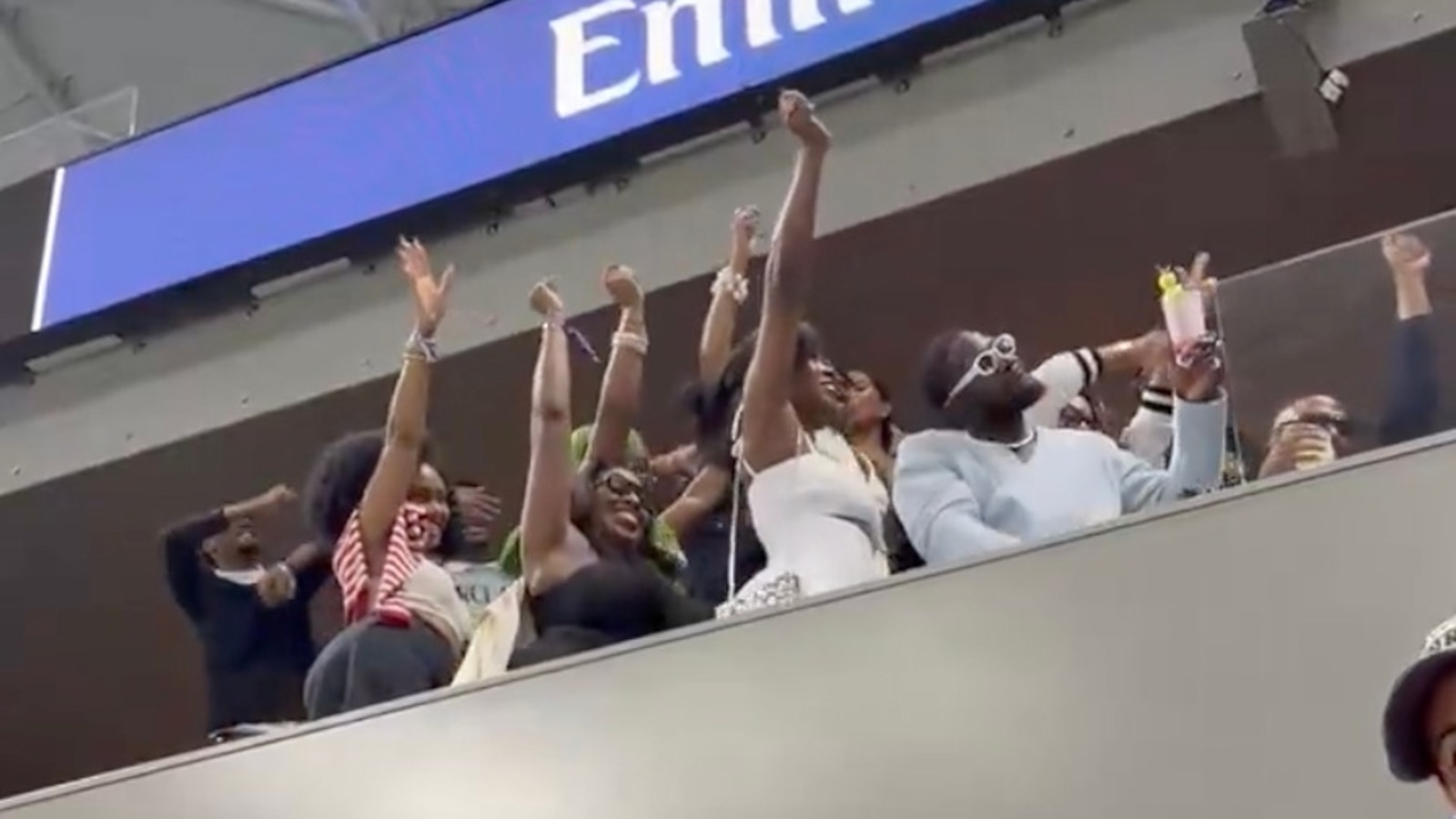
During Naomi Osaka's match against Anastasia Zakharova at this year's US Open, a group of ring light-wielding influencers packed into a luxury suite became enough of a distraction that the umpire paused the match and repeatedly asked them to quiet down.
Elsewhere at the USTA Billie Jean King National Tennis Center, other creators were seen asking US Open staffers to take full-flash photos of them while Osaka and Zakharova were playing.
USTA media operations director Jeanmarie Daly said last month that the US Open was "almost doubling" the number of content creators it was approving for credentials.
There were "close to 100" influencers at this year's US Open, up from 54 last year.
In a statement to ABC News, USTA spokesperson Brendan McIntyre said the influencers whose antics disrupted the Osaka and Zakharova match were not credentialed by the organization.
McIntyre told The Athletic that media credentials were not given to Meg Radice and Audrey Jongens, two lifestyle influencers whose access to the US Open was revoked after they posted images of their badges to Instagram.
Distinct publishers with included, body-backed reporting in this cluster.
1 article · September 5, 2026
Follow any of these and your For You feed starts watching them — no settings page required.
Evidence-backed comparisons of source perspectives and observed adoption signals. Read the methodology
Which Builder, Operator, and Investor concerns the observed source mix emphasized—not a truth score.
Evidence, demonstrated adoption, hype gap, incentives, and confidence are assessed independently, each on its own current evidence. How these are measured.
Named officials, one narrator
Three USTA figures are on the record by name and title, and the credential counts are specific enough that the association could be held to them. Everything else depends on The Verge's relay: the ABC News and Athletic statements are summarised rather than reproduced, the etiquette reminders come via another reporter with no brand attached, and the ad-spend figures have no research source behind them.
Creator access scaled on the record
What is genuinely measurable here is the accreditation programme: 54 approved creators last year, close to 100 this year, announced by the association itself. The venue rules moved the same way, with the 2024 end of enforced seating and the free-movement areas the tournament director endorses, so the presence of roaming content-makers at courtside is a deliberate operating choice with numbers behind it.
The big number and the incident are not joined
Our own framing, like The Verge's, sets the near-doubling of approved creators next to the suite that stopped play. The association says the people the umpire quieted carried none of its credentials, and the two badges it did pull came off a concessions vendor's staff list. The 54-to-100 figure is solid, but nothing in this reporting connects it to what happened during the Osaka match, and the $44 billion projection is asked to carry an inevitability argument it cannot support unsourced.
The only quoted party is the one being blamed
Every fact about who held a credential comes from a USTA spokesperson answering for a week of viral video, and in both cases the answer is that the offenders were somebody else's guests. The pre-tournament boast about doubling creator approvals came from the same organisation when the traffic was welcome. Brands, meanwhile, have an obvious reason to be seen circulating etiquette reminders, which is the form in which that detail reaches the story.
Verifiable edges, unverified middle
Credential counts, the new signage and the 2024 seating change can all be checked against the tournament's own records. The part that matters most cannot: how names on a food vendor's staff list became US Open badges, who invited the suite group, and whether the brands said to have sent etiquette notes actually did. One outlet, no responses from the people involved.