Product1 publisher3 min readPublished
Video outlasts every multitasking trick in a longtime foldable user's account of the iPhone Duo
Apple's foldable lands October 23 at $1,999. Fast Company's reviewer, several years into foldables, says tent mode and side-by-side apps get occasional use while video gets constant use, which is where layout work should land.
The Product Desk · Product desk
What happened
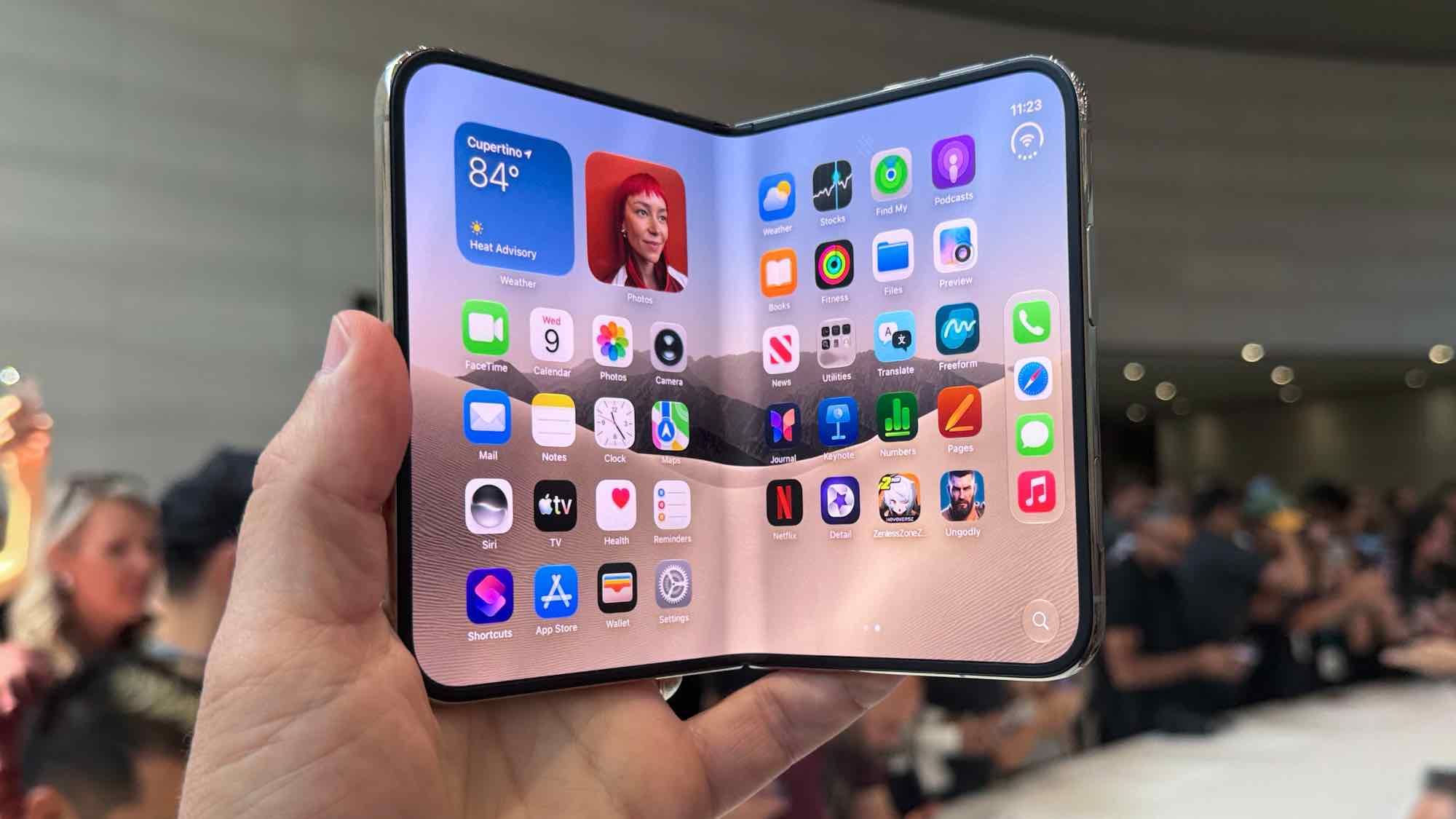
- Apple's foldable, the iPhone Duo, launches on October 23 at $1,999, folding to roughly passport size and opening to an inner display that resembles a small tablet.
- Apple's pitch covers running two apps side by side, propping the phone in tent mode for StandBy, and shooting selfies on the outer cameras with the cover display as a preview.
- Fast Company's reviewer, several years into foldables, says those features satisfy on the occasions he uses them but that he always gravitates back to watching video.
- Face ID would not fit within the confines of Apple's first foldable, so the Duo unlocks with Touch ID built into the power button along the side of the screen.
- Roughly 90% of people who have seen the reviewer's foldables ask whether the phone creases like a hardcover book with a separate page on each half of the inner screen.
Compiled by The Product DeskSomething wrong?How this is made
Why it matters
- decision A team with one sprint of foldable work has to pick between the multi-pane productivity story and the video-plus-companion state, and only the second has a stated habit behind it from someone who has lived with these devices.
- constraint One-handed use stays a compromise, and the side strip Apple added for menus and the dock does not remove the cross-screen reach, so every control parked on the far edge charges the user a regrip.
- exposure Flows written around passive face authentication meet a deliberate button press on this device, which gives any app that re-authenticates silently a new failure mode and new help copy to write.
- precedent Stakeholder requests for the book-page spread will keep arriving because it is the thing onlookers ask about, but a reviewer who says buyers drop it now gives teams a counterweight to cite.
The awkward finding for anyone planning foldable-only features sits in second place on Fast Company's list, and it is nothing in particular. A small tablet is simply more pleasant to hold than a phone: two hands, thumbs on the edges, more room to read, type and play games, with the tasks staying the same tasks done in a better posture [8]. The improvement comes from reflowing existing tasks into a better posture; no new feature required. Nobody has to invent a mode to capture it, and a team that spends a quarter inventing one is building for the launch video.
Where the fold does change the state, in the same account, it changes it around playback. Split-screen earns its keep when one pane holds the video and the other holds email or something to read, because the video pane stays a decent size [5]. The Duo's proportions and the Fold8's are both better suited to that than the taller book-shaped foldables of earlier years [6]. That is a hardware fact your layout inherits: the video-plus-companion arrangement has more usable room than it did on the devices most teams last tested against.
The two-page book spread fails for a measurable reason. Each half of the inner display is about the size of a regular phone screen, so the pages come out cramped, and the reviewer expects buyers to go back to a single page spanning the full inner display, closer to an iPad Mini or a Kindle [11]. Worth being clear about the class of evidence here: this is one practitioner's report after years of foldables and a month on Samsung's Fold8 [7], which makes it the best available read before October 23 rather than a measurement of what buyers do.
On unlock, the reviewer's own workaround is to enrol a left index finger alongside the right thumb, so the finger can wrap around the power button from either grip, and he notes a fingerprint reader works whether or not the user is looking straight at the screen [13].
The sorting tool has two axes: how often a user enters the state, and whether the state needs the fold at all. Frequent and fold-dependent is video on the inner screen with a legible second pane beside it, and that is the first build. Frequent and fold-independent is reading and typing, where the work is making the screens you already have reflow properly. Rare and fold-dependent is the book spread and the half-folded camera prop, which the reviewer points out has nowhere to sit except the ground [14]. Rare and fold-independent does not deserve a headcount.
This material covers what Apple showed and what living with a foldable is like, but stops short of stylus input on the Duo [17], so a plan that assumes an Apple Pencil on the inner display is ahead of the evidence. If only one layout state is right on launch day, make it the one where video fills the inner screen and the pane next to it stays readable [1][5].
What to watch
- Whether Apple's own post-launch marketing leads with video on the inner display or with two-app multitasking.
- Independent Duo reviews that report how often the two-page book layout survives past the first week.
- Whether Apple documents stylus input for the inner display, which this material does not mention at all.