Product1 publisher3 min readPublished
American Supercritical pitches up to 50% more output from turbines already in the ground
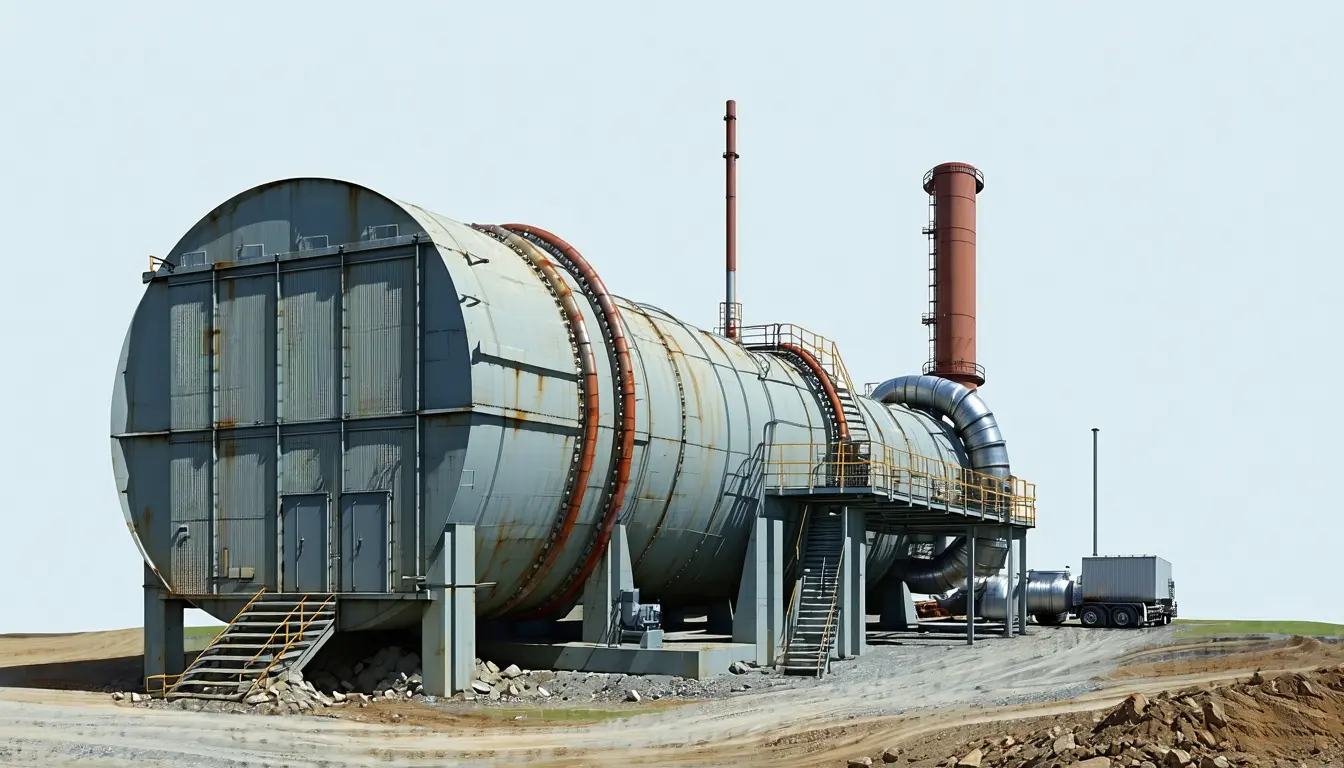
The Denver startup left stealth with $8 million and a factory-built supercritical CO2 block that sits at a simple-cycle turbine's exhaust. Its case to operators is that the turbine itself needs no permit work.
The Product Desk · Product desk
What happened
- American Supercritical left stealth with an $8 million pre-seed to sell factory-built supercritical CO2 power blocks that convert gas turbine exhaust heat into additional electricity.
- It puts the US simple-cycle turbine fleet it is targeting at roughly 140 GW, as electricity demand from data centers, manufacturing and electrification grows.
- The startup has opened a 25,000-square-foot Denver facility for testing and low-volume production, staffed with engineers who have worked at Sandia, Kairos Power, Echogen, Blue Origin and Southwest Research Institute.
Compiled by The Product DeskSomething wrong?How this is made
Why it matters
- decision An operator asked for more megawatts now has a third option beside buying a turbine and doing nothing: bolting a bottoming cycle onto a unit that is already permitted. The payback still tracks hours run.
- capability If the one-tenth footprint holds in the field, heat recovery becomes buildable at crowded peaker sites that could never accommodate a steam generator and second turbine.
- exposure Whoever hosts the first unit takes the schedule and commissioning risk of a company that has just closed its pre-seed and is running low-volume production out of one building.
- cost The 20 million tons is a fleet-wide total, so it only arrives if thousands of individually financed retrofits pencil out for their owners, at roughly 286,000 tons a year per added gigawatt.
The buyer here is a plant owner with simple-cycle turbines and a load-growth problem. Those units make electricity directly from hot combustion gases and release the remaining heat through the exhaust [4]. They go up quickly and give up efficiency against a combined-cycle plant [14]. Matt Carlson, co-founder and CTO, said: "Compressed timelines pushed operators toward simple cycle turbines. Wasting fuel was never the goal." [12]
The retrofit claim is narrow and specific. The block installs at the turbine exhaust, requires no modification to the turbine, and according to the company can be installed without re-permitting the turbine itself [2][6]. That claim has to hold at a particular site, in front of a particular air regulator.
American Supercritical puts the US simple-cycle fleet at roughly 140 GW [5]. Take its own upper bound of 50% at face value and full conversion adds about 70 GW [19]. The company also estimates that converting the existing fleet would avoid about 20 million tons of CO2 a year [11], which works out to roughly 286,000 tons per added gigawatt per year [20].
The company did not disclose a price, a first customer, or a date for a first installation. Its new Denver facility is 25,000 square feet and is described for testing and low-volume production [15], and the team includes engineers who have worked at Sandia National Laboratories, Kairos Power, Echogen, Blue Origin and Southwest Research Institute [16]. The $8 million pre-seed was led by Silent Ventures [17]. American Supercritical says the same platform could eventually recover heat from small modular reactors, geothermal plants, concentrated solar facilities and industrial processes [18]. Unit one still has to do its job at a turbine exhaust.
Sorting candidate sites takes two axes: hours run and space available. A bottoming cycle earns in proportion to the hours the turbine actually runs, so a peaker that fires a few times a summer will not pay for one regardless of whose equipment goes in. Space is where sCO2 differs from the steam alternative. CO2 held above its critical temperature and pressure is dense enough that turbines and heat exchangers can be considerably more compact than steam-cycle equipment [8], and the company says its system occupies about one-tenth the space of a steam system [9]. That footprint makes recovery practical at sites where conventional steam gear would be hard to fit.
High hours and a crowded site is where an owner would consider this. High hours plus room to build is where the owner should price a conventional steam bottoming cycle, which does the same job by raising steam for a second turbine [7], against a pre-seed company's first machine. Simon Shuham, co-founder and CEO, said: "Our sCO2 power block converts any gas turbine into a combined cycle plant. We upgrade turbines running today instead of replacing them." [10] The output figure in the company's own material is stated as up to 50%, with no additional fuel burned [3].
What to watch
- A named host site with measured output gain on a running turbine.
- Whether a permitting authority agrees that adding a bottoming cycle leaves the turbine's existing permit untouched.
- Any order book or follow-on round that moves the Denver site past low-volume production.