Product1 publisher3 min readPublished
China's security minister names two US model versions in a state cyberspace journal
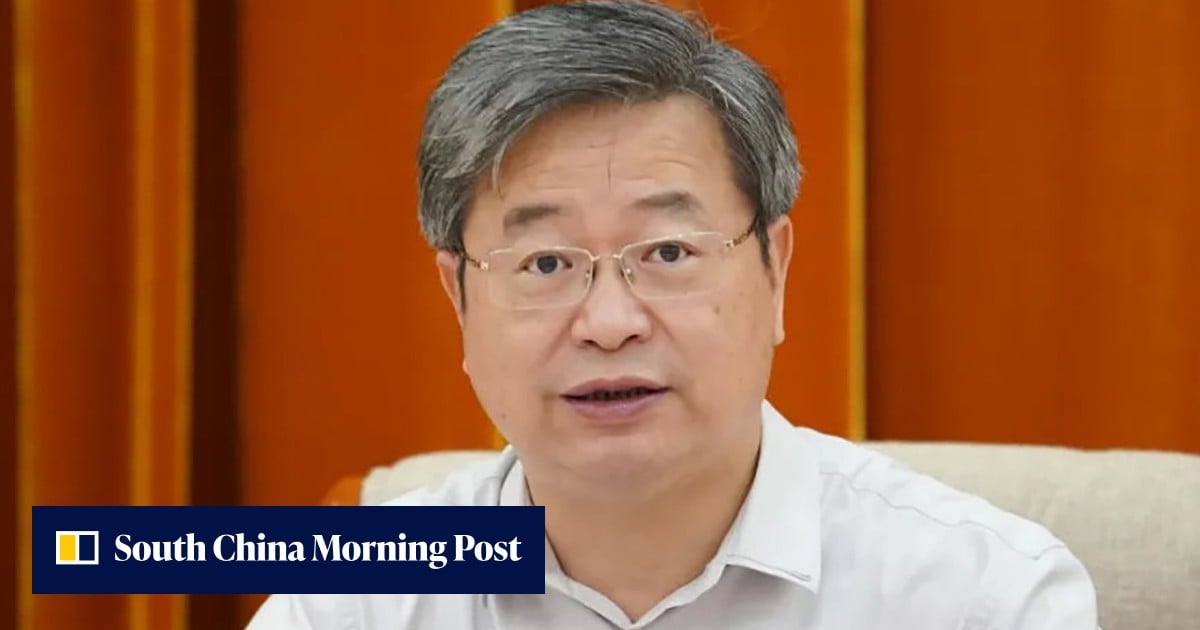
Chen Yixin's signed article calls Claude Mythos and GPT-5.5-Cyber a serious risk to China's critical information infrastructure. It cites no incident, and only one of the two is sold to customers at all.
The Product Desk · Product desk
What happened
- China's minister of state security, Chen Yixin, named Claude Mythos and GPT-5.5-Cyber in a signed article, with both model names given in Chinese and in English and glossed as "myth" and "cyber".
- The passage says the two models mark a point at which AI is markedly raising the efficiency and weaponisation of vulnerability discovery and malware development, bringing serious risk to critical information infrastructure.
- It ran in China Cyberspace, the journal of the Cyberspace Administration of China, which published the piece through its WeChat account on 13 September.
- Chen points to no attack on a Chinese target and no incident involving either model; the two names appear in the text as a marker of capability.
Compiled by The Product DeskSomething wrong?How this is made
Why it matters
- contradiction Beijing treats the two model families as a threat to denounce while the European Commission's cybersecurity agency is testing models from the same two vendors, so a multinational security team is reading opposite signals from two authorities it answers to.
- precedent Chen's request for a national prevention and control system sets up version-level naming as the way a future Chinese instrument could scope AI controls, and version strings are replaced faster than rules are rewritten.
- decision Only one of the two named models is on sale, so the live decision for a China-facing team is narrow: whether to keep a GPT-5.5-Cyber seat pointed at systems in China with a state journal citation sitting in the file.
Chen's article gives a security team with staff in Shanghai and a paid seat on a security-specific model nothing to file, and one new line for the risk register. Anthropic released Mythos as its strongest model and has said it will hand what the model finds to defenders while withholding the model itself [9]. OpenAI sells GPT-5.5-Cyber as a security-specific model, and both companies market the capability Chen describes as a defensive one [10].
The names in Chen's text are version strings, and they are not the strings other regulators are working with: the European Commission said last week that its cybersecurity agency is testing Mythos 5 and GPT-6 Astra [12], while Chen's text names Mythos and GPT-5.5-Cyber [3]. A control scoped to the string "Claude Mythos" would need reissuing at every release. What survives a release is the capability description, which Chen puts as industrialised vulnerabilities, fully automated attack and defence, and AI against AI, and he writes that AI has sharply lowered both the technical threshold and the cost of mounting an attack [6].
That claim is partly measurable. TNW reported in July, using VulnCheck's data, that AI is finding roughly twice as many software flaws as before, and that almost none of those flaws were then exploited in the wild [11]. Twice the discoveries with an exploited count near zero means the exploited share of discovered flaws went down [2].
Cyber is second on a list of six risks, behind a systemic effect on the political security environment [5]. Under that first heading Chen writes that hostile forces manufacture political rumours cheaply and at volume, using synthetic audio and video, AI-generated images and text, and what he calls "intelligent online armies" [17]. His third risk is data: Chinese users of AI services and foreign intelligence agencies alike could come away with national data, trade secrets or citizens' personal information [14]. The piece runs under his two titles, party secretary and minister of the Ministry of State Security [1], and Taiwan's United Daily News reported the model names out of the Chinese text [13].
Beijing has held this worry longer than it has published it. TNW reported in August that China champions open AI in public while worrying privately about one closed American model [16]. The article also landed two days after the commerce ministry called Dario Amodei's export-control essay proof of American technological hegemony, with a Global Times commentary describing a Cold War script [15].
Two things decide whether any of this changes a deployment plan: an obligation you can point to, meaning a rule number, a licence condition or a named prohibited use, and a vendor that ships you the named version. Anthropic withholds Mythos [9], and nothing published so far supplies the obligation. For GPT-5.5-Cyber the seat is buyable [10] and the cost is political, so the work this week is writing down who decides whether to keep it if a Chinese instrument ever quotes the string.
What to watch
- Whether the two model names reappear in a CAC or ministry instrument with a rule number attached instead of in signed commentary.
- Any change to Anthropic's arrangement of withholding Mythos while passing its findings to defenders, which would put the named model in customer hands.
- Whether the exploited share moves in VulnCheck's data, since the doubling in AI-assisted flaw discovery has not shown up as flaws exploited in the wild.