Leadership1 publisher2 min readPublished
China's state security minister puts regime security first on Beijing's list of six AI risks
Chen Yixin's article in the internet regulator's own journal ranks political rumors and cognitive warfare ahead of infrastructure and data as AI dangers. It also asks Beijing to build a risk prevention and control system faster.
The Board Room · Leadership desk
What happened
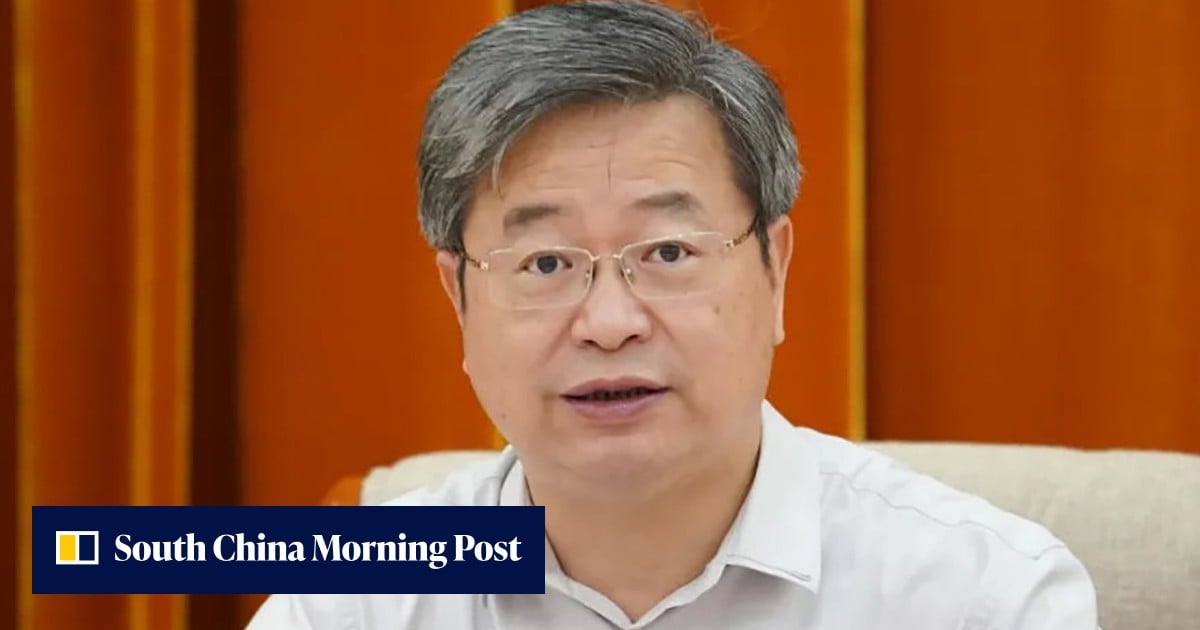
- Chen Yixin, China's minister of state security, published an article on Sunday morning in China Cyberspace, a journal run by the Cyberspace Administration of China, the country's internet regulator.
- The article sets out six major AI risks to Beijing and places regime security first, ahead of every technical or economic danger on the list.
- The other five risks are attacks on critical infrastructure, large-scale data leaks, monopolies and closed technological systems, disruption of social governance, and AI-powered precision targeting in war.
- Chen called on China to accelerate construction of a security risk prevention and control system and to promote the "healthy and orderly development" of AI through high-efficiency governance.
Compiled by The Board RoomSomething wrong?How this is made
Why it matters
- constraint A vendor serving Chinese users has to pass a test about the political effect of model outputs, and evaluations built around capability misuse do not answer it. The review is separate and separately staffed.
- exposure Foreign operators' logs and cross-border transfers sit inside the leak category the ministry says it is guarding, so approval decisions turn on intelligence risk as much as on privacy compliance.
- precedent Officials drafting the next round of AI measures now have a published priority order from the security ministry to cite, which makes information controls the likely first deliverable and capability limits the later one.
- decision A firm with deployments in China and in the US now chooses between one AI safety programme and two, because the risk being named in Beijing and the risk the US lab chiefs spent the weekend on are not the same object.
Only one position in the list is fixed. Business Insider's account gives an ordinal for regime security and introduces the other five risks with the word "including", without ranking them [16]. Infrastructure, data leakage and technological dependence are all in the list, and the account does not say which of them Chen put second.
The item in the top position describes what models put out. Chen wrote that hostile forces and malicious individuals abuse generative AI, including deepfake audio and video, AI-generated images and text, and "intelligent online armies", to produce political rumors at low cost and in large quantities [3]. Those tools, he said, can "spread harmful information, incite antagonistic emotions, and wage a war of public opinion and cognitive warfare", which he described as direct threats to China's political, institutional and ideological security [4].
One item points at foreign operators directly. Chen grouped large-scale data leaks with foreign intelligence agencies obtaining critical national data, trade secrets or citizens' personal information [7]. The infrastructure item, in Business Insider's summary, rests on how efficiently cyberattacks can be run given the power of models like Mythos [6].
Business Insider characterized Chen's call for strong "developmental guidelines" as essentially more government control of AI development [8]. Chen also said AI should be developed "with the wellbeing of all humanity as its guiding principle" [10].
The outward-facing half of the article asks for less control elsewhere. Chen said global powers must "resolutely resist hegemonism, technological barriers, and exclusive blocs" and work to set up a "fair and open international AI rules system" [11]. Xi Jinping, at the BRICS summit in New Delhi, said: "We should take a people-centered approach, develop AI for the positive and for good, and work faster to evolve a consensus-based global AI governance framework, so that new technologies can light the way toward shared prosperity" [12]. Chen's article and Xi's remarks came the same day [15].
The text establishes the priority order the ministry is willing to publish. The article does not say whether measures will follow in that order [2].
The American version of this argument, over the same weekend, was about a different object. Dario Amodei, Sam Altman and Elon Musk all backed calls to slow the pace of frontier AI development [13], after Anthropic researcher Jacob Coxon quit the company saying that it and OpenAI are "gambling with our lives" [14]. Chen's first risk is what people do with model outputs. A firm operating on both sides is answering to two definitions of AI safety, and only one of them is satisfied by evaluations of what a model can do.
What to watch
- Whether the Cyberspace Administration of China issues measures that follow Chen's ordering, and whether regime security appears as a named category in the text.
- Whether the "fair and open international AI rules system" language turns into a specific Chinese proposal at a multilateral body, and what it asks of foreign model providers.
- Whether cross-border data transfer review is folded into the security risk prevention and control system Chen described.