Invest1 distinct publisher3 min readPublished
Bank of America ranks the gas station chain fifth in American pizza on a yardstick that also counts fountain drinks, which makes the real asset nearly 3,000 sites, half of them in towns of 5,000 people or fewer.
The Investor · Invest desk

Compiled by The InvestorSomething wrong?How this is made
Each of those stores carries roughly $9.3 million of market capitalization [1], and about 1,500 of them stand in towns of 5,000 people or fewer [6], which is a rich price for parking lots in places no national brand ever underwrote. It is also where the argument thins, because the Fortune account gives no prepared-food gross margin and no attachment rate [7], so the proposition that food is the profitable end of a fuel retailer rests on a league table rather than on a segment P&L.
That table is worth reading closely. Bank of America's ranking runs on prepared food and dispensed beverage sales [1], and the second half of that phrase is, by the plain sense of the words, not pizza; the fountain drink and the morning coffee land on the same line. That does not make the rank wrong, it makes it a measure of a store rather than of a pizza chain, which is the more interesting version of the claim anyway. Pizza has been on the menu since 1984 [15], and the estate was assembled town by town from a converted service station in Boone, Iowa, in 1968, on Donald Lamberti's stated theory that it would probably work in the next small town, in places other brands were not looking to develop [16].
The wings show the growth math plainly. Sauced Wings went from a January 2025 pilot to almost 900 stores, with the remainder of the chain scheduled over the following two years [7]. The report postdates a January 2026 piece on pizza demand [9], so at least twelve months had elapsed, which caps the pace achieved so far at about 75 stores a month [2]; the remaining 2,100 stores inside twenty-four months needs roughly 88 [3], at least 17% above the fastest rate the rollout can have managed [4]. The rollout will have to move faster than it has moved so far.
Attention is not what Casey's is buying. The 600 basis point gain in Gen Z engagement over three years [13] came out of a creator genre about gas-station pizza that the chief merchandising officer says he welcomes [14], distribution the company neither pays for nor schedules, and cannot replace on demand when the algorithm moves on.
This is probably wrong, but the rerating looks like a property repricing rather than a brand repricing: the twelve-month gain implies roughly $18.7 billion a year ago and about $9.3 billion of value added since [5], against an asset base whose scarcity is planning permission across 19 states [4]. There are three places it could break. Restate the Bank of America rank on pizza-only revenue and fifth place may not survive [1]; the wings schedule slips and comparable sales lose their item engine [4]; or the rural traffic that fills the ovens tracks fuel volumes, which nothing disclosed here measures [7].
Ranked by verification strength, evidence, and original report placement.
Bank of America Research concluded that Casey's pizza business ranks as the fifth-largest pizza chain in the entire US when measured by prepared food and dispensed beverage sales.
Tom Brennan, Casey's chief merchandising officer, confirmed to Fortune that the company is the fifth-largest pizza chain, the fourth-largest liquor license holder and the third-largest convenience store operator in the US.
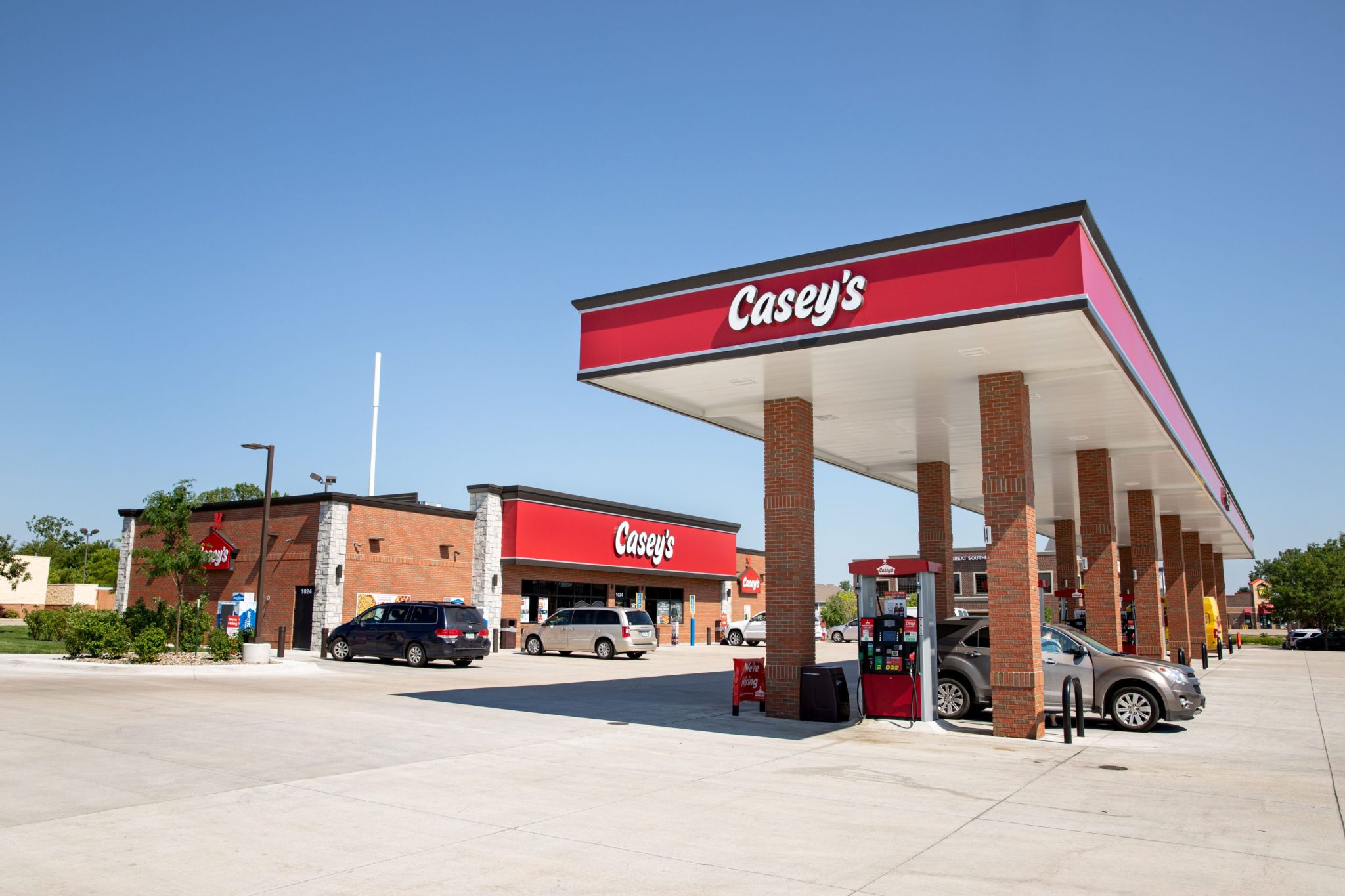
Casey's is closing in on 3,000 stores, nearly half of which sit in towns of 5,000 people or fewer and about two-thirds in towns under 20,000.
Casey's stock is up more than 50% in the past 12 months, for a market capitalization of $28 billion; it is a Fortune 500 company.
Casey's Sauced Wings began as a pilot in January 2025 and have grown to almost 900 stores, with a gradual rollout across the chain over the next two years.
Distinct publishers with included, body-backed reporting in this cluster.
Follow any of these and your For You feed starts watching them — no settings page required.
product
PayPal stopped saying no. Payments teams should now plan for a Stripe-owned checkout rail3 distinct publishers
invest
Tiny corp wants Etched's numbers. Jane Street led $700M at $21B without publishing any1 distinct publisher
invest
Druckenmiller calls his protege's doubled Treasury buybacks price management, not liquidity1 distinct publisher
invest
A US brigade took counter-drone gear to Combined Resolve and was wiped out anyway1 distinct publisher
Evidence-backed comparisons of source perspectives and observed adoption signals. Read the methodology
Which Builder, Operator, and Investor concerns the observed source mix emphasized—not a truth score.
Evidence, demonstrated adoption, hype gap, incentives, and confidence are assessed independently, each on its own current evidence. How these are measured.
One newsroom, one executive, one note nobody can read
Fortune's interview with Casey's chief merchandising officer is doing almost all the work, propped up by a Bank of America ranking that is described but never published. The checkable parts hold — store count, states, market capitalization, Fortune 500 status. The parts that decide the argument do not: the fifth-place finish rests on an unseen research note, the 'competitive rating' behind the half-of-stores-without-a-rival figure is a company definition kept in-house, and the 5% prepared-food price increase is Casey's own arithmetic against a public inflation series.
The stores and the wings are countable
Physical facts are the sturdiest thing here. Nearly 3,000 sites in 19 states, roughly 1,500 of them in towns of 5,000 or fewer, and wings already frying in almost 900 stores are hard to stage for an interview. The demand side is softer: Gen Z 'penetration' up 600 basis points is Casey's own social team scoring engagement, a metric with no stated denominator, and the reporting offers no traffic or comparable-store figure to sit beside it.
Fifth place, fountain drinks included
Fortune states the yardstick honestly — prepared food and dispensed beverage sales — and then spends the rest of the piece calling Casey's the fifth-largest pizza chain, which lets slushies and coffee help seat it above chains that sell only pizza. Layer on a quick-service pizza category that went negative in 2025 and a 'taking share' line with no share number, and the framing runs ahead of the proof. The overstatement is not uniform, though: the same reporting undersells its own best figure, since at roughly $9.3 million of market value per store the market has already priced the moat this story presents as undiscovered.
Everyone in the frame gains from this retelling
A chief merchandising officer got to define his own competitive set in the middle of a 50% run in the stock. Bank of America's research desk supplied the ranking that made the run narratable. Fortune got a Fortune 500 stealth-empire story with taco pizza in it, and Casey's got free reinforcement of a creator genre it says it welcomes. None of that makes the numbers false, but no participant here had any reason to argue for a stricter yardstick.
Internally consistent, externally untested
The arithmetic hangs together and the public facts are the kind a single outlet rarely botches. What holds this in the middle is the shape of the reporting: one publisher, three secondhand outside references, and a picture of the economics that stops just short of decisive. Bank of America's 58% prepared-food gross margin against a 23.5% company margin does appear — that much is on the page — but attachment rate, fuel gallons and same-store sales do not, and those are the numbers that would separate a moat from a good twelve months.