Science1 publisher2 min readPublished
Bionic Reading shifts where 90 readers first look while leaving their reading speed unchanged
UCL researchers tracked 90 skilled adult readers and found Bionic Reading's bolded word starts moved their eyes but did not make them read faster. That leaves the speed claim unsupported for fluent adults, while readers with dyslexia and long-term use fell outside the test.
The Scientist · Science desk
What happened
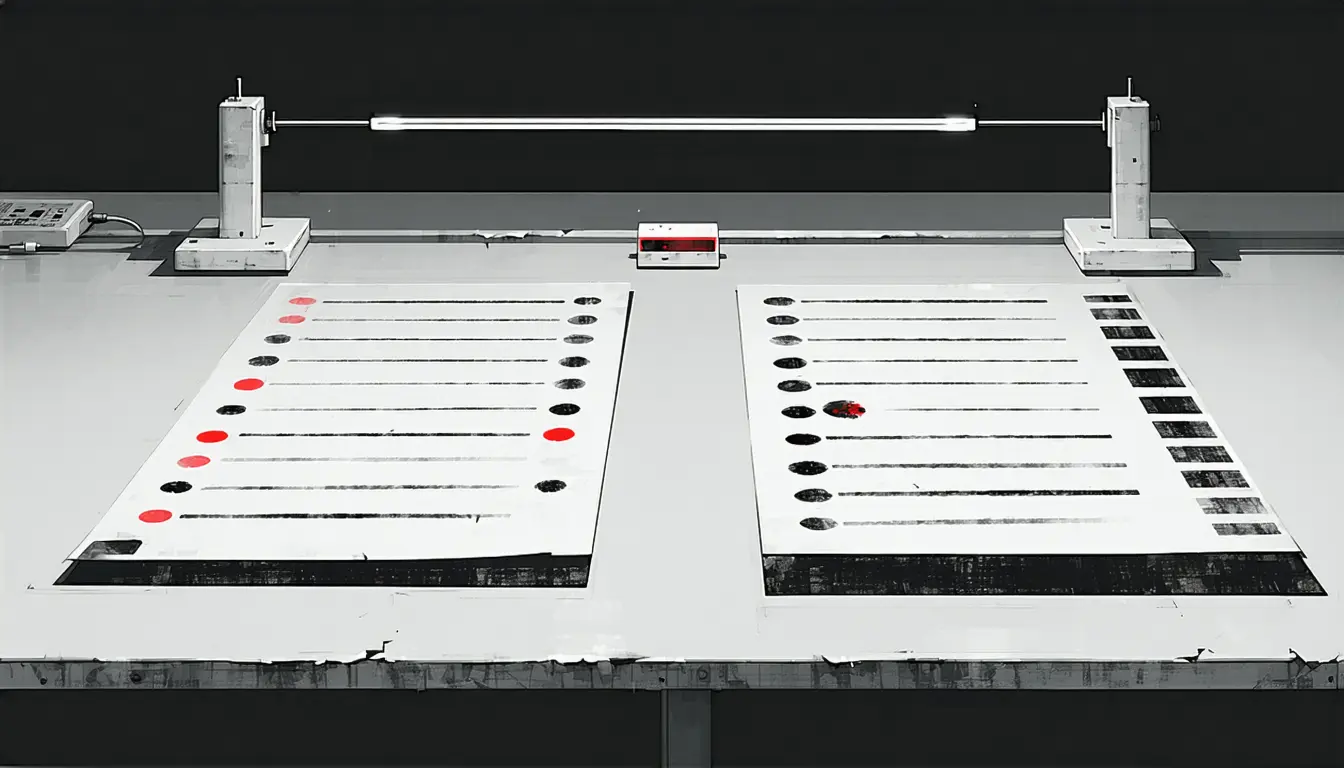
- Readers saw target words in plain type, with roughly the first half bolded, or with the same number of letters bolded around the middle.
- Bolded beginnings pulled readers' first glance toward the start of eight-letter words more than they did for four-letter words.
- Bolding word beginnings produced no reliable change in how often readers skipped the target words.
- Asked afterwards, 43 readers rated plain text most readable, 31 preferred bolded beginnings and 16 preferred bolded middles.
- An earlier eye-tracking study, published in 2025 in Attention, Perception, & Psychophysics, found bolded word beginnings hindered reading.
Compiled by The ScientistSomething wrong?How this is made
Why it matters
- decision Anyone selling bolding to fluent adults as a way to read faster is arguing against two eye-tracking studies, one showing no gain and one showing a slowdown.
- decision Roughly half the readers liked a bolded format best, so it suits an optional comfort setting; satisfaction scores cannot stand in for a measured speed gain.
- constraint Any remaining case for the format concerns readers with dyslexia and long-term practice, neither of which this test covered, so claims there need their own trials.
The study splits the Bionic Reading pitch in two. The format bolds certain letters on the theory that steering the eyes to a word's first letters lets the brain complete the word, and it is promoted as an aid to reading speed and comprehension [2]. Adam J. Parker and colleagues at University College London tested the two parts separately. They asked whether bolding changes where readers look, and whether it helps them process what they see [3][20].
The middle-bolding format is the control [6]. If bold type helps only because it catches the eye, bolding the middle of a word should help as much as bolding its start. If beginnings are special, only the first-half format should show a gain. Target words came in matched pairs of four and eight letters that could fill the same slot in a sentence, such as "doll" or "princess" [8]. That let the team compare short and long words inside the same sentence frame.
An eye tracker logged where the eyes first landed in each word, how long they stayed there including return visits, and whether the word was skipped [9]. The 90 readers, aged 18 to 40, each read 90 sentences [4][5], about 8,100 sentence readings in total [1]. Only the landing position responded to bold type [10][11][12]. I think the null result on reading time tells us something, because the same measures did pick up word length: eight-letter words took longer and were skipped less often [13].
Comprehension is less settled. Readers answered about 95% of the true-or-false questions correctly [7][14]. With scores that high, a helpful format had only a few points to gain. The team found no reliable comprehension benefit from bolding, and some comparisons were inconclusive [14].
The preference counts add up to the full sample. Of the 90 readers, 47, about 52%, rated one of the bolded formats as the most readable [2]. The study as reported does not break reading times down by which format a reader preferred.
Taken together with the 2025 study, the evidence for skilled adult readers is one null result on speed and one finding of slower reading [11][19]. The limits are specific. The team used one font, Courier New, and one bolding scheme. It did not test the Bionic Reading platform's personalized settings or the effect of prolonged practice [5][17]. Readers with dyslexia or other reading difficulties were not in the sample, and the findings cannot be extended to them [18].
What to watch
- A trial with readers who have dyslexia or other reading difficulties, the group this sample excluded.
- Studies of prolonged practice, other fonts, or the platform's personalized bolding settings, none of which the UCL team tested.
- A comprehension test hard enough that scores sit well below 95%, so any bolding effect on understanding has room to show.