Product5 publishers3 min readPublished Updated
California's No Robo Bosses Act makes HR reviewers bring their own evidence before an AI-backed firing
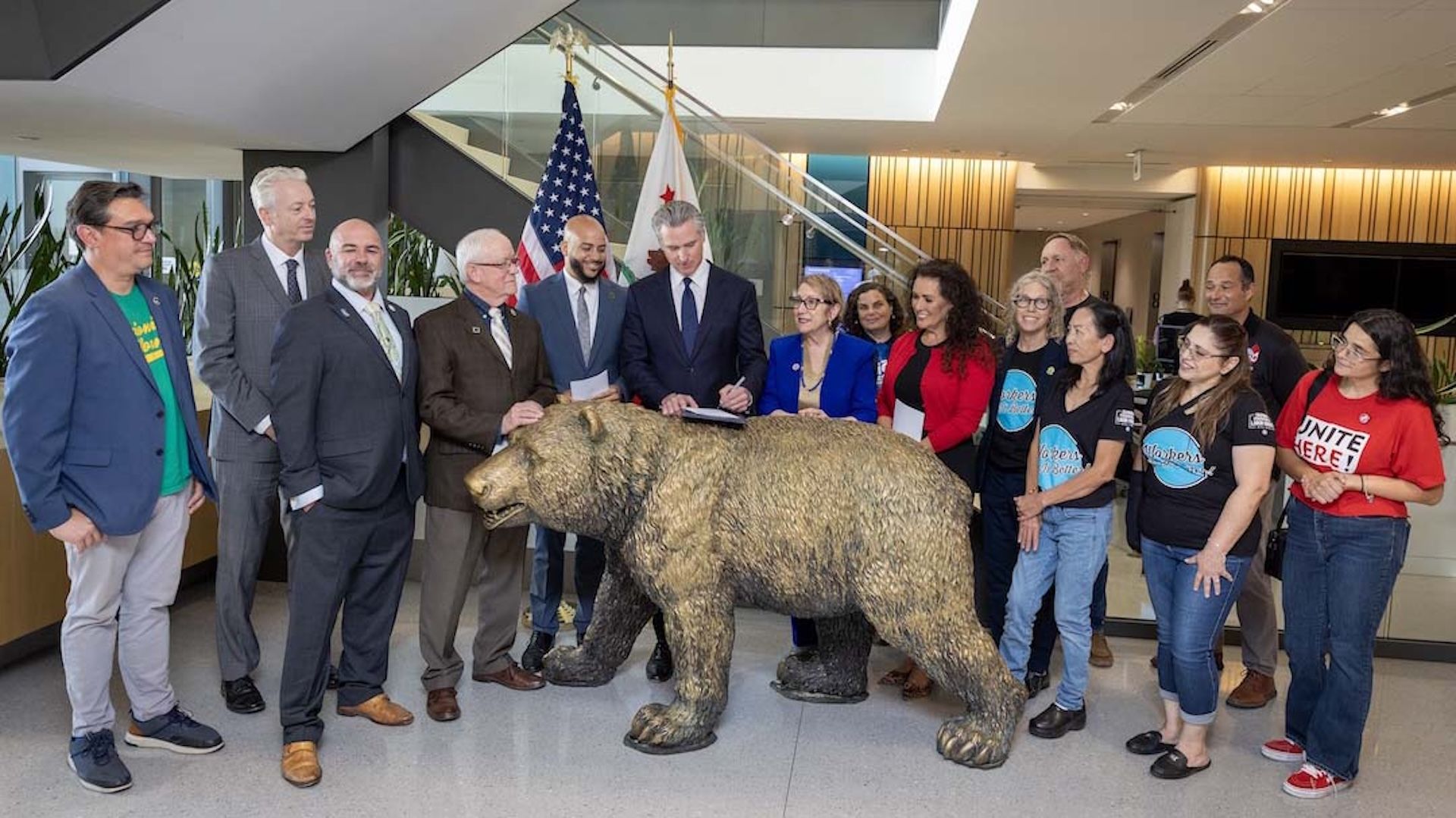
Gavin Newsom signed California's No Robo Bosses Act, barring employers from relying solely on AI to fire or discipline workers starting July 2027. HR teams have about nine months to turn a sign-off click into a review backed by evidence the software did not generate.
The Product Desk · Product desk
Drafted by a language model from the sources cited here and checked against its claim ledger before publication. How we use AISend a correction
What happened
- When an employer mainly relies on an automated system, a human reviewer must corroborate the decision using other information such as manager evaluations or peer reviews.
- According to TechRadar, the reviewer cannot simply approve the system's output and has to provide evidence of their own.
- Newsom signed 12 other bills alongside it, covering AI-driven layoffs, workplace surveillance, deepfakes, medical AI and lawyers' use of the technology.
- The signing came a day after a September 29 White House lunch where AI companies signed voluntary safety standards without any legal enforcement mechanism.
Compiled by The Product DeskSomething wrong?How this is made
Why it matters
- constraint A one-click approval on an AI recommendation stops meeting California law in July 2027, so discipline workflows built around a sign-off button need a separate evidence step.
- cost Every AI-flagged firing or discipline case will take reviewer time to gather manager or peer input, and that time comes out of HR and line managers' weeks.
- decision Employers have to classify each workflow by whether the system is the main basis for the outcome, because that classification decides whether the corroboration rule applies.
Take an HR team whose discipline step today is a flagged case from a monitoring tool and an Approve button. From July 1, 2027, a click on that button is the thing SB 947 says does not count [2][3][5]. The reviewer has to arrive with material the system did not produce. Gizmodo's examples are manager evaluations and peer reviews [4].
Teams that run automated decision systems can tell themselves a human is in the loop because a person signs every case. The law, as both outlets describe it, separates signing from corroborating, and only corroborating meets the bar [4][5]. The state's labor federation backed it on those terms. "By signing these four first-in-the-nation bills, Governor Newsom has shown the country how we can begin to put guardrails on AI at work to ensure human oversight over this technology, limit surveillance, and put workers first," said Lorena Gonzalez, president of the California Federation of Labor Unions, AFL-CIO [8].
The duty turns on how heavily the employer leans on the system. The law bars relying on an automated system solely, and the corroboration requirement applies when the employer mainly relies on one [1][4]. The coverage does not define "mainly," and it does not describe a requirement to keep records of the review. I'd expect employers to file the corroborating evidence with each case anyway, since a review nobody wrote down is hard to show later, though on the reported text that is a practice choice.
Teams have time. Newsom signed the bill on September 30, 2026, about nine months before it takes effect [3][1].
He pitched the package as a state answer to Washington. "We are deeply mindful we have to do a lot more in the absence of federal leadership," Newsom said [9].
To sort the rebuild, put each firing or discipline workflow on two axes: whether the system's output mainly determines the outcome, and whether the reviewer brings evidence the system did not generate. A system that decides plus a reviewer who adds nothing is the case the law was written for, and it needs a new review step before July 2027 [4][5]. Swap in a reviewer who pulls manager evaluations or peer reviews and the same workflow matches the corroboration the law describes [4]. Workflows where people decide from their own evidence, with the system only informing them, carry less exposure. Check the advisory tool with a rubber-stamp reviewer hardest, because a reviewer who adds nothing can turn an advisory score into the main basis of the decision.
My recommendation is to require independent evidence at the review step everywhere AI touches discipline. The cost is reviewer time on every case, plus some of the speed that made the system attractive in the first place.
What to watch
- How California regulators or courts read 'mainly relies' once SB 947 takes effect on July 1, 2027.
- Whether HR software vendors add an independent-evidence field to their approval steps for California employers.
- Whether the statute text or later guidance adds a documentation requirement for the human review.