Product1 publisher3 min readPublished Updated
Bose's cheaper QuietComfort refresh makes the $449 Ultra a harder sell on noise alone
A Gizmodo review places the non-Ultra QuietComfort Headphones (2nd Gen) just below the Ultra on noise cancellation and above cheaper rivals, with Bose's new seal-gap tricks shipping down-market.
The Product Desk · Product desk
Drafted by a language model from the sources cited here and checked against its claim ledger before publication. How we use AISend a correction
What happened
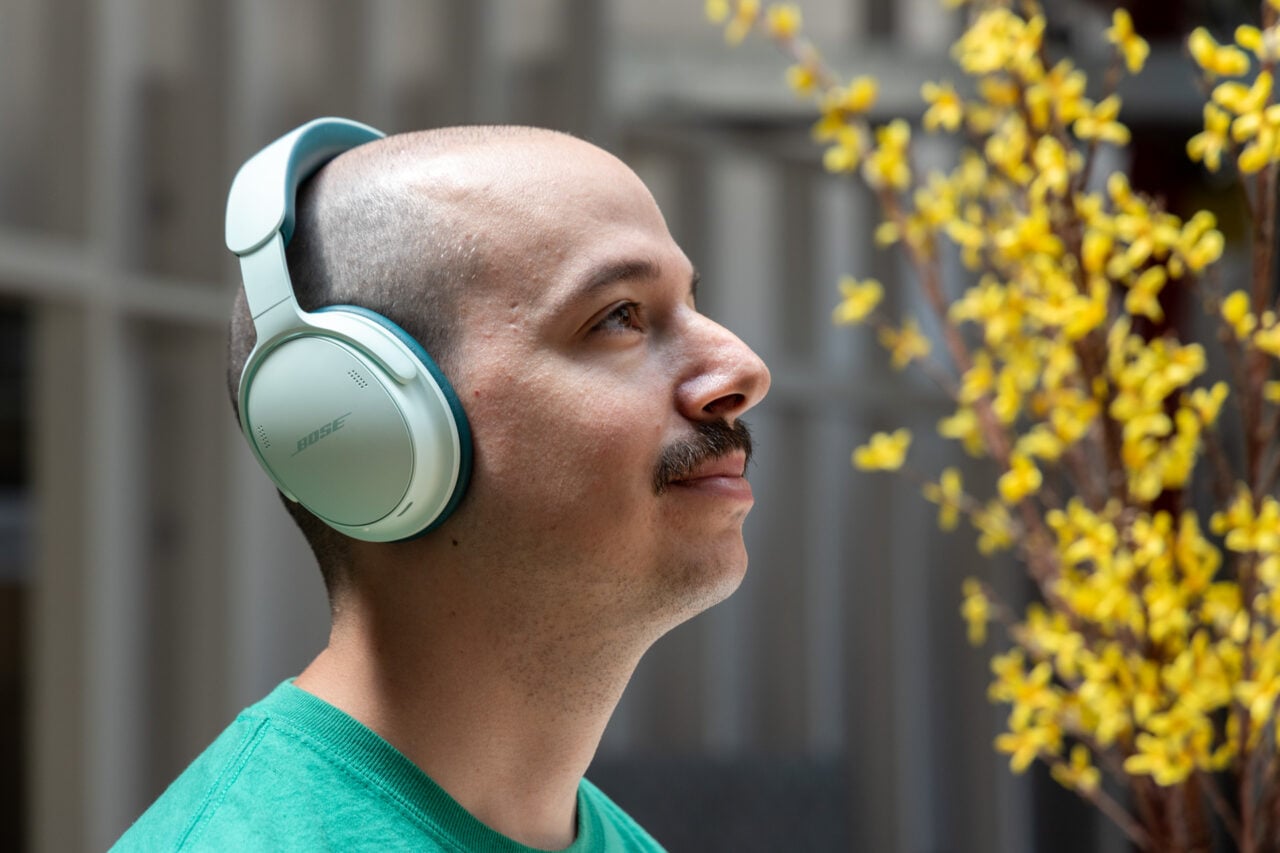
- Bose has released the non-Ultra QuietComfort Headphones (2nd Gen), described by Gizmodo as a small upgrade with a few small improvements over the prior generation.
- The Bose QuietComfort Ultra Headphones (2nd Gen) cost $449, which Gizmodo calls a lot of money for a pair of wireless headphones.
- On the subway, the reviewer was impressed by the noise blocked by the QuietComfort Headphones (2nd Gen); it was not quite as formidable as the QuietComfort Ultra Headphones (2nd Gen), but still better than a lot of pairs used over the past year, including cheaper ones like the $299 Nothing Headphone 1.
- The reviewer could hear some rumbles, especially with quieter audio such as a podcast, but did not find it distracting; on New York sidewalks, glimmers of street noise such as cars and construction came through.
- ANC levels on the QuietComfort Headphones (2nd Gen) can be adjusted in Bose's app.
Compiled by The Product DeskSomething wrong?How this is made
Why it matters
Bose has taken its non-Ultra QuietComfort Headphones to a second generation, and Gizmodo's review of them describes the noise cancellation as short of the $449 QuietComfort Ultra Headphones (2nd Gen) but better than a lot of pairs the reviewer has used in the past year, including the cheaper $299 Nothing Headphone 1 [1][2][3]. That ordering matters more than the feature list, because the two additions in this generation are the ones that decide whether ANC works on an actual head rather than on a test fixture [6][8].
The first is what Bose calls seal-gap compensation. According to Bose, the QuietControl ANC in this generation better compensates for gaps between the earcup and the ear caused by hair, glasses, or hats, all of which break the seal that noise cancellation depends on [6]. Gizmodo tested this by wearing sunglasses for extended periods and reported that the ANC still performed at a high level, while noting that a thicker hat or a lot of hair would likely expose the limits [7]. The second addition is ActiveSense, which engages ANC during sudden loud events while the headphones are in Bose's Aware transparency mode [8]. On the subway, the reviewer felt it ducked train screeching while still passing through surrounding sound, but said it was hard to be certain [9].
Neither of those is a spec-sheet item that sells units at retail, and both are the kind of thing that historically arrived first at the top of a line. Their presence here is the whole argument: the reviewer's ANC ranking places this model between the Ultra and a $299 competitor, which is a narrow window for a flagship to defend [15].
The rest of the picture is uneven. Rumbles were still audible, particularly under quieter content like podcasts, and street noise leaked through on New York sidewalks, though not in a way the reviewer found distracting [4]. ANC intensity is adjustable in Bose's app [5]. Aware mode was rated decent and better than cheaper pairs, but behind the AirPods Max 2 on transparency [10]. Sound quality held up on a Steely Dan track, with guitar, keys, and vocals separable and bass present without muddying the mix, while Daft Punk's "Da Funk" pushed the low end hard enough to drown the mix at lower volumes [12][13]. Calls were the clear failure: the headphones picked up ambient noise and wind, the person on the other end rated the call 4/10 after hearing footsteps and street noise, and the ANC ducked in and out during the conversation [11]. Gizmodo's summary lists improved ANC, solid sound, and fit as pros, against price, forgettable Immersive Audio, and bad call quality [14].
What to watch: the review does not state a price for the non-Ultra model, so the actual dollar gap to the Ultra, and therefore the trade this refresh represents, is not quantifiable from this material [16]. Also worth watching is whether Bose treats seal-gap compensation and ActiveSense as permanent down-market features or reserves the next such fix for the Ultra line, and whether the call-quality problem is a tuning issue or a microphone-array limit [11].