Science2 distinct publishers3 min readPublished
A biologist argues sex-related traits vary independently rather than along one line. The practical bite is in case definitions: intersex prevalence estimates span 0.2% to 6% depending on what you count.
The Scientist · Science desk
Compiled by The ScientistSomething wrong?How this is made
Writing in The Conversation, a biologist argues that human sex-related biological traits are neither binary nor arranged along a single spectrum, and that describing one person accurately can require multiple sliding scales rather than one position on one line [1][4][10]. Strip out the culture-war framing and what is left is a claim about measurement, and measurement claims are the ones that end up inside eligibility rules, laboratory reference ranges and trial enrollment criteria.
The argument is built in steps. To call sex binary, the author writes, is to assert that humans are sexually dimorphic: that female and male distributions of sex-related traits do not overlap, so that plotting a trait such as amount of coarse body hair would produce two separate bell curves [2]. The counterclaim, which the author says biologists and physicians have long known, is that there is overlap in every sex-related trait, so a given person can be female-typical in one, male-typical in another and intermediate in a third [3][4].
The move from spectrum to multidimensional is the part that matters operationally. Genital development, the essay notes, tracks androgen exposure and receptivity continuously, producing intermediate structures at intermediate levels [7][8], which the author says fits a color-spectrum analogy of one axis running red to violet [9]. But the other primary traits that get used as sex markers - chromosomes, gonads, hormones and hormone receptors, internal reproductive ducts, external genitals - can each point in different directions in the same body [6][9][3]. The example given is complete androgen insensitivity with a Y chromosome: testes in the abdomen, female-typical genitals, and after puberty breasts, a high-pitched voice and no coarse body hair [10]. One number cannot carry that.
The definitions in working use already disagree. Biologists usually define an animal's sex by gamete size, small for sperm and large for eggs, produced by testes or ovaries; physicians assign sex at birth from genitals, which may not match gonadal sex [12]. Because chromosomes, gonads and genitals can disagree within one person, the essay argues it is not clear that any one of them alone should set the category [13]. Note the size of the resulting uncertainty: intersex variations are put at 0.2% to 6% of the population depending on which variations are counted [11]. That is a thirtyfold spread [1], and it is not instrument noise. It is case definition doing the work, which is the same failure mode as any cohort defined by an unstated inclusion rule.
The clearest evidence that this is unsettled in practice is regulatory. Regulators of elite women's athletics including the International Olympic Committee have changed their sex tests repeatedly over the past century, from genitals to chromosomes to testosterone levels, and in March 2026 the IOC returned to chromosomes [15][16] - at least three switches of the operative variable [2]. Each switch redefines the population, and therefore who is in and who is out, without anyone's biology changing.
Two cautions. The essay is a single-authored argument drawn from the author's own book, "The Binary Delusion" [5], and it does not address clinical trials or lab reference ranges; that extension is mine. What follows from it, if the trait-overlap claim holds [3], is narrow and testable: a rule or a range labelled male or female is a rule about one measured variable, and it should say which one.
Ranked by verification strength, evidence, and original report placement.
The essay 'Biological sex is neither binary nor a spectrum - a biologist explains how it's multidimensional' was published by The Conversation.
There is a common misconception that biological sex - usually determined by a person's sex chromosomes, gonads (ovaries or testes) or genitals - is binary, assuming everyone is biologically either female or male with no ambiguity or intermediacy.
Asserting that sex is binary is essentially asserting that people are sexually dimorphic - that the sex-related biological traits of females and males do not overlap - which graphed for a trait such as amount of coarse body hair would look like two separate bell curves.
Biologists and physicians have long known that sex-related biological traits are not sexually dimorphic; there is overlap between females and males in each sex-related biological trait.
Some people are more typically female in some traits, more typically male in other traits, and intermediate in still others.
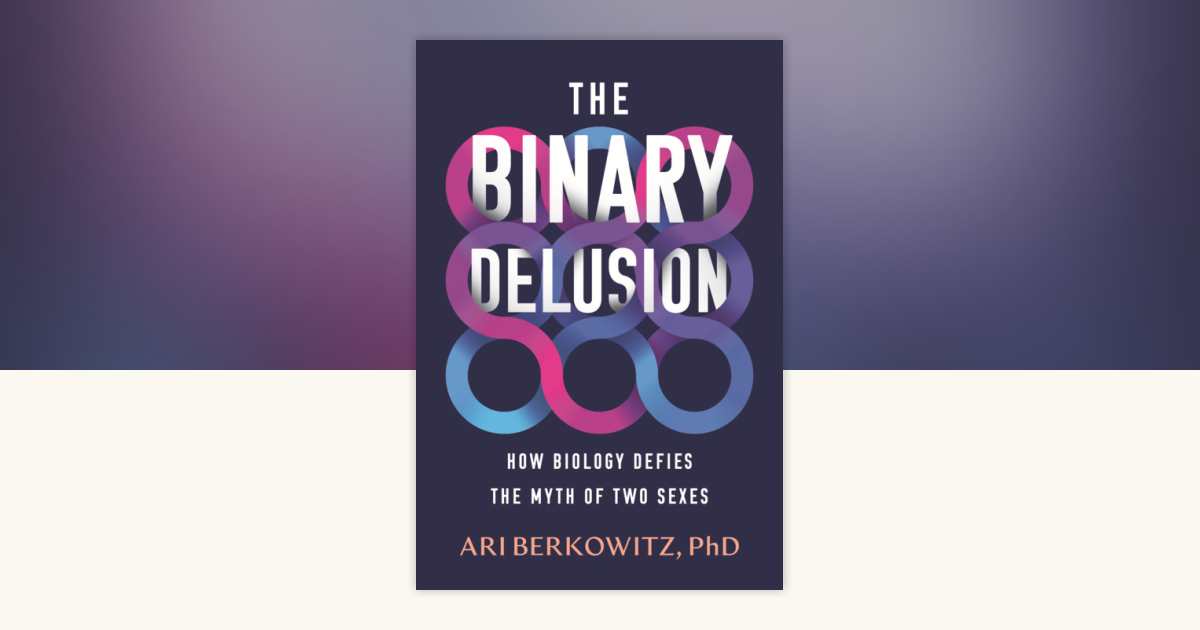
The author explores the argument in a new book, 'The Binary Delusion: How Biology Defies the Myth of Two Sexes.'
Follow any of these and your For You feed starts watching them — no settings page required.
Evidence-backed comparisons of source perspectives and observed adoption signals. Read the methodology
Which Builder, Operator, and Investor concerns the observed source mix emphasized—not a truth score.
Evidence, demonstrated adoption, hype gap, incentives, and confidence are assessed independently, each on its own current evidence. How these are measured.
Single-origin expert essay, unreferenced key numbers
The cluster contains one text: an academic-authored explainer, republished verbatim. Its qualitative biology (trait overlap, androgen-dependent development, discordant primary traits) is internally coherent and consistent with mainstream description, but the two load-bearing operational facts - the 0.2%-6% prevalence range and the March 2026 IOC criterion change - are asserted without citations, primary documents, or independent confirmation anywhere in the supplied material.
Institutions still on one field; only datapoint moves the other way
The single institutional action in the cluster is the IOC reverting to a single-variable chromosome test, which is the opposite of the multi-axis representation the essay argues for. No registry, clinical reference-range, records-system, or regulatory adoption of multi-axis sex representation appears in either source, and the essay itself notes clinical and biological definitions remain divergent.
Argument modestly outruns its supplied evidence
The conceptual claim - independent trait axes rather than one line - is well matched to the descriptive biology the essay provides, so the gap is small. It is positive rather than zero because the headline-level rejection of the spectrum model and the practical implication for eligibility rules and reference ranges are carried by unreferenced figures (a 30x-wide prevalence range) and a single unsourced policy fact, and because verbatim syndication can read as broader confirmation than the one source base supports.
Disclosed book promotion in a contested policy area
The essay is explicitly drawn from and names the author's new book, giving a disclosed commercial and reputational interest in the strong framing. The publication model - academic-authored explainer distributed free and picked up verbatim by an aggregator - rewards reach on a politically charged topic. Nothing in the cluster indicates undisclosed funding or sponsorship, so the reading stays moderate rather than high.
Provenance clear, corroboration absent
Authorship, publication dates and syndication path are unambiguous, and the descriptive biology is stable across the cluster. Confidence is held near mid-range because there is exactly one independent source, the two quantitative or dated claims most relevant to practice are unreferenced, and no contrary expert view is available in the material to test the argument against.
science
Whale-watch footage catches 1,417 humpbacks feeding along a corridor theory calls a fast1 distinct publisher
science
Police AI reached the evidence file before anyone measured how often it fabricates1 distinct publisher
science
The 35C problem is a rostering problem: card data says afternoon trade does not come back until dark1 distinct publisher
science
A handful of Texan pumas saved the Florida panther. Genetics is still off the plan.1 distinct publisher
Distinct publishers with included, body-backed reporting in this cluster.
phys.org
1 article · August 18, 2026
theconversation.com
1 article · August 17, 2026