Invest1 distinct publisher3 min readPublished
Pablo Hernandez de Cos told Jackson Hole that tokenized deposits look more promising than stablecoins. The number underneath that judgement is a $307bn float turning over roughly 202 times a year, mostly not for goods.
The Investor · Invest desk

Compiled by The InvestorSomething wrong?How this is made
Divide the flow by the float and the shape of the thing appears. The $62 trillion of stablecoin transfers that BCG and Allium counted across public blockchains in a year [10], set against a market capitalisation of $307 billion in December 2025 [13], is about 202 turns of the stock [16], which is not how money behaves when it sits in a working-capital account waiting for a supplier invoice. Use instead the $4.2 trillion the same paper classes as real-economy payments [11] and the float turns roughly fourteen times [17]. Use the number BCG itself calls a minimum, $350bn to $550bn of observable bilateral payments for goods and services in 2025 [12], and you get about one and a half turns [18]. (The float is a December snapshot and the volume is a full year, so read the turn counts as magnitude, not bookkeeping.)
That floor is 8 to 13 percent of the real-economy bucket [19] and between 0.56 and 0.89 percent of the headline [20]. So the $62 trillion is a price, in the sense that it is what this market has agreed to quote about itself, and the value a treasurer can actually route sits somewhere between the floor and whatever share of the $4.2 trillion survives a definition audit. The other $57.8 trillion [21] is trading and collateral movement, which is a real business, just not the one a procurement committee is being asked to sign.
The mechanism de Cos leans on is narrower than the usual complaint. A payer holding USDT and a payee who accepts only USDC has to sell one and buy the other at a moving price, so the dollar that leaves need not be the dollar that lands [4], which is an FX spread hidden inside a single nominal currency, and moving one issuer's coin between chains carries its own complicated and sometimes costly steps [5]. Tokenized deposits, on his account, settle through central bank accounts and keep par redemption and finality [6].
The counter-thesis lives in the same reporting. More than twelve banks, Bank of America, Wells Fargo, Santander, Citi, Goldman Sachs and UBS among them, are preparing a shared stablecoin on public chains rather than cede the rail to Tether and Circle [14], and one instrument redeemable at par at each of those banks answers the singleness objection by construction, or rather answers the version of it created by competing issuers with competing reserves. The GENIUS Act, implemented on July 18, 2025, gave banks federal access through subsidiaries [15]. The BIS route needs central bank accounts [6], which is a shorter list of eligible participants and a longer wait, and every engineering quarter the consortium spends on permissionless rails is a quarter not spent on the tokenized deposit backbone the BIS says it wants [2]. A third path is simply political: the BIS warning on stablecoin dollarization in emerging economies [9] means some jurisdictions will restrict this regardless of how well it is designed.
This is probably wrong, but I would size a corporate stablecoin programme off the floor rather than the headline and treat the ratio as the thing to negotiate with. What would break the view: a BCG update showing real-economy payments rising as a share of volume rather than only in dollars, or a consortium coin that clears at par against USDC on-chain, either of which would make the singleness problem [4] a description of 2025 instead of of stablecoins.
Ranked by verification strength, evidence, and original report placement.
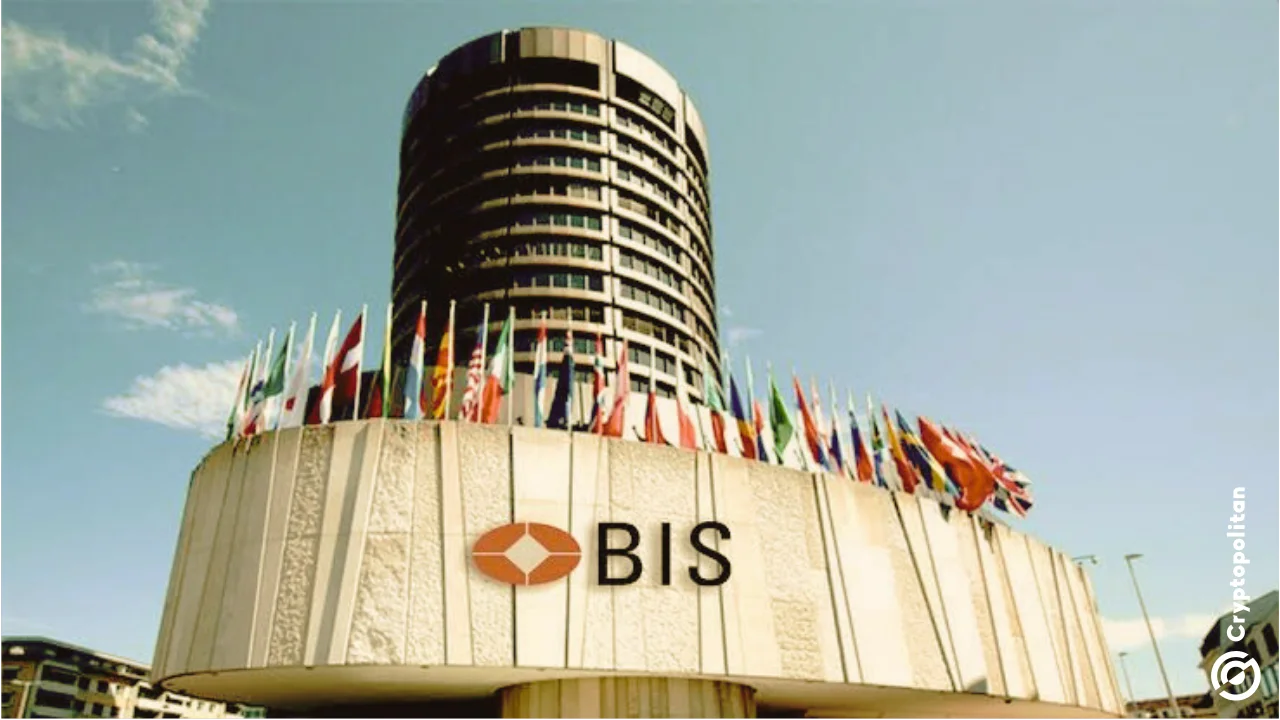
Addressing the Jackson Hole Economic Symposium on August 28, BIS general manager Pablo Hernandez de Cos said a framework based on tokenized deposits "looks more promising" than stablecoins.
BIS officials have emphasised that tokenized deposits should be the backbone of modern digital payment systems as banks move activity onto blockchains.
A January 2026 white paper from Boston Consulting Group and blockchain data company Allium estimated that public blockchains conducted more than $62 trillion of stablecoin transactions over one year.
The GENIUS Act, implemented on July 18, 2025, allowed banks to obtain federal-level access through subsidiaries.
De Cos centred his argument on three properties he says money must have: singleness, interoperability and financial integrity.
On singleness, de Cos said a holder of Tether's USDT paying a recipient who accepts only Circle's USDC must sell USDT and buy USDC, and because prices fluctuate the final value of the transfer may not equal one US dollar; the system does not guarantee one-to-one exchangeability.
Distinct publishers with included, body-backed reporting in this cluster.
1 article · August 29, 2026
Follow any of these and your For You feed starts watching them — no settings page required.
invest
Central banks concede the CBDC answer, and the stablecoin fight moves to issuers1 distinct publisher
invest
USDT wins users 2.7 to 1, USDC wins the venues: distribution is setting stablecoin share1 distinct publisher
invest
USDC clears 77% of on-chain transfer volume, and its record DEX day is a rounding error1 distinct publisher
invest
Tether says it is not building a chain, which tells you where its money is going instead1 distinct publisher
Evidence-backed comparisons of source perspectives and observed adoption signals. Read the methodology
Which Builder, Operator, and Investor concerns the observed source mix emphasized—not a truth score.
Evidence, demonstrated adoption, hype gap, incentives, and confidence are assessed independently, each on its own current evidence. How these are measured.
Every number from one unlinked paper
The three quantities the story turns on — $62 trillion, $4.2 trillion, $307 billion — all come from a single BCG–Allium white paper that Cryptopolitan summarises without a link, a methodology note, or a definition of what counts as a real-economy payment. De Cos's Jackson Hole argument reaches us in paraphrase with two short quoted fragments, and the BIS annual report is dated June 23 with no year given. The arithmetic on those figures is sound; the figures themselves have not been checked by anyone in our coverage.
Enormous circulation, narrow payment use
Stablecoins are unambiguously in heavy use — a $307 billion float moving trillions is real activity, not a pilot. But the part that matters for the claim being contested, payment for goods and services, is $350–550 billion observable, and BCG calls that a floor. On the other side of the argument there is nothing to measure at all: tokenized deposits get a recommendation and no volume, and the community-bank route through BankChain is a 2027 target. Adoption is high for a trading instrument and thin for the use case the BIS is arguing about.
The headline flatters the rails by two orders of magnitude
Positive, and the gap sits in the ecosystem's number rather than in this outlet's prose. $62 trillion is the figure that travels; $350–550 billion is what BCG can actually observe being paid for goods and services, roughly 0.6 to 0.9 percent of it. Cryptopolitan reports the deflation honestly and then leaves it in one section without letting it touch the bank-consortium story it tells three paragraphs later. The BIS side carries its own unpriced optimism: "looks more promising" is offered with no deployed tokenized-deposit volume behind it.
Everyone in frame is defending a balance sheet
The BIS is the standard-setter for a settlement architecture that runs through central bank accounts, and its recommendation happens to be that money keep running through them. The banks are franker: Moynihan says up to $6 trillion of deposits could walk if issuers were allowed to pay yield, and "if they make that legal, we'll go into that business" — a consortium token is deposit defence with a product label. BCG sells payments strategy to exactly the institutions weighing this decision, and the outlet reporting it all closes with a newsletter pitch. None of this makes the facts wrong; it does mean no disinterested party is quoted anywhere in the story.
Arithmetic solid, foundations single-threaded
We are confident in what the numbers imply if they hold — the turnover ratios and the payment share follow directly from figures printed side by side. We are much less confident that the figures hold, because nothing here has a second source, the white paper is unlinked, the report date is missing its year, and the piece's own bullets and body disagree on whether the bank consortium is preparing or exploring.