Product1 publisher3 min readPublished
SpaceX's AI1 and the real test for orbital data centers: bottlenecks out minus bottlenecks in
The binding constraint on AI capacity is power, water and permits, not silicon. Orbital compute still has to survive the arithmetic: 150kW per satellite against gigawatt-scale ground sites.
The Product Desk · Product desk
Drafted by a language model from the sources cited here and checked against its claim ledger before publication. How we use AISend a correction
What happened
- Ahead of its flotation, SpaceX announced its AI1 orbital data center satellite, along with plans to open a factory in Texas to produce them starting in 2027.
- In many regions, data center developments face seven-year power queues in some markets, water scarcity, and regulatory/community resistance, all of which threaten deployment timelines; lengthening regulatory timelines and community pushback affect construction schedules and increase stakeholder management costs.
- According to Bessemer Venture Partners, of the 110 data center projects that were expected to go live in 2025, more than a quarter were delayed due to power, permitting, and construction constraints.
- These obstacles threaten project economics because infrastructure that arrives after the model-refresh cycle delivers diminished returns.
- For decades compute itself was the scarce resource; today access to power, cooling, permitting, and grid connections increasingly determines how quickly new AI capacity can be deployed.
Compiled by The Product DeskSomething wrong?How this is made
Why it matters
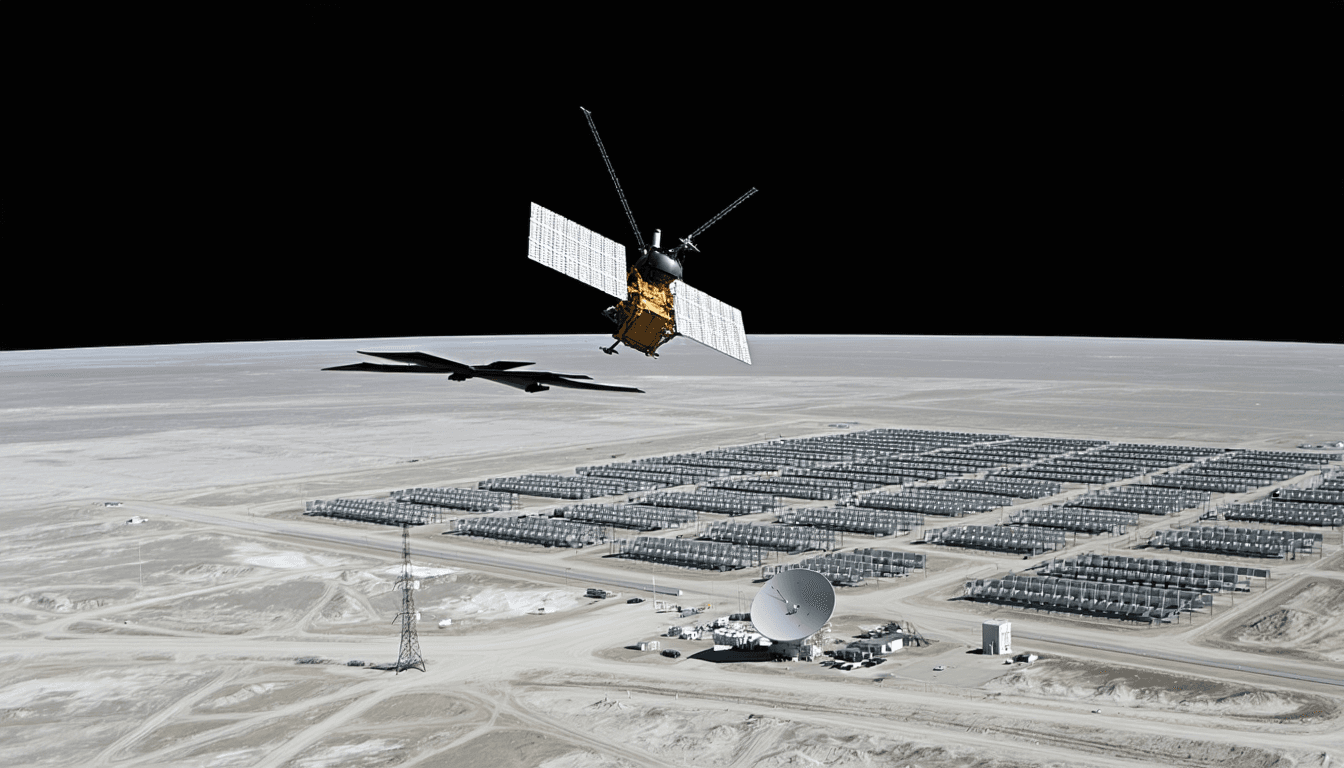
SpaceX has revealed the first generation of its orbital data center satellite, AI1, along with plans for a Texas factory to build them starting in 2027 [1]. It arrives in a market where the scarce input is no longer the chip: according to an opinion piece published by DatacenterDynamics, some markets now quote seven-year power queues, alongside water scarcity and regulatory and community resistance [2].
The demand-side numbers are the part operators should read first. Bessemer Venture Partners counted 110 data center projects expected to go live in 2025 and found that more than a quarter were delayed by power, permitting or construction constraints [3], which is at least 28 sites [1]. The piece argues the damage is not only schedule slip: infrastructure that lands after the model-refresh cycle it was underwritten for delivers diminished returns [4]. That is the honest reason orbit is being discussed at all. For decades compute was the scarce resource; now power, cooling, permitting and grid connections set the pace [5].
Then the supply side. AI1 is reported to provide roughly 150kW peak and 120kW average compute power [6], while terrestrial hyperscale capacity is measured in gigawatts [7]. On average power that is on the order of 8,300 AI1-class satellites per gigawatt, or about 6,700 at peak [2]. Nobody in the source claims parity. The stated model is a modular, networked constellation aimed at workloads where orbit is structurally better: near-continuous solar exposure in certain configurations, a radiative thermal environment that avoids water-based cooling, proximity to space-generated data, and geopolitical resilience [8]. Feasibility is no longer the open question either, with a recent demonstration testing an H100-class GPU payload in space [9].
The bottlenecks orbit adds are specific, and each maps onto an advantage. The radiative environment removes the water problem but not the heat problem: every orbit passes through a few minutes of shadow, with temperatures ranging from +120C to -250C, which makes heat spreading, conservative power density and intelligent workload scheduling determinants of performance rather than housekeeping [10]. Power arrays have to be high-specific-power and radiation-tolerant, with energy storage sized for transients and contingency eclipse events inside strict mass and reliability limits [11]. Compute has to be radiation-hardened, redundant and autonomous, and it has to be refreshable, for example through swappable units [12]. Low Earth orbit between 400 and 1,400km, with a 90 to 120 minute period, buys lower communication latency than deep-space deployments [13]. The author frames six engineering foundations in total as prerequisites [14].
Read against the constraint list, the trade is legible. Orbit plausibly removes the grid interconnect queue, the water draw and the local planning fight [2][8]. It replaces them with launch cadence, thermal design margin, radiation tolerance and in-orbit serviceability [10][11][12].
Three things to watch. First, whether the 2027 factory date holds [1], because production rate rather than per-satellite capability is what decides whether a constellation ever reaches aggregate relevance against the gigawatt comparison [2]. Second, whether hardware refresh in orbit is demonstrated rather than described [12]; a fleet that cannot be re-chipped inherits exactly the failure mode that makes late terrestrial capacity unprofitable [4]. Third, whether terrestrial delay rates move off the 2025 baseline [3]; if seven-year queues shorten [2], the case for orbit narrows to the workloads that were always better served there, principally those close to data generated in space [8].