Product1 publisher3 min readPublished
A double-press of the Apple Watch crown now turns the last 15 seconds into text
Live Rewind is a small feature with an outsized policy footprint, because the room cannot see it happen and whoever writes the rule has to separate it from the accessibility feature shipping alongside it.
The Product Desk · Product desk
What happened
- Apple used its "Surprise and Shine" iPhone event on Wednesday to give its watches the ability to process live audio and transcribe speech, which TechCrunch called the event's real surprise.
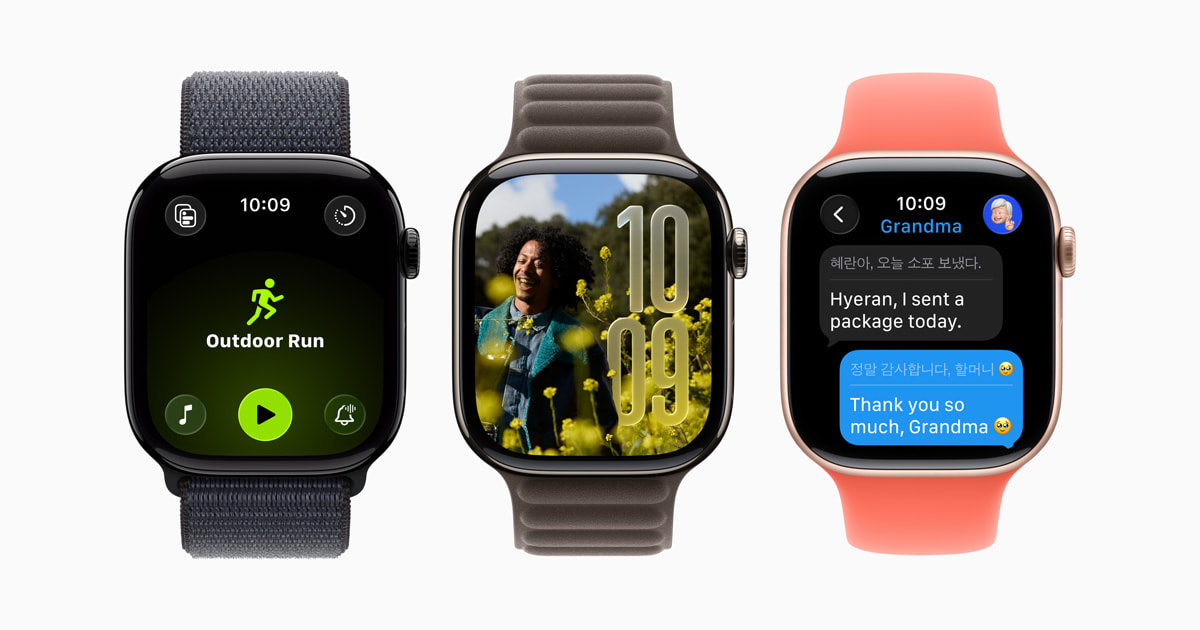
- One of the three new features, Live Rewind, transcribes the previous 15 seconds of speech when the wearer double-presses the watch's digital crown.
- Apple does not save the audio, so what persists is a text transcript, which can be filed in the company's new standalone Siri app for later.
- A second feature, Audio Intelligence, uses on-device AI to alert wearers to sirens, alarms, doorbells and crying babies, and works when the paired iPhone is elsewhere.
- Other makers of wearable recorders already hand the legal question to the buyer: Plaud advises its customers to obtain legally required consent before recording.
Compiled by The Product DeskSomething wrong?How this is made
Why it matters
- decision The question in front of policy owners stops being whether watches are allowed on the premises and becomes which named feature is allowed, and most recording policies have no vocabulary for that distinction.
- constraint Door signage and the reminder at the top of a meeting both assume recording is a visible act, and they have nothing to work with when the giveaway is a chime scaled to a wrist.
- exposure Amazon's Bee already tells users that compliance with minors' data-privacy law is theirs alone, and employers should expect that same allocation to settle on the wearer and on whoever runs the room the wearer walked into.
Across a desk in a one-to-one, a double-press of the digital crown looks like someone checking the time. Apple says the capture announces itself with an audible chime and a full-screen microphone animation [6], and both of those are sized for the wrist they sit on. TechCrunch's point is that raising a phone to film someone is an obvious move and a crown press is not [15]. That gap is where the policy problem lives.
The 15-second window is the part worth understanding. To hand the wearer the previous 15 seconds of speech on demand [4], the watch has to be holding those seconds before anyone asks for them [17]. Apple's answer is that the audio is not kept and what persists is text [7], which is a real distinction and one the person in the other chair has no way to check. TechCrunch's own summary of whether you are always being recorded near a wearer is "not exactly" [13]. That is accurate, and it is not the sentence a patient or a job candidate will find reassuring.
Here is what teams tell themselves users do with transcription: capture the good idea before it evaporates. Apple's own examples are a book recommendation, a colleague's brilliant idea, or something you did not hear the first time [12]. Here is what the category actually shows so far, by TechCrunch's account: meeting notes, plus recorded lectures and interviews [11], settings where a device sits on the table and somebody has said out loud why it is there. Live Rewind carries the same capability into rooms with no table, and TechCrunch notes it also lets you catch someone saying something they did not mean to have recorded [14].
Who this is for is answerable one feature at a time. The sound alerts are for deaf and hard-of-hearing wearers, and TechCrunch doubts anyone objects to that use [16]. Live Rewind is for the wearer and nobody else in the conversation. What the account does not contain is any Apple guidance to employers, any enterprise control that would switch off Live Rewind while leaving the sound alerts running, or any figures on how often people reach for it [18]. Anyone forecasting adoption from here is guessing.
The legal read is open. TechCrunch says it is unclear how courts would treat text-only transcripts, that they might be introduced as evidence but be harder to authenticate without audio, and that the rules will likely vary by state [8]. A transcript too thin to admit at trial is still perfectly serviceable pasted into a group chat.
The rule that survives Monday is written per feature, not per device. Put every room your organisation controls on two axes: what it costs if 15 seconds of that room becomes text somewhere else, and whether the people in it would register a chime from someone's wrist. The high-cost, unnoticed corner, which is exam rooms and any table where a supplier is quoting a price, is the only quadrant that needs new language, and the language should name Live Rewind and Siri Recap. The tradeoff is enforcement. "No smartwatches" is one sentence a front desk can apply, and it also strips the fire alarm alert off the wrist of the hard-of-hearing employee who had a use for it [16].
What to watch
- The first published Apple guidance telling employers or clinicians how to handle Live Rewind in regulated rooms.
- Any evidentiary ruling on whether a Siri app transcript with no underlying audio is admitted.
- Whether Apple's terms follow Plaud's advice and Bee's terms in assigning consent compliance to the wearer.