Science1 publisher2 min readPublished
Charcoal in a West Antarctic seafloor core records Earth's southernmost known wildfires
Scientists report charcoal from 90-million-year-old fires in a seafloor core drilled about 900 km from the South Pole, the southernmost wildfires on record. Fire grew more common as rainforest gave way to moss bog, but the case that fire drove the change rests on timing in one core.
The Scientist · Science desk
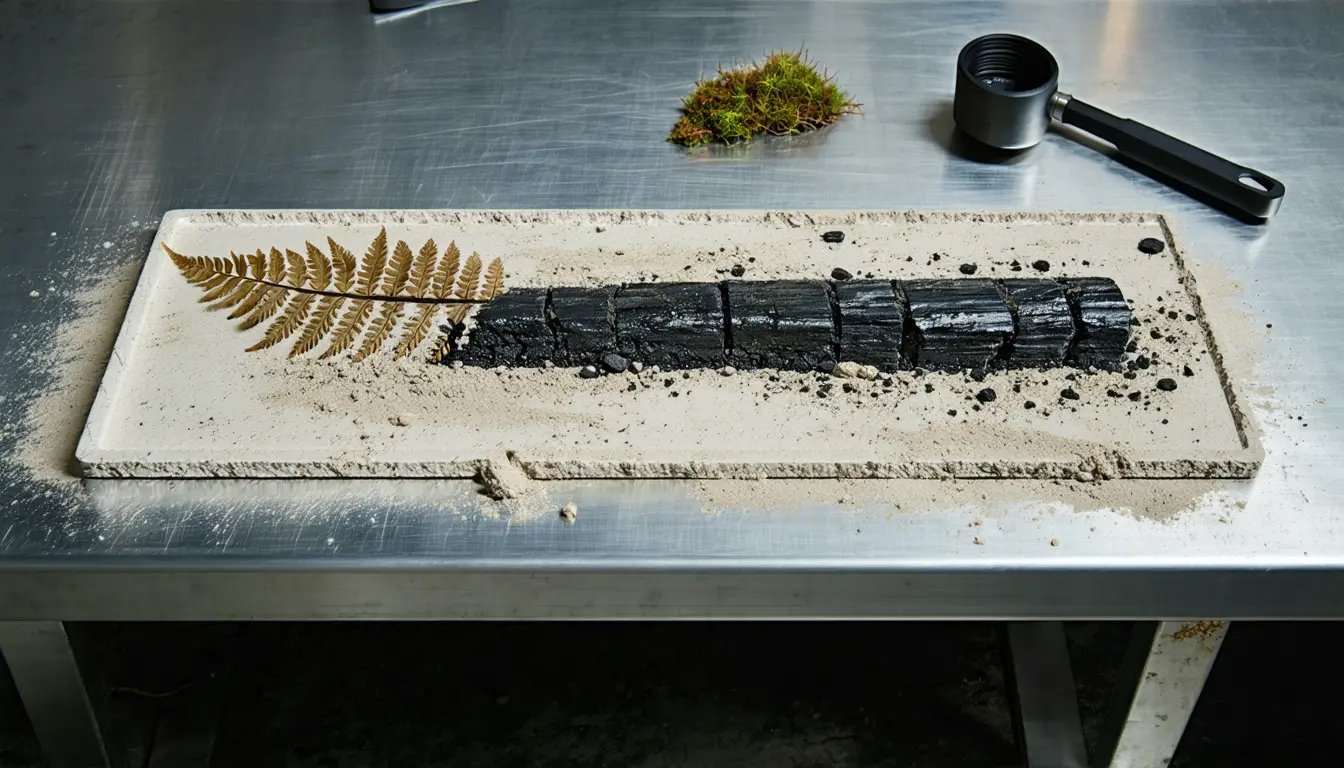
What happened
- In 2020 the same team used fossil pollen and roots in the roughly 30-meter core to show that a humid, swampy rainforest grew there, the southernmost forest on record.
- Light reflected off the burnt particles indicates lower-temperature surface fires, as opposed to underground peatland fires or crown fires in the canopy.
- Older, lower layers hold conifers typical of a temperate rainforest, while later layers show a sharp rise in ferns and sphagnum moss.
Compiled by The ScientistSomething wrong?How this is made
Why it matters
- constraint The claim that fire built the bog rests on co-occurrence in a single core, so it is a hypothesis until other Antarctic records show the same sequence.
- capability Pairing microscopy, spectrometry, amber and reflectance lets a few charcoal flecks give a fire's temperature class as well as its presence, an approach other deep-time cores can borrow.
- precedent If the match holds, the low-intensity surface fires of today's peatlands also ran in a polar Cretaceous bog, giving modern peat-fire studies a comparison 90 million years old.
The charcoal turned up during a search for something else. To recover pollen and spores, the team dissolved the sediment in strong acids that leave only organic material behind [5]. "We spotted these tiny pieces of charcoal," said Johann Klages, a sedimentologist at the Alfred Wegener Institute [6].
A dark fleck in a sediment sample is thin evidence on its own, so the team checked it by independent routes. Under high-powered microscopes the fragments showed plant cell walls, so they were burnt plant tissue [7]. Spectrometry picked up the chemical residues that partially burnt plants leave behind [8]. Amber gave a third line. "We saw, in some instances, that the amber was covering the bark of a former tree," Klages said. "That usually happens when the tree gets injured by some kind of external force." [9]
Ellen Currano, a paleoecologist at the University of Wyoming who was not involved in the study, praised that combination. "It was just spectacular to have slightly different ways of looking at the geologic record and looking at fire histories. And by putting them all together, you understand more than you would with just one proxy," she said [17]. I think the fire identification is well supported. Microscopy, chemistry, resin and reflectance each arrive at fire by a different route [7][8][9][10].
The case that fire made the bog is softer, and the researchers frame it more cautiously. Along with the vegetation change, the core's pH dropped, as it should when a landscape turns into acidic peat bog [12]. "We see an evolution of fire going on," said Ulrich Salzmann, a paleoecologist at Northumbria University [13]. "You basically see the peat spores increasing at the same time that fire goes up," he said [15]. According to the Eos account, the idea that more frequent fires kept the landscape open and so sustained the bog is the scientists' speculation [14].
The thing this doesn't tell you is the direction of cause. Charcoal rising with moss spores fits fire clearing ground for moss. It also fits a landscape that burned more often once it had changed, and one core's sequence cannot separate the two. Salzmann noted that similar links between fire and peat bogs are seen in the high Arctic today [16].
The likeness to modern bogs runs down to the spores. Salzmann compared the 90-million-year-old sphagnum spores with spores from the past 10,000 years in Scotland and found them remarkably similar [18]. "I find it so amazing," he said [18]. Peat bogs today also burn in low-intensity surface fires [19], the kind the reflectance measurements pointed to in the Cretaceous core [10].
What to watch
- Charcoal and pollen records from other Cretaceous cores near West Antarctica, which would show whether the fire-and-peat sequence was regional or confined to this site.
- Finer sampling across the transition that could show whether rises in charcoal led or lagged the rise in sphagnum spores.