Science1 publisher2 min readPublished
Sheeppox DNA survived a thousand years in the parchment of medieval gospels
Researchers found sheeppox virus DNA in 32 folia of medieval European parchment, including three pages of the York Gospels. The finding turns animal-skin manuscripts into a dated archive of ancient livestock disease.
The Scientist · Science desk
What happened
- Researchers examined genetic data from medieval parchment held by projects at the University of York and Oxford's Bodleian Library, most of it from central and western Europe.
- The skins came from cattle, sheep and goats and dated to roughly A.D. 700 to 1400, and most had been used in religious documents.
- The team detected sheeppox virus DNA in 32 parchment folia, each of which showed at least a hint of the pathogen.
- The York Gospels, a rare pre-Norman Conquest gospel that survived the Reformation, carried the virus on three pages, one of them a legal note added around A.D. 990.
Compiled by The ScientistSomething wrong?How this is made
Why it matters
- capability Because DNA from the skinned animal survives fragmented in parchment for over a thousand years, well-catalogued library manuscripts become a dated, located record of the pathogens those animals carried.
- constraint The study reports 32 positive folia but not how many it screened, so the count shows the virus was present without showing how common infection was.
- precedent DNA extracted from ancient teeth and bones for animal studies can be re-screened for pathogens it was never sampled for, as the steppe teeth showed, reopening datasets already in hand.
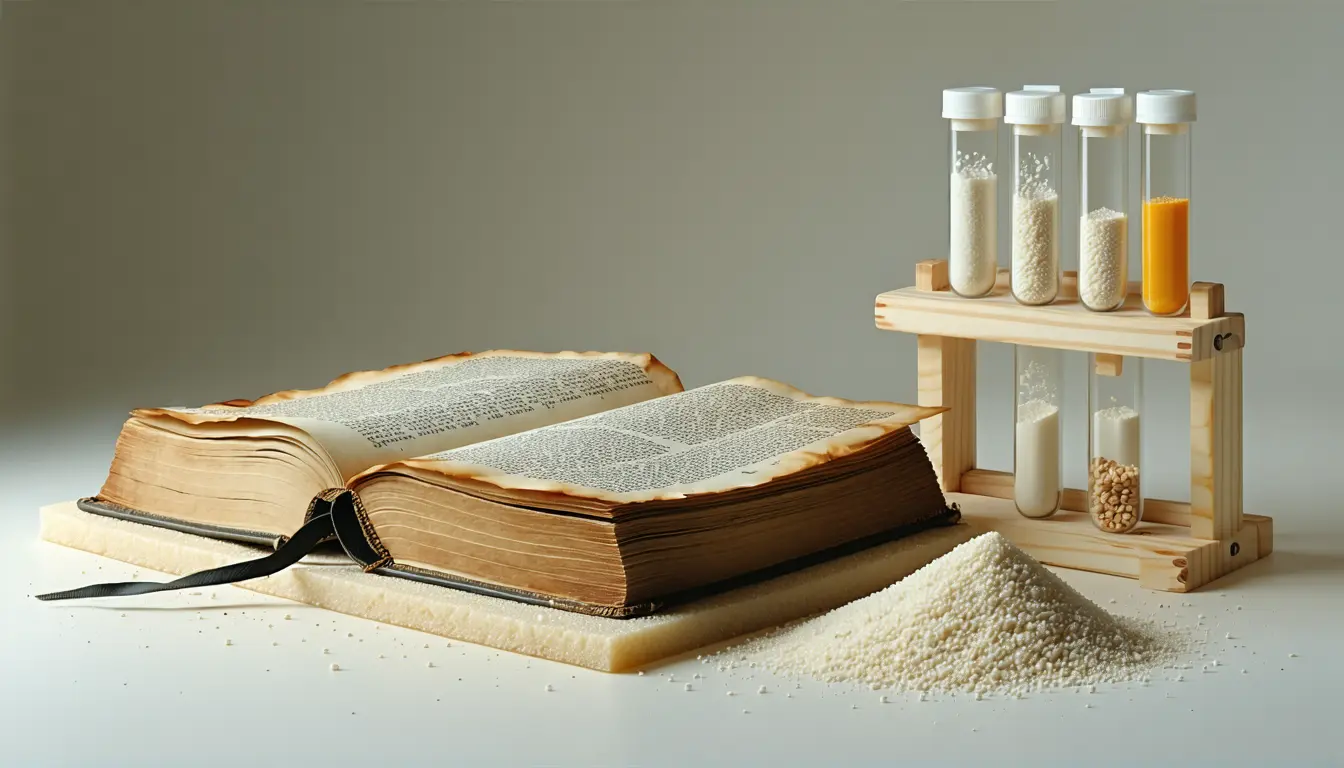
Parchment keeps DNA without anyone intending it to. Skins were soaked in quicklime, scraped clear of flesh and hair with heavy blades, then stretched on frames overnight or longer until they set into a taut, durable membrane [2]. The animal's own DNA sets with it, and the researchers report that fragmented DNA can survive in parchment for well over a thousand years, depending on how the document was stored [3]. Their question was whether an infection the animal carried at death could leave a signature too, if the pathogen was present at a high enough level [17].
The signature belonged to the sheeppox virus, the ovine relative of smallpox, recovered from genetic data on manuscripts held by projects at the University of York and Oxford's Bodleian Library [4][6]. Sheeppox is gone from Europe now but endemic across much of Africa and Asia, highly infectious and often fatal in young sheep [7].
The parchment signals are faint. Thirty-two folia showed at least a trace of the virus [8], and the densest concentration was in the York Gospels, where three pages carried its DNA, including a legal note added around A.D. 990 [9]. Sampling that document meant lifting a minimal amount of surface with erasers [10]. The Corpus Glossary, a Latin and Old English dictionary from about A.D. 800, held traces as well [11], and so did 15th-century paper from Clairvaux in France, which had probably been sized with collagen from animal scraps [12].
The reconstructable genomes came from teeth. The team screened DNA from animal teeth, bones and diseased skin going back thousands of years [13], and the oldest viral genomes it found came from two sheep teeth from the Eurasian steppe, roughly 3,700 and 3,200 years old, sampled for animal DNA even though they carried pathogen DNA [14]. From that viral DNA the team estimated when the sheeppox virus arose [16]. The parchment fixed a date and place for the virus, while the teeth preserved enough sequence to reconstruct its older lineage [8][14].
The material does not document a jump to people. Sheeppox is a relative of smallpox, but what the study found is a sheep disease in sheep-derived parchment [6]. Farmers have fought it for a long time: the Roman writer Columella described a "pusula" in sheep in the 60s B.C. that is now taken to be sheeppox [15].
What to watch
- Whether the paper publishes a dated origin estimate for sheeppox, which the available account of the teeth work stops short of giving.
- Whether the same manuscript screening recovers other livestock or human pathogens beyond sheeppox from library collections.
- Whether prevalence is reported, so the 32 positive folia can be read as a rate against the number screened.