Science1 publisher2 min readPublished
CASPAR restarts on fluorine after 18 months of trial and error on the target
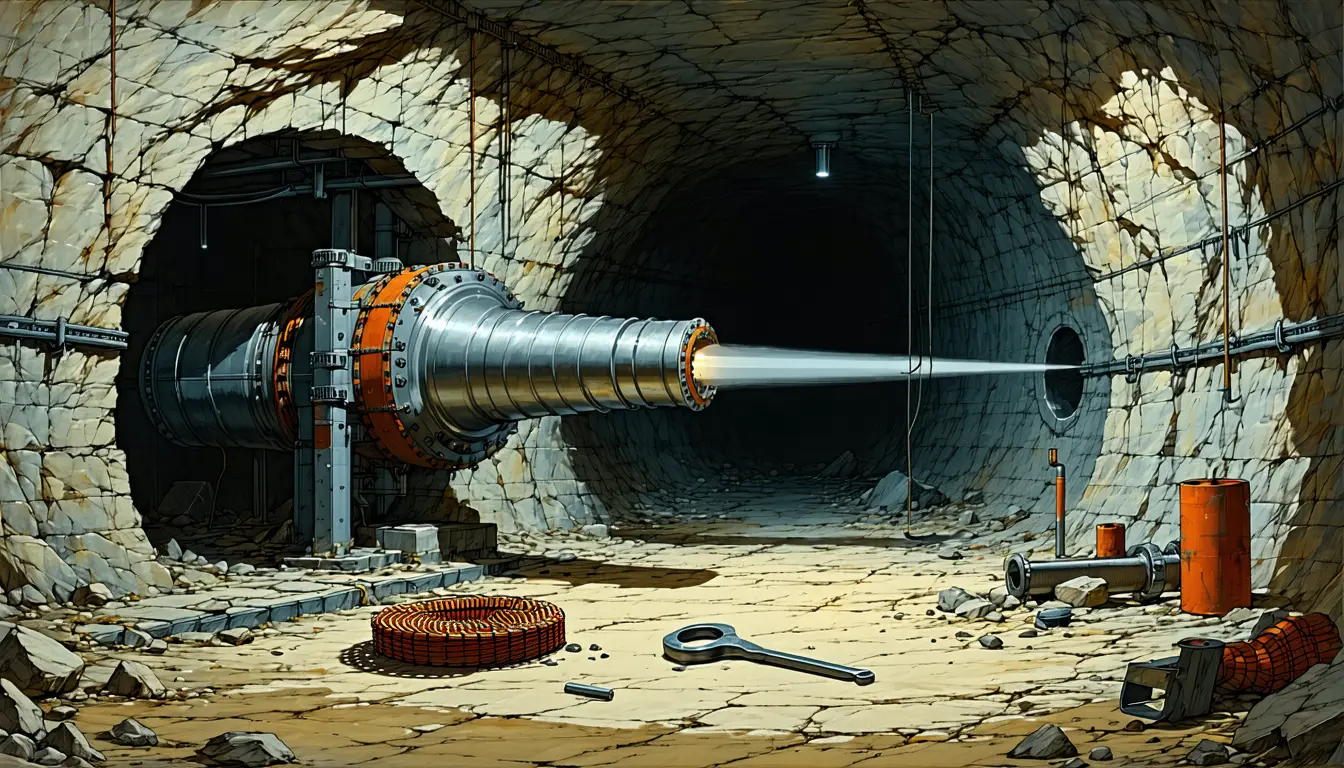
CASPAR, the Notre Dame-led accelerator nearly a mile under South Dakota, has begun firing protons at a fluorine target that took a year and a half to build. The run has not yet produced published numbers.
The Scientist · Science desk
What happened
- CASPAR, a compact accelerator built to recreate the conditions inside stars, has restarted with a new target: fluorine, the ninth element on the periodic table.
- The machine sits nearly a mile underground at the Sanford Underground Research Facility, where it fires protons into specialized targets to reproduce the reactions that build elements in stars.
- Leah Zimmer, a Notre Dame physics doctoral candidate, made the fluorine target herself over a year and a half, with thousands of runs on a surface accelerator and samples prepared using hydrofluoric acid.
- Zimmer is using the run to study how fluorine forms in early stars, the stage of element-building she is treating as her doctoral subject.
Compiled by The ScientistSomething wrong?How this is made
Why it matters
- constraint Target chemistry was the pacing item. Eighteen months of fabrication and thousands of surface-accelerator runs stood between the plan and a piece of fluorine the underground machine could shoot at.
- capability Element 9 joins the set of stellar reactions CASPAR can put a proton beam through, and it does so only because a fluorine target that works now exists.
- decision What has been reported is a beam back on a target. Anyone waiting to revise a fluorine reaction rate in a stellar model is still waiting.
- precedent Robertson describes the experiment as a self-contained training module. The full cycle from target-making to publication runs again with each graduate student who arrives.
Some stars get stuck in a loop. Carbon, nitrogen and oxygen are produced and then destroyed, again and again, and the process can stop the formation of heavier elements [8]. Fluorine is one way out of it. "But fluorine is one of these breakout reactions that, in certain conditions, can jump from carbon, nitrogen, oxygen, bam, straight through fluorine and on to the heavier elements," said Dan Robertson, the principal investigator on CASPAR and a research professor in Notre Dame's Department of Physics and Astronomy [9][7].
Elements get built in the first place because heat and pressure inside stars force protons and neutrons together in fusion reactions, beginning with hydrogen and helium [15]. A small accelerator can imitate a narrow slice of that. Robertson described what the imitation buys as "what elements are produced, how they are produced, what energy they produce while forming and the conditions we can recreate to give us information about the insides of stars" [14]. The specific reaction Zimmer is measuring and the beam energies are missing from the phys.org account of the restart [16].
The astrophysics behind the run is stated as a belief, and Zimmer stated it that way herself. "What I find most interesting about fluorine is that we think the reaction that created this element took place inside stars pretty early on in the universe," she said [5]. The laboratory question is what happens when protons hit fluorine under controlled conditions. The stellar question is larger, and Zimmer called the interactions "a piece of the puzzle as to how the first stars were formed way back in the early universe" [6].
Making the thing the beam hits was the long part. Zimmer built the fluorine-based target herself, with thousands of runs on a surface accelerator and samples prepared using hydrofluoric acid [10]. "There is a lot of joy in doing something where you can see the results of what you've done," she said of the hands-on work [17].
Part of CASPAR's purpose is training the next generation of astrophysicists and nuclear physicists [18]. Robertson said students on the experiment work across mechanical engineering, chemistry, materials science, astrophysics, data analysis, computational management and scientific publication [13].
What to watch
- A published cross section or reaction rate from the fluorine run, with the specific reaction and beam energies named, would turn a restart into an input a stellar model can use.
- Whether Zimmer's target recipe transfers to other materials, or whether the next target has to be developed from scratch by the next student.
- How long the fluorine science run holds beam time underground at SURF before the target is changed out.