Build1 distinct publisher2 min readPublished
Two of the largest buyers of compute told G20 technology ministers that their binding limit is skilled labour and megawatts, and Musk dated the power shortfall to next year. Both are claims about their own builds.
The Engineer · Build desk

Compiled by The EngineerSomething wrong?How this is made
The line that got the least attention was this: Musk said his company was building the required power generation to go with its data centers [7]. A buyer takes on generation when it cannot get a delivery date it believes, and that is a harder statement about supply than the phrase "crisis of power" [5]. It also changes the unit of schedule risk from a purchase order to a construction project.
Zuckerberg's other figure deserves the same reading. He put the buildout at "hundreds of thousands and maybe millions of jobs" in the skilled trades, on the grounds that demand for data centers is immense [3]. That is a demand estimate, a count of the positions the buildout wants to fill, separate from any licences a state has issued or apprenticeships anyone has funded. The shortage he described is a hiring result inside one company, tied to Meta's wages, Meta's counties and Meta's compressed schedule [4]. For it to transfer to your project, you would have to be bidding for the same journeymen in the same window, which is exactly the condition that makes the claim uncomfortable for everyone else building anything.
The economic case scales loosely by comparison. Musk said AI would increase the global economy by 20 to 30 percent, or roughly $20 trillion to $30 trillion per year [11]. Divide either end by its own percentage and the implied base is about $100 trillion [12]. So the number is a ratio applied to current world output, not a figure assembled from capacity, and it moves with whichever multiple you like best.
The meeting itself was a lobbying venue, held a day after Trump called opponents of AI data centers "backwards and poor" [9], and set against a backlash that is now an election issue [10]. Musk used the same platform to tell European ministers that in the EU things are generally default illegal, which does not stop innovation but slows it considerably [14], with the French, Italian and German technology ministers and EU tech chief Henna Virkkunen in the room [15]. Demis Hassabis, addressing the same ministers, said human-level AI would carry ten times the impact of the Industrial Revolution and had to be pursued responsibly [16].
What can actually be checked is narrower than any of that. If Musk's date holds and the shortfall lands next year [6], then every capacity contract signed now is underwritten by a counterparty's generation plan, and of the two men on the call only one said his was already under construction [7].
Ranked by verification strength, evidence, and original report placement.
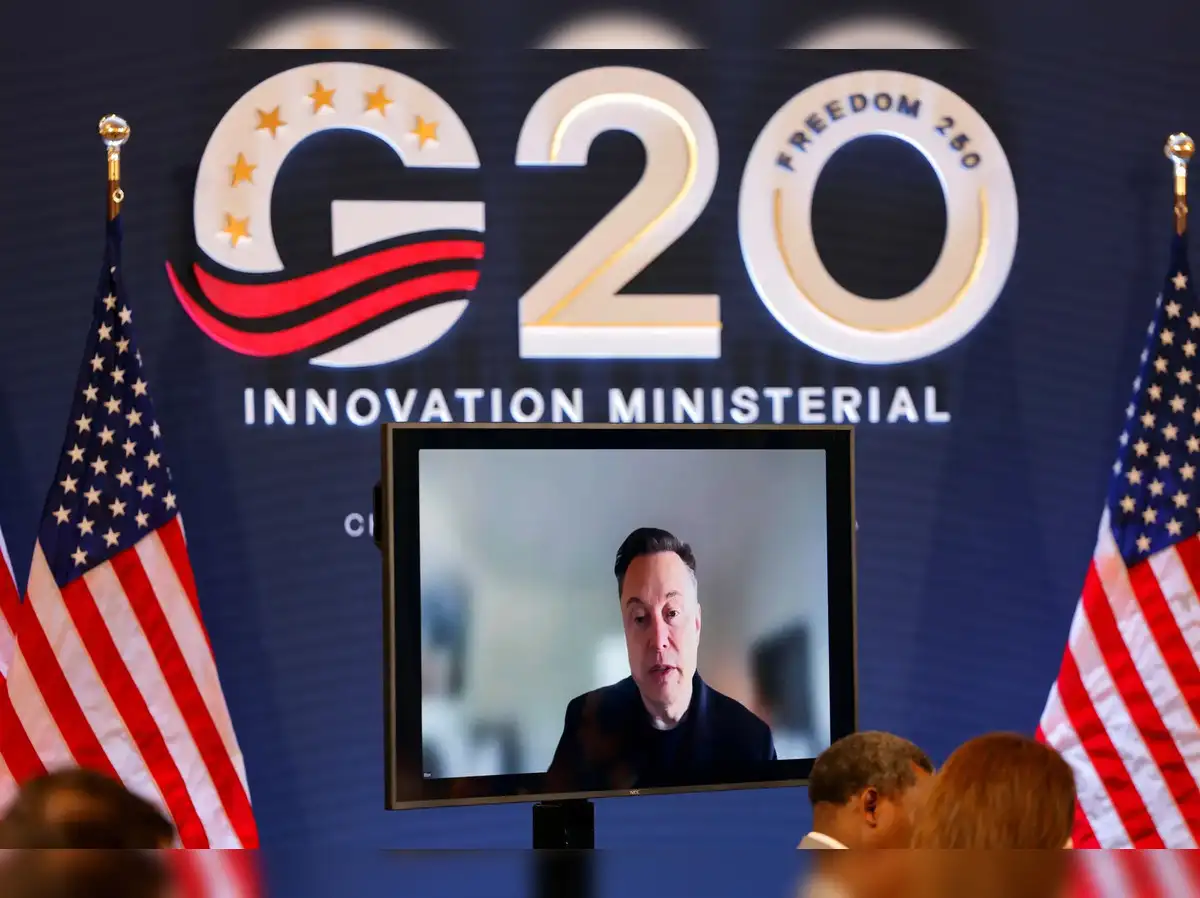
Mark Zuckerberg and Elon Musk on Tuesday stressed the need for more AI data centers and the electric power needed to support them at a meeting of G20 technology ministers focused on AI.
The two US tech bosses spoke virtually at a G20 meeting in Chapel Hill, North Carolina organized by the White House, which is dedicated to keeping the AI revolution largely free of government rules and scrutiny.
Zuckerberg said the buildout would require "hundreds of thousands and maybe millions of jobs" in the skilled trades, "just because the demand for data centers is immense."
Zuckerberg said: "What we've basically found at Meta is that we... can't find the skilled tradespeople that we need to build the data centers... that we as one company are trying to build."
Musk called out a "crisis of power" in the AI buildout that he said was giving China the advantage.
Musk said there will be a significant power shortfall next year, "not (the) distant future."
Distinct publishers with included, body-backed reporting in this cluster.
Follow any of these and your For You feed starts watching them — no settings page required.
invest
Washington pitches Carolina Principles to G20, urging no new AI rules or bodies1 distinct publisher
invest
The 81% Problem: AI's Star CEOs Are Polling Badly With The People They Need To Hire1 distinct publisher
product
Nine AI leaders, nine majorities of distrust: the floor onboarding copy cannot lift1 distinct publisher
product
Nvidia's $105bn guarantee, not OpenAI's balance sheet, is what makes Ohio's 8 gigawatts buildable1 distinct publisher
Evidence-backed comparisons of source perspectives and observed adoption signals. Read the methodology
Which Builder, Operator, and Investor concerns the observed source mix emphasized—not a truth score.
Evidence, demonstrated adoption, hype gap, incentives, and confidence are assessed independently, each on its own current evidence. How these are measured.
One wire account, all of it on the record
Everything solid here is solid in the same narrow way: these are quotes from a public forum, faithfully transcribed by The Economic Times, and no one disputes that the words were said. The moment a claim reaches past the speaker — the shortfall next year, the trillions of uplift, the majority of Americans said to oppose data centres — the reporting has nothing behind it but assertion, and in the polling case not even a pollster's name.
No megawatts, no headcounts
Two constraint disclosures is not a measurement. Neither executive attached a number to anything — not tradespeople hired or sought, not sites under construction, not nameplate capacity of the generation Musk says he is building — and no utility or contractor appears to supply one. There is nothing here to size.
Trillion-dollar promises, quoted not checked
The gap is not uniform, which is what makes it interesting. Musk's $20-30 trillion a year and Hassabis's ten-times-the-Industrial-Revolution are unfalsifiable as stated and pass through untested, pushing the story well past its evidence. Pulling the other way, the labour admission is a concession against interest — a chief executive telling ministers he cannot staff his own sites is the least inflated thing in the piece, and it gets less room than the trillions.
A room convened to hear exactly this
Follow who benefits from each sentence. The forum was organised by the administration's own science adviser and Commerce Secretary and is described as dedicated to keeping AI lightly regulated; the speakers are the buyers who need faster permits, more power, and more trained labour; the president had just called objectors backwards and poor. Musk pressed a default-legal standard on Europe with French, Italian, German and EU officials sitting in front of him, and the December summit that follows is at Trump's own resort. Every incentive in the room points the same direction, and nothing in the reporting points back.
Firm on who said what, soft on whether it holds
We can be fairly sure of the transcript: a public ministerial meeting, quotes that would be widely contradicted if wrong. We cannot be sure of much else, because one syndicated report is doing all the work and its two most consequential propositions — next year's shortfall and majority public opposition — are exactly the ones with no data attached.