Science1 publisher3 min readPublished Updated
Janelia's WHOLISTIC reads calcium signals from nearly every cell in a live zebrafish larva
Coverage is the achievement in this Nature paper: cardiovascular, digestive and nervous activity recorded on one clock, in an animal chosen because you can see through it, which is also why the result is about a fish larva.
The Scientist · Science desk
What happened
- Janelia Research Campus has built WHOLISTIC, a system that records real-time calcium communication signals from nearly every cell in a living vertebrate at the same time.
- The Nature paper comes from Virginie Ruetten in Misha Ahrens's lab, with collaborators at University College London, Virginia Tech and Tsinghua University.
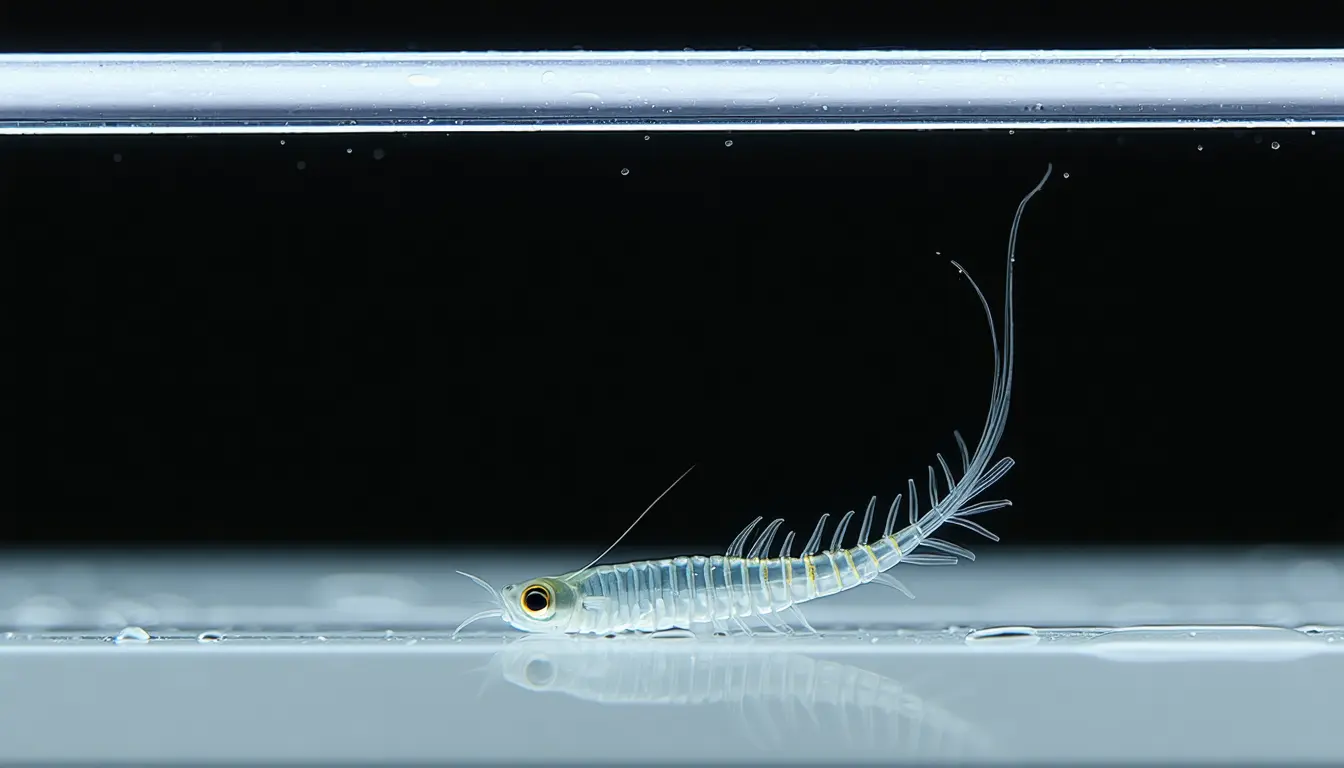
- In a young zebrafish the system records cardiovascular, digestive and nervous system activity together, covering the animal as it swims, eats and sleeps.
- The team is sharing its fish lines with other laboratories and releasing the computational methods as open source.
Compiled by The ScientistSomething wrong?How this is made
Why it matters
- capability Questions that span organ systems become measurable in one animal instead of being inferred by stitching together recordings from different experiments and different fields.
- constraint Simultaneity buys correlation, so any claim that a gut signal drove a brain signal still needs a perturbation experiment the method itself does not perform.
- decision For a lab weighing adoption, the shared fish and open code lower the software barrier, leaving the optics and the requirement for a see-through animal as the real cost of entry.
- precedent Janelia's own brain-and-behavior programme now has a body-wide baseline available to it, which raises the bar for what counts as sufficient coverage in that work.
Calcium is what makes a body-wide recording thinkable. Nearly every cell uses it to signal to its neighbours [5], so one sensor chemistry yields a comparable readout in a heart cell, a gut cell and a neuron. The Ahrens lab and collaborators have been imaging those signals across the whole larval zebrafish brain for more than a decade [6]. Getting from brain to body was four engineering problems rather than one.
They needed a way to put a calcium sensor into every cell, not only neurons; then a microscope suited to signals whose amplitude and time course differ between tissues; then software that tracks and aligns those signals in a moving animal and sorts cells into types by activity pattern. Activity pattern is a weak basis for saying what a cell is, so the last step was whole-body expansion microscopy, which enlarges the fixed tissue enough to read fine structure and check the identities the recording assigned [7]. That validation step is what makes the cell-type claims arguable rather than assumed.
A concurrent recording establishes simultaneity, not direction. Calcium rising in the gut and in a brainstem region within the same moment tells you the two co-occur, not which moved first or whether either moved the other; separating those still needs perturbation [17]. The announcement is also quiet on the quantities that decide how much biology is actually in reach: how many cells, at what volume rate, at what spatial resolution, for how long [16]. Whether the system can order events across organs, as opposed to noting that they happen together, is precisely what those numbers would settle.
The trade the design makes is the animal. A days-old larval zebrafish is tiny and transparent, which is why every cell is optically reachable at once [6]. The team is now porting the method to Danionella, which stays transparent throughout life and can therefore support more complex behaviors than a larva a few days old [12]. Janelia frames the work as a first step toward the machinery of more complex organisms, humans included [18]. What the system currently delivers, described accurately in the present tense, is a complete recording of one very simple vertebrate under a microscope.
Ahrens's case for why the coverage matters is about where explanations live. Evolution, he says, "didn't care whether a decision was implemented in the brain's prefrontal cortex or in a connection between the brainstem and the bladder" [9], and disciplines organised by organ system inherit that indifference as a blind spot; he expects physiology, neuroscience, behavior and cell biology to be able to work in the same animal now [10]. Ruetten states the gap more concretely: "There are some really basic properties that were just missing because it's been very difficult to look at cellular responses at scale" [11]. Those properties are the checkable part of the claim, and Janelia has pointed the method at its own recently launched effort to work out how a vertebrate brain generates behavior [13], which is where they would surface first.
What to watch
- Whether the Danionella port holds signal quality in an adult-transparent fish, which is what would move this past days-old larvae.
- The paper's reported figures for cells recorded, volume rate, resolution and session length, none of which the announcement gives.
- Whether outside labs get comparable recordings from the shared fish and open-source code, or whether the microscope turns out to be the gate.