Science1 publisher2 min readPublished
Syria's wartime antiquities director writes up how 30,000 objects left Deir ez-Zor
Abdulkarim, who ran Syria's antiquities directorate through the war, has published an account of the two operations that moved roughly 30,000 objects from Deir ez-Zor to Damascus. He also states the risk test he used to order them.
The Scientist · Science desk
What happened
- Between 2014 and 2015, roughly 30,000 items were moved out of the Deir ez-Zor Museum in northeastern Syria, which is now permanently closed.
- In the first operation, staff took the museum's most significant holdings to a military airport, and transport aircraft flew them to secure storage in Damascus.
- After sites were destroyed in 2015, the antiquities directorate ordered every museum in a conflict zone emptied, and a second batch from Deir ez-Zor went to Damascus.
- Abdulkarim, who was director-general of the Directorate-General of Antiquities and Museums at the time, has now published his account of both operations in Museum Management and Curatorship.
- The head of antiquities in Palmyra was publicly executed for refusing to disclose where artifacts had been hidden.
Compiled by The ScientistSomething wrong?How this is made
Why it matters
- capability Museum emergency planning gains a worked case it can cite, written by the person who gave the order, with the route, the packing materials and the sequencing on the record.
- constraint With one museum described and no collection left in place for comparison, the paper cannot establish that moving the objects produced fewer losses than sheltering them would have.
- exposure If the redocumentation in Damascus was as thorough as Abdulkarim describes, anything from this collection that later surfaces on a market is identifiable, and the dealer holding it is the one exposed.
- precedent The sequence here, one flagship site destroyed and then a blanket evacuation order, is the pattern other national services are likely to follow instead of assessing museum by museum.
The transferable part of this paper is the standard Abdulkarim says he applied, and it was comparative. "My judgment was that the risks of leaving the collection in Deir ez-Zor had become greater than the risks of moving it," he said [13]. The trigger came from outside Syria, in the raiding of the Mosul Cultural Museum in Iraq in 2014 [5]. "For me, Mosul was a clear warning that waiting for ideal security conditions was no longer possible," he said. "The greater risk could be doing nothing." [6]
How much could leave depended on the route. By the summer of 2014, access to the city ran through one very thin, very vulnerable corridor linking part of Deir ez-Zor to a military airport [7]. More than 11,000 objects went out that year [8]. Against a two-year total of almost 30,000 [1], that leaves roughly 19,000 for the 2015 phase, about 63 percent of everything moved [17]. Both published figures are rounded, so treat the split as approximate. The larger move followed the destruction of the Temple of Ba'al Shamin, which UNESCO has described as one of the most important religious buildings of its time and place [11].
A count of objects does not measure mass, fragility, or how much lift each one needed, and the account is given in objects [1]. The totals are the directorate's own [18]. Abdulkarim does report one outcome measure cleanly: none of his colleagues were injured across the two missions, and he said the risk to them was the hardest part of the operation for him personally [15].
"Digital documentation became a central element of our heritage protection strategy during the war," he said, describing it as a second layer of protection [9]. His stated purpose for it is narrow and useful: it "helps establish an object's identity, trace and potentially recover it, and combat theft and illicit trafficking if it is lost" [10]. That work began once the crates reached secure storage in Damascus, alongside conservation [8].
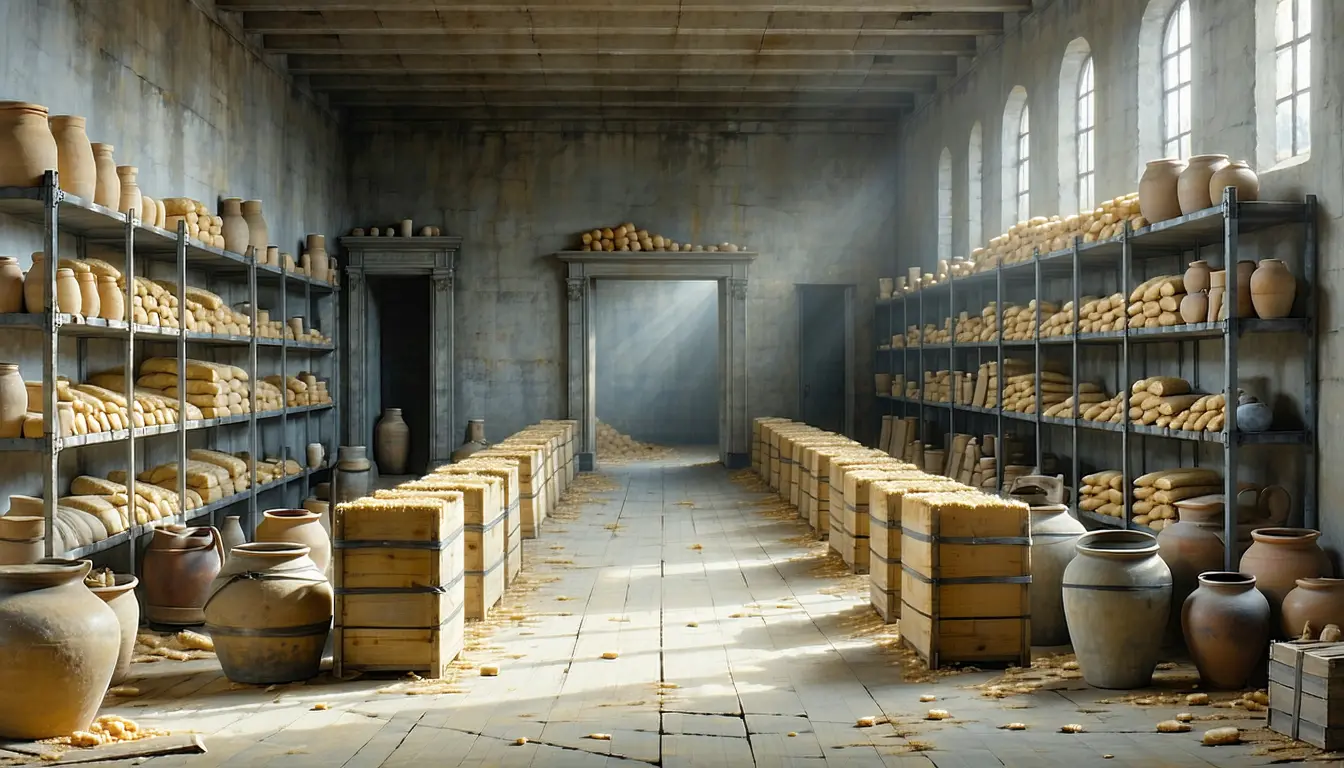
Staff improvised the packing against limited resources and time pressure, using wooden crates, cotton canvas and reinforced cardboard [16]. Abdulkarim, now professor of archaeology and history at the University of Sharjah [3], told Discover that the operation was not simply about saving 30,000 objects. He said they were protecting thousands of years of the memory of the Euphrates region, at a time when its communities themselves were suffering enormous human losses because of the war [4].
What to watch
- Whether an inventory conducted by anyone outside DGAM confirms the roughly 30,000 count and the condition of the objects in Damascus storage.
- Whether other antiquities services write Abdulkarim's comparative risk test into their own emergency plans, or keep waiting for security conditions to improve.
- Whether the Deir ez-Zor collection is ever returned, and what state the wooden-crate and cardboard packing left it in.