Science1 distinct publisher3 min readUpdated
A 25-country systematic review finds legacy flame retardants dominant in particle-rich matrices. The exposure pathway now belongs to whoever dewaters, dredges or spreads.
The Scientist · Science desk

Compiled by The ScientistSomething wrong?How this is made
Follow any of these and your For You feed starts watching them — no settings page required.
Whatever the chemistry, the accounting is simple: the fraction of PBDEs that matters to an operator is the fraction that ends up in material you dredge, dewater or spread. Prof. Khaled Abass of the University of Sharjah, who led the review, reports BDE-209 dominating sediments, sludge, wastewater-related systems and deposition [3], while water showed lower and more transient concentrations [6]. Read as a mass balance, a treatment works is a concentration device under that description: it takes a particle-associated contaminant out of a dilute stream and hands it back as cake. Land application completes the transfer to soil, which is among the compartments the authors say these reservoirs feed, along with waterways, waste-management systems and food chains [4].
The evidence base beneath that conclusion is thinner than the headline country count suggests. The review included 181 studies [8] across 25 countries [1], an average of roughly seven per country [13], synthesised over six matrix types [15]. With distributions described as strongly dependent on matrix [6], a country with no reported detections may simply be a country where nobody sampled sediment. The congener split matters here too: BDE-47 and BDE-99 turned up more in air and soil [5], so an air-and-water monitoring programme can return clean-looking numbers while the heavy congener sits in the solids nobody assayed.
Then there is the recycling problem, which Abass raises himself: Europe is moving toward more ambitious circular-economy models, and circularity without chemical safety can unintentionally recirculate legacy pollutants [11]. PBDEs went into electronics, textiles, plastics, vehicles, furniture and building materials [12], and the review lists legacy consumer products and recycled materials among the reasons the compounds remain detectable [10]. That puts the screening obligation at the feedstock rather than the finished product, because the incoming bale is where the burden is decided.
One inconsistency in the reporting changes how the timeline reads. The phys.org headline dates the bans to the 1970s, while the article text says only that restrictions were introduced more than half a century ago and does not date PBDE restrictions specifically [14]. If the restriction clock is younger than the headline implies, then more of the stock is still in service inside buildings, vehicles and furniture, and the sludge signal is not a decaying tail but an active supply. Nothing in the material settles that, and it is the difference between managing a legacy and managing an inflow.
The procedural finding is the durable one. Regulatory bans ended production; they did not end the source term, which moved to whoever handles the solids [4][10]. Until sludge acceptance criteria and dredge-disposal permits name congeners rather than chemical classes, that handover happens with no number attached to it.
Ranked by verification strength, evidence, and original report placement.
A new systematic review published in the journal Environmental Research detected banned chemicals, including PBDEs, in air, water, sediments, soils, snow and sludge across ecosystems in 25 European countries.
The study reports that regulatory restrictions introduced more than half a century ago have failed to eliminate contamination from banned chemicals across Europe.
Lead author Prof. Khaled Abass of the College of Health Sciences at the University of Sharjah said one of the most important findings is the dominance of BDE-209 in particle-rich matrices, including sediments, sludge, wastewater-related systems and deposition.
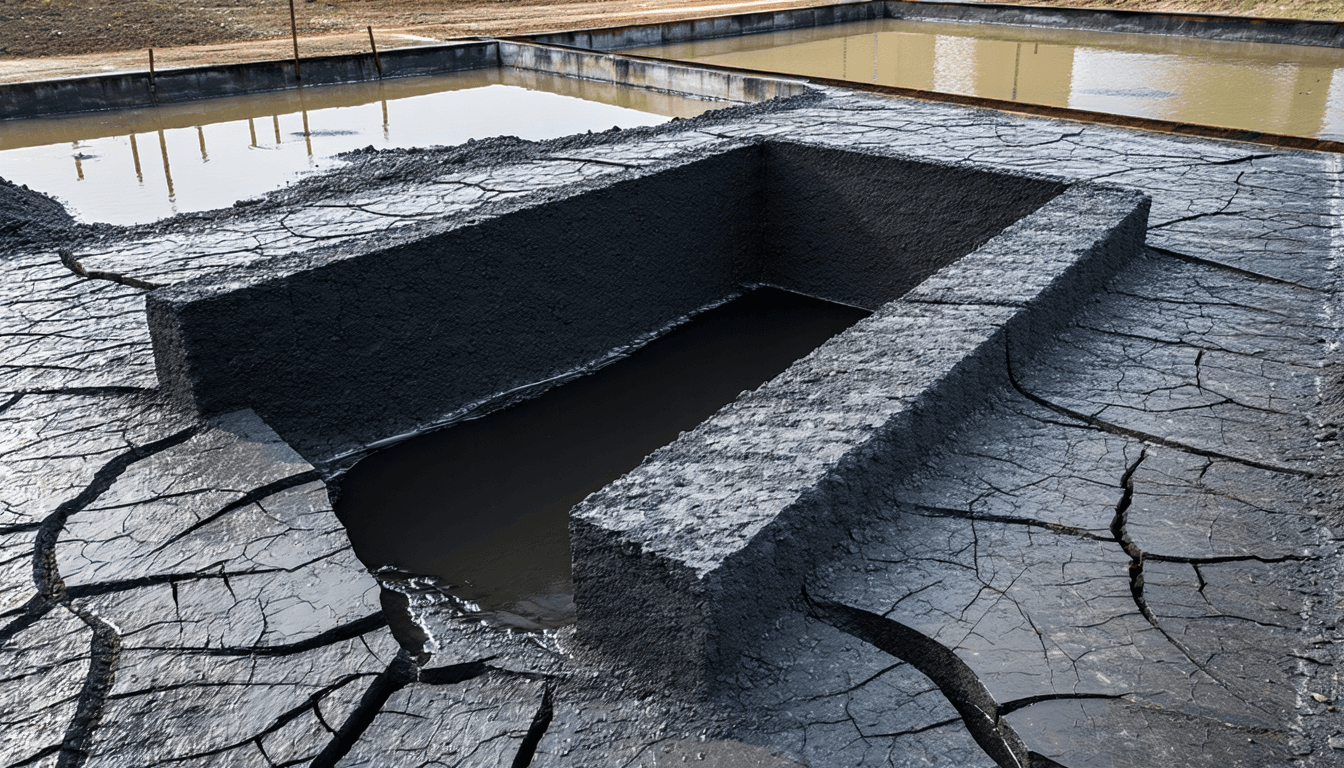
According to the researchers, sediments are not passive storage sites but long-term reservoirs that gradually release contaminants into waterways, soils, waste-management systems and food chains.
The study found lower-brominated congeners such as BDE-47 and BDE-99 were more prevalent in air and soil samples.
The authors report PBDEs were widely detected in both impacted and remote European environments with distributions strongly dependent on matrix type: water generally showed lower, more transient concentrations, whereas sediments, sludge and some soils acted as major reservoirs.
Evidence-backed comparisons of source perspectives and observed adoption signals. Read the methodology
Which Builder, Operator, and Investor concerns the observed source mix emphasized—not a truth score.
Evidence, demonstrated adoption, hype gap, incentives, and confidence are assessed independently, each on its own current evidence. How these are measured.
Registered systematic review, single-outlet relay
The underlying work is a peer-reviewed systematic review with unusually explicit methodological scaffolding for a news item: PRISMA adherence, a PROSPERO registration number, SURE-based risk-of-bias assessment, three named databases searched through November 2025 and 181 included studies across six matrices. That supports the qualitative findings well. It is discounted because every claim reaches us through one outlet, no quantitative results (concentrations, ranges, trends) are reported, no per-country distribution is given for the 181 studies, and no DOI or link to the paper is provided for verification.
No uptake evidence in cluster
The supplied material reports research findings and recommendations only. There is no evidence of any monitoring programme, utility, regulator or recycler acting on them — no adopted multi-matrix monitoring scheme, no sludge or recyclate rule change, no procurement or operational response. Adoption cannot be scored without inventing facts.
Body restrained, headline overreaches
The substantive claims are stated carefully and hedged by matrix ('widely detected', 'strongly dependent on matrix type', 'more transient concentrations'), which keeps the gap small. The overstatement is mostly presentational: the headline asserts a 1970s ban the body never substantiates, and the continental 'across Europe' framing rests on an average of about seven studies per country with no concentrations attached, so the strength of the picture reads firmer than the reported evidence base.
Institution-sourced science relay
The article is built almost entirely on quotes from the lead author and foregrounds his institutional affiliation, the pattern of a university-communications-driven research write-up, and it closes with the authors' own call for expanded monitoring, an outcome that benefits the research community making the call. No funder is disclosed, no independent scientist is quoted, and no regulator or affected operator is asked to respond. These are ordinary academic promotion incentives rather than commercial ones, so the score is moderate rather than high.
Method credible, corroboration absent
Confidence sits mid-range: the methodological disclosures are specific and checkable, so the existence and shape of the review are unlikely to be wrong, but a single publisher, zero quantitative detail, no primary-document link and no adoption or regulatory response mean the practical significance for sludge, sediment and recyclate handling remains unverified within this cluster.
build
Prisma v7 stops seeding for you, and the pooled URL will not finish the job1 distinct publisher
build
Four Layers, One Status Code: Testing Tenant Scope on a Generated Prisma Route1 distinct publisher
build
A RAG demo becomes a product at the tenant boundary, not the retriever1 distinct publisher
science
Transport cost, not tonnage: Finnish team remaps who can actually reach the calories1 distinct publisher
Distinct publishers with included, body-backed reporting in this cluster.
phys.org
1 article · August 24, 2026