Science1 distinct publisher3 min readPublished
Alaska's North Slope tundra stays small because winter punishes anything above the snow. That ceiling is lifting by roughly 0.7C a decade, and the baseline it held cannot be collected twice.
The Scientist · Science desk

Compiled by The ScientistSomething wrong?How this is made
The reason anyone flies to a field station 200 miles north of the Arctic Circle to examine plants through a hand lens [16] is that the list of things keeping those plants short is short enough to write down. Anne Bjorkman of the University of Gothenburg gives two items: in winter, whatever pokes above the shallow insulating snow gets damaged by cold and wind, or eaten [6], and roots stop where the permafrost starts [7]. That is about as close to a single-variable system as field ecology gets, which is why the place has long been a usable window on what makes plants grow at all [19].
The variable moved. This part of Alaska is 2.7C (4.8F) warmer than it was 40 years ago, mostly from burning coal, oil and gas [5], which works out to roughly 0.68C per decade [1], in a region warming four times faster than the rest of the planet and doing it hardest in winter [4] - the season that does the cutting [6]. The response arrives as two separate things that look identical in a greenness index: plants already present are growing taller [8], and taller species that previously could not survive the cold are moving in [9].
Neither response leaves the driver alone. Sarah Elmendorf of the University of Colorado describes canopies dark enough and tall enough to stand above the snow, absorbing solar energy that white snow would have reflected [10]; Duncan Menge of Columbia calls darker tundra one of the main reasons for Arctic amplification [12]. The same shrubs catch more snow, the deeper snow keeps the ground warmer, and winter microbes release more methane [13]. Against that, Elmendorf offers one partial credit: the added greenery takes up more carbon dioxide [14]. Two amplifying mechanisms named by these researchers, one offset, and no sign attached to the sum [2].
So the long-term work Menge describes, establishing what controls how much plants grow and how green the tundra gets [15], is chasing a subject that is being edited by its own answer. The Toolik question of whether harsh conditions push plants to compete or cooperate [16] presumes a cast of species, and immigration is changing the cast [9]. Downstream, Chris Neill and Linda Deegan of the Woodwell Climate Research Center report willow stands spreading far enough to shade streams and alter the ecology of fish, insects and birds [17], a thermal effect delivered by vegetation rather than by the water. Their multiyear study asks whether an ecosystem can adapt and even evolve genetically under that stress; Deegan says that if it is, it is grounds for hope for the most fragile Arctic systems [18].
Elmendorf calls shrubification a major fingerprint of change that researchers can see [11]. It is also the thing doing the erasing. The cold was the control condition, and the cold is what is being withdrawn [8][9].
Ranked by verification strength, evidence, and original report placement.
The North Slope is a vast, sparsely populated treeless area of Alaska stretching from the Brooks mountain range to the Arctic Ocean.
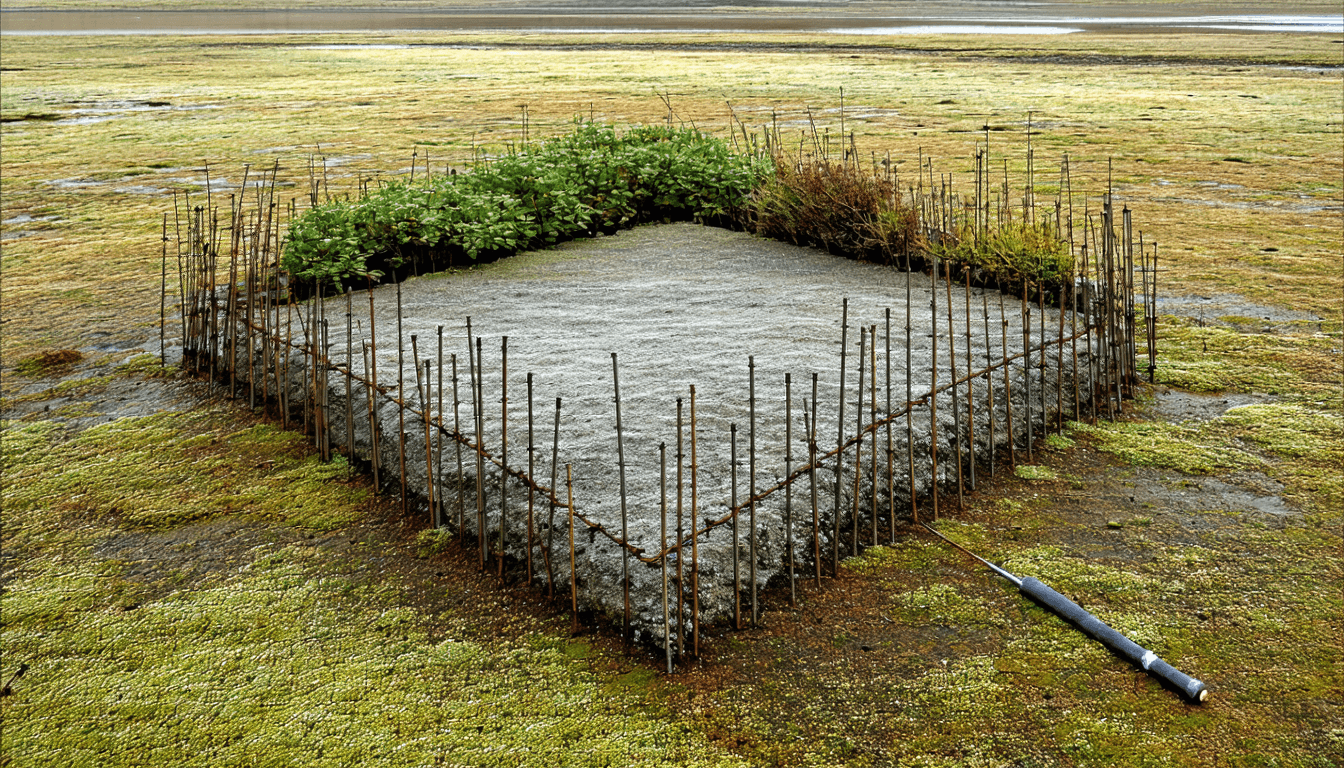
The North Slope tundra's vegetation tops out at about 10 inches (25 centimetres).
Researchers walking the North Slope towered over knee-high dwarf birch trees, and rhododendrons did not reach the backs of their shoes.
The Arctic is warming four times faster than the rest of Earth, especially in winter.
This part of Alaska is about 4.8 degrees Fahrenheit (2.7 degrees Celsius) warmer than it was 40 years ago, mostly because of the burning of coal, oil and gas.
Plant ecologist Anne Bjorkman of the University of Gothenburg says the main reason Arctic plant life stays small is winter: anything protruding above the shallow, insulating snow cover is more prone to being damaged by cold and wind or eaten by wildlife.
Follow any of these and your For You feed starts watching them — no settings page required.
Evidence-backed comparisons of source perspectives and observed adoption signals. Read the methodology
Which Builder, Operator, and Investor concerns the observed source mix emphasized—not a truth score.
Evidence, demonstrated adoption, hype gap, incentives, and confidence are assessed independently, each on its own current evidence. How these are measured.
Named expert testimony, no primary studies attached
Every substantive mechanism claim is attributed on the record to an identified researcher at a named institution (Bjorkman/Gothenburg, Elmendorf/Colorado, Menge/Columbia, Neill and Deegan/Woodwell), and the reporting is first-hand from the site, which lifts this above unsourced assertion. But no underlying paper, dataset or measurement series is cited; the 2.7C-over-40-years figure carries no method or uncertainty; the willow/stream ecology effect is stated as apparent; and the adaptation study has no results yet. One publisher, one item, no independent corroboration.
Not applicable / no adoption evidence
The supplied material contains no releases, deployments, benchmarks, pricing or usage disclosures, and no measurable uptake of any tool, method or dataset. The only concrete institutional facts are that studies are ongoing at Toolik Field Station and by Woodwell researchers, which does not constitute adoption evidence. No adoption observations were recorded, so this dimension cannot be measured.
Mild framing overhang above what the sources state
The reported claims themselves are modest and well-hedged by the scientists quoted ("could compensate somewhat," "seem to be," "if that is happening"). The overhang comes from packaging: the cluster's dek converts a stated 2.7C-over-40-years figure into a clean "roughly 0.7C a decade" trend and asserts a lost, non-repeatable control condition, and the source's own "lush jungle" and "mini-greenhouse" language dramatizes a landscape it simultaneously describes as 10 inches tall. Amplifying feedbacks are named without magnitude while the single offsetting mechanism is mentioned once, which tilts the reader toward a stronger conclusion than the evidence base supports. The gap is framing-level, not fabrication, hence small and positive.
No disclosed funding or interest structure
The source names researchers and institutions but discloses no funding source, grant program, station budget, sponsor or commercial interest, and there is no policy or advocacy actor identified. Inferring an incentive structure from the mere presence of long-term field programs would go beyond the supplied material, so this dimension is left unmeasured.
Moderate-low: single publisher, single item, uncorroborated figures
Confidence is limited primarily by cluster structure rather than by the quality of the reporting: one publisher, one article, no primary literature, no adoption evidence and no incentive disclosure. Direction of travel (tundra vegetation getting taller under regional warming, with albedo and methane feedbacks) is supported by multiple independent named experts within the piece, which keeps confidence in the qualitative direction moderate, but every quantitative element rests on a single unsourced statement.
science
Antarctica froze because the mantle pushed it uphill, a new Science paper argues1 distinct publisher
science
A chip with human bone, lung and circulating tumour cells tests the metastasis model gap1 distinct publisher
build
Simple AI's robot-free dataset matches teleoperation at more than ten times the demonstrations1 distinct publisher
science
Hansen says this El Nino is already the strongest; two of three metrics still put it behind1 distinct publisher
Distinct publishers with included, body-backed reporting in this cluster.
phys.org
1 article · August 25, 2026