Science1 publisher2 min readPublished
The Marine Mammal Center plans to assess a humpback that swam 60 miles up the Sacramento River
Nobody knows yet whether the whale is ailing or simply passing through, so the Marine Mammal Center is assessing it from a distance. Three such visits into the Delta have been documented in four decades.
The Scientist · Science desk
What happened
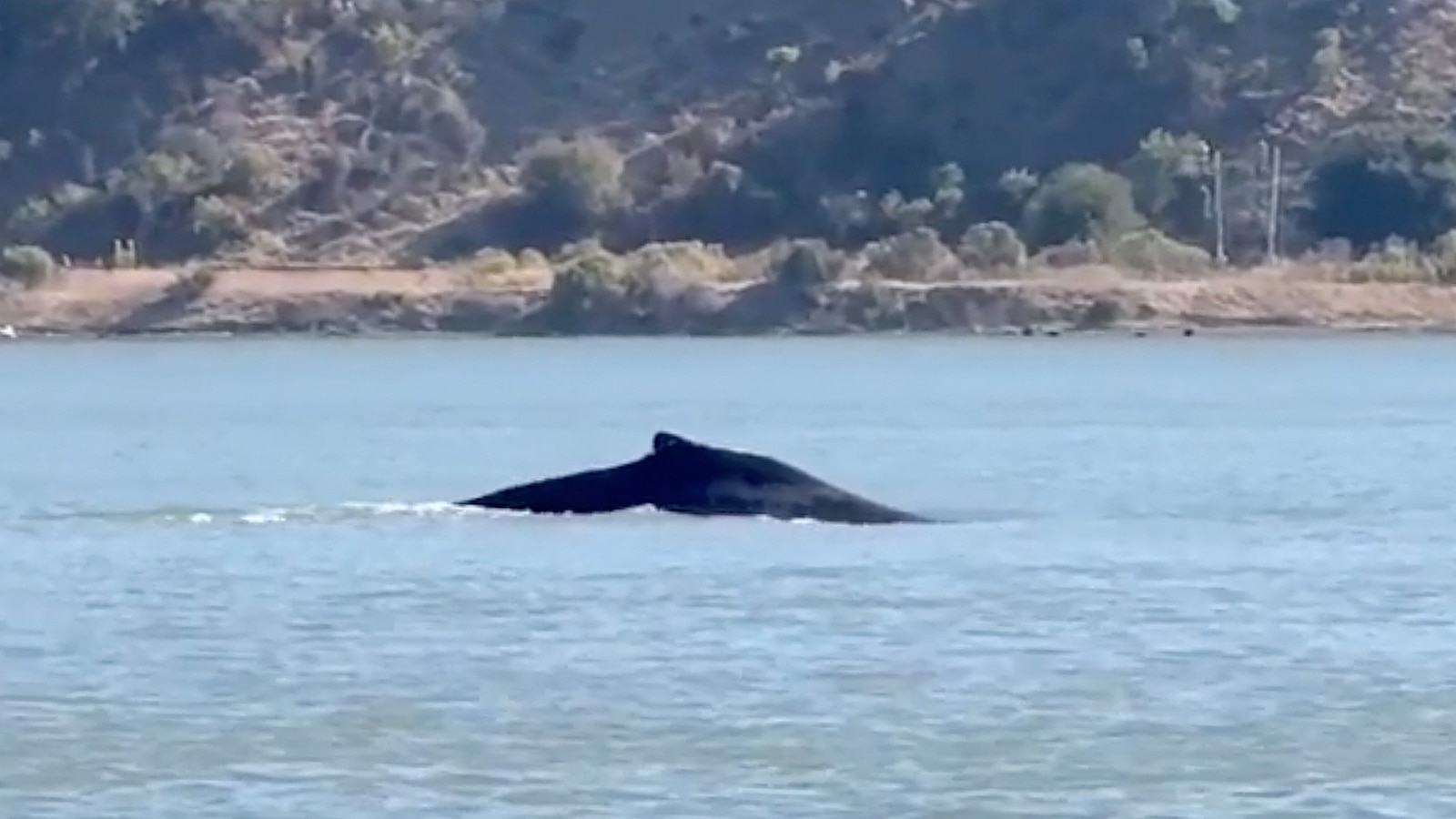
- Denny Glover, fishing for salmon and striped bass from a 21-foot boat, filmed a fully grown humpback surfacing on Wednesday in the Sacramento River, about 60 miles from the Pacific Ocean.
- The Marine Mammal Center said the whale entered San Francisco Bay earlier in the week and has since been traveling east through the Sacramento-San Joaquin Delta.
- The Sausalito-based center said its cetacean team is planning to assess and monitor the animal, and its conservation director asked the public not to interact with it or try to change its course.
- The whale is already in a photo identification catalog, and the center said the most recent record of it before this week was off Baja California in February; its sex is unknown.
- The California Department of Fish and Wildlife and the National Oceanic and Atmospheric Administration both declined to comment on the sighting.
Compiled by The ScientistSomething wrong?How this is made
Why it matters
- decision Touching a whale has to be justified by its condition; turning up in an odd place is not enough, and until the cetacean team has an assessment the defensible call is to keep away.
- constraint A photo identification catalog can fix where an animal was and where it is, and the cetacean team will still need to watch it surface to judge its health.
- exposure The immediate hazard to the animal is the crowd its own videos attract, in a working river where small boats can get close.
- precedent Both known Delta precedents ended with the whales leaving under their own power.
Fifteen photo-identification records over 24 years works out to about one every 19 months [7][1]. The number describes how often this whale and a camera have been in the same place, not how often the animal has surfaced. The last record before this week put it off Baja California in February, roughly seven months ago [8][4].
Two upriver visits are on the record before this one. A humpback known as Humphrey spent several weeks around Rio Vista in 1985, and a mother-calf pair called Delta and Dawn spent nearly three weeks in the Sacramento River Delta in 2007 [11][12]. Counting this week, the record holds three known episodes in 41 years, spaced 22 years and then 19 years apart [3]. Three points that far apart are too few to read as a trend. The center's statement and the Associated Press account do not say how much of the Delta was under observation in 1985 compared with now, when an angler fishing for salmon can shoot video of a spout from a 21-foot boat [1].
Condition is what would change the response, and the only condition evidence in the account is behavioral. "It came up and went down in fairly regular intervals," Denny Glover said [15]. "It was moving along at a fair clip. It wasn't acting erratically other than that it was upstream in a freshwater river" [16]. He said the whale seemed in good shape despite being far from home [17].
Those are useful observations of an animal showing no visible distress. Body condition is a separate measurement, and what turned a whale east through San Francisco Bay is still unexplained. Glover's boat was less than half the length of the animal, which puts the whale over 42 feet [2][2]. Humpbacks weigh up to 80,000 pounds [14].
"While it's unknown whether this whale is just passing through or if there is an underlying, unknown ailment, the best thing people can do is experience this adult whale's presence from a respectful distance," said Kathi George, the center's director of cetacean conservation biology [5]. The two questions the center's scientists have named are what condition the animal is in and how it wound up 60 miles from the sea [20].
What to watch
- Whether the cetacean team publishes a condition assessment, and whether it reports any sign of injury or poor body condition.
- Whether either the federal or the state wildlife agency speaks on the record about the sighting.
- How far east the animal travels before it turns, and how long the trip lasts compared with the earlier Delta visits.