Product1 publisher2 min readPublished
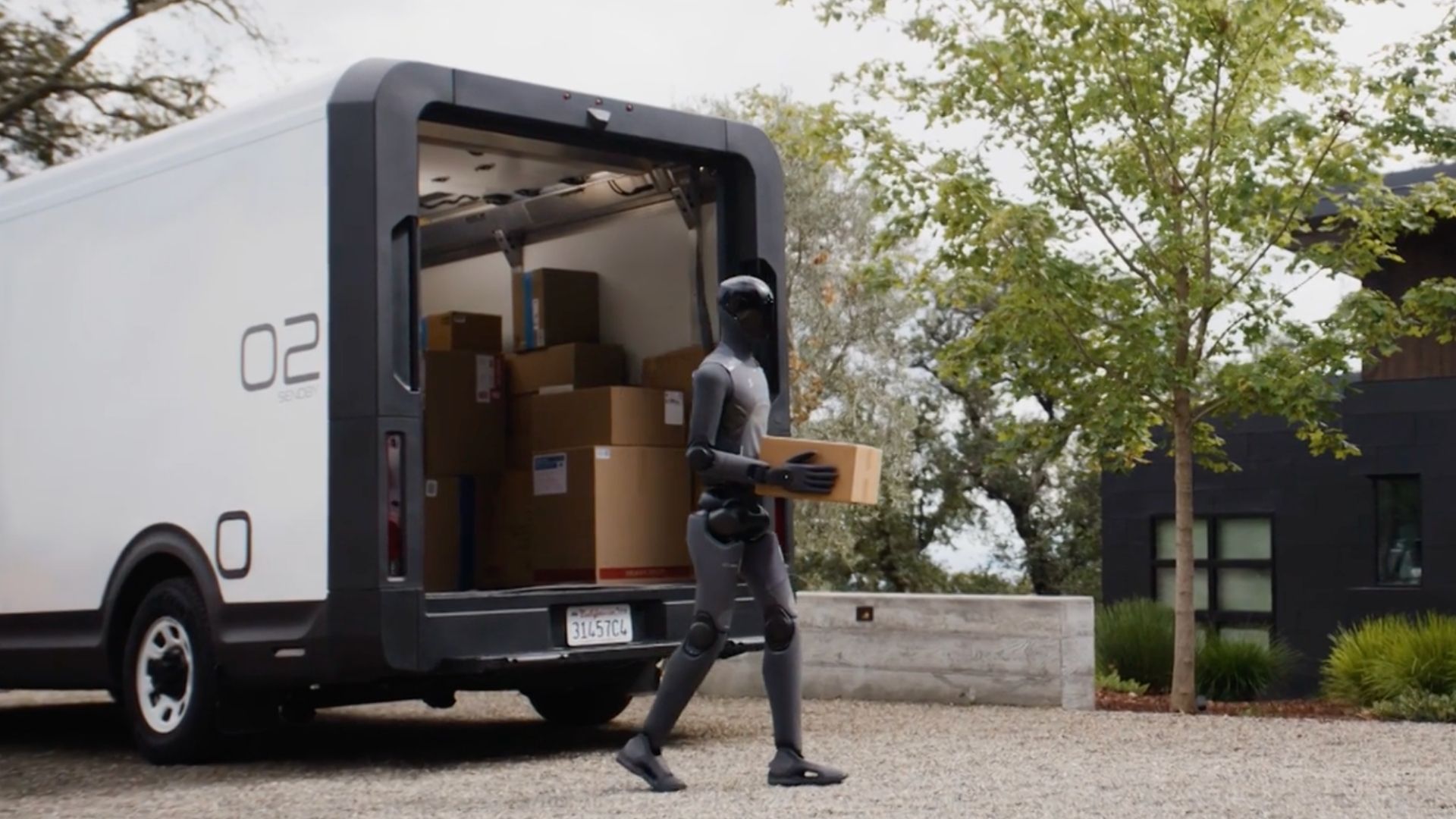
Figure's robot averaged three parts per vehicle over 1,250 hours on a BMW line
The one humanoid deployment with published duty numbers did a single station's worth of work, while Chinese makers supplied more than four in five installations worldwide in 2025. Both facts shape a pilot decision.
The Product Desk · Product desk
What happened
- Figure's Figure 02 loaded more than 90,000 components and logged more than 1,250 operating hours on a BMW production line, contributing to the output of more than 30,000 vehicles.
- Chinese manufacturers accounted for more than four out of every five humanoid robot installations worldwide in 2025.
- A Reuters investigation, cited in the same survey of humanoid makers, found that humanoids generally remain too slow and error-prone for most industrial work.
- Tesla's Optimus has yet to reach significant commercial deployment, and Elon Musk has acknowledged that its initial production ramp will be extremely slow.
Compiled by The Product DeskSomething wrong?How this is made
Why it matters
- constraint The only humanoid deployment with published duty figures covers one station's repetitive fit, so that station's rate is the one number a plant scoping a pilot as general-purpose labour has to price against.
- contradiction Figure's hours on a live line and the Reuters finding that humanoids are too slow for most industrial work both describe 2025, and the gap between them is which task got picked.
- exposure A buyer moving past one unit is shopping in a market where two Chinese makers hold most of the installed base. Spares and lead times sit inside what began as an engineering evaluation.
- cost The cheapest published humanoid price is aimed at universities and labs, so $13,500 belongs to that market, and a plant comparing quotes for full-size industrial machines is working from other numbers.
A manufacturing engineer sitting through a humanoid pitch can do the useful division in the meeting. Figure's published totals from BMW come to three components per vehicle, and to about 72 components for every operating hour [1][1][2]. All three totals are stated as minimums, so both figures are floors.
Three parts a car at that rate describes one station doing one repetitive fit, sustained for the equivalent of roughly 156 eight-hour shifts [5]. That one task is what the published record covers, and it ran on an active production line rather than a staged set-up [2].
The pitch for redeployability is that the same machine walks to the next job when the line changes. What a pilot buys is one station's fit at a measured rate, and that is the half with numbers attached to it.
The Reuters investigation cited by Interesting Engineering and Figure's hours on a live line can both be true. Units ship into pilots, and pilots pick the station where the cycle has enough slack for a slow hand. UBTech shipped 1,079 full-size humanoids in 2025, and its Walker S2 swaps its own battery so it can resume work without someone plugging it in [8][10].
Supply is further along than capability. AgiBot took 30.4 percent of 2025 installations and Unitree 26.4 percent, according to figures covered by the South China Morning Post, so two firms account for 56.8 percent of the world's installs between them [5][6][4]. Those figures are broken out by maker and not by the country each machine went into. Unitree's G1 starts at about $13,500, and the buyers named for it are universities, developers and AI laboratories [7]. On the American side, Apptronik has commercial agreements with Mercedes-Benz and the logistics company GXO, and has raised more than $935 million [12].
Candidate tasks sort on how much the part mix varies at that station and how much slack the cycle has. Fixed automation already owns low variation with a tight cycle, and it will keep owning it. A humanoid competes in the opposite corner, where the mix changes often and the station tolerates a slower hand than a person's. Figure's totals are the only published yardstick for what that corner looks like inside a car plant, and about 72 components an hour is where that yardstick tops out [1][2].
What to watch
- Whether Figure or BMW publish duty numbers for a second station, or a cycle time per part.
- Whether Apptronik's Mercedes-Benz and GXO agreements produce published operating hours the way the BMW work did.
- Whether anyone breaks out the 2025 installation shares by the country the machines were installed in.