Invest1 distinct publisher3 min readPublished
The catalogue took 14 years and more than 260 institutional visits to assemble. It lifts the known overseas count sevenfold, so roughly 19,700 objects in nearly 30 countries just acquired a citable public record.
The Investor · Invest desk

Compiled by The InvestorSomething wrong?How this is made
Seven times is a multiplier that runs backwards as well as forwards: if the new count of more than 23,000 objects is seven times what the field assumed [1][3], the working figure had been somewhere near 3,290 [1], and about 19,700 objects went from unrecorded to photographed and numbered in a single publishing event [2]. Shanghai Classics Publishing House put the 60 volumes out in April [2], and the physical detail that the stack stands taller than a person [9] is a fair proxy for the labour behind it: 23,000 entries across 14 years is roughly 1,640 a year, about four and a half a day without a break for a decade and a half [4], spread over the 260-plus institutions the team visited, which averages something like 88 objects apiece [5][3]. That cost is why no comparable base existed, and why a rival one does not arrive next quarter.
What the volumes change is not the objects but the information set around them, and price is where information sets live. A bronze with a clean acquisition file loses nothing by being catalogued. A bronze whose file is a dealer receipt and a gap acquires, at no cost to itself, a public entry that a future buyer's counsel reads before wiring funds. The objects themselves are identical, but only one of them just became cheaper to challenge.
There are two versions of this that end elsewhere. In the first, documentation is bullish: a published scholarly entry authenticates, mainland demand rewards objects with citations, and catalogued lots trade better than uncatalogued ones, which makes the register a marketing asset for the very holders it names. In the second, the entries are typology, form and inscription and dating, with no acquisition chains in them at all, in which case documented title is untouched and this is a census with unusually good photographs. The reporting supports provenance-shaped work, since the team scanned rare catalogues and trawled auction records [5], but it does not say the published entries carry acquisition histories, and that gap is where the whole thesis sits.
This is probably wrong, but the more useful reading treats the register itself, not any individual restitution, as the actual objective. Zhu Fenghan, the lead editor and a Boya Chair Professor at Peking University, described the project in the People's Daily as creating archives and preserving evidence for history, and as getting a clear picture of family assets [6][7]; the South China Morning Post frames the volumes as a toolkit for China's reclamation campaign and as an assertion of Beijing's ambition to shape the global rules of repatriation [8]. Whoever owns the reference that everyone else cites gets considerable say over what counts as proof. Fourteen years of counting, commissioned in 2012 and published before any claim is attached to it [4], is the sequencing of an institution building a standard rather than pursuing a vessel, and those 14 years of scholarly capacity went into building that reference itself, not into any single case.
What would prove it wrong is simple enough to check: if two years pass and no claim or withdrawn lot cites a volume entry, then the 60 volumes are scholarship, and I have read a market document into a library.
Ranked by verification strength, evidence, and original report placement.
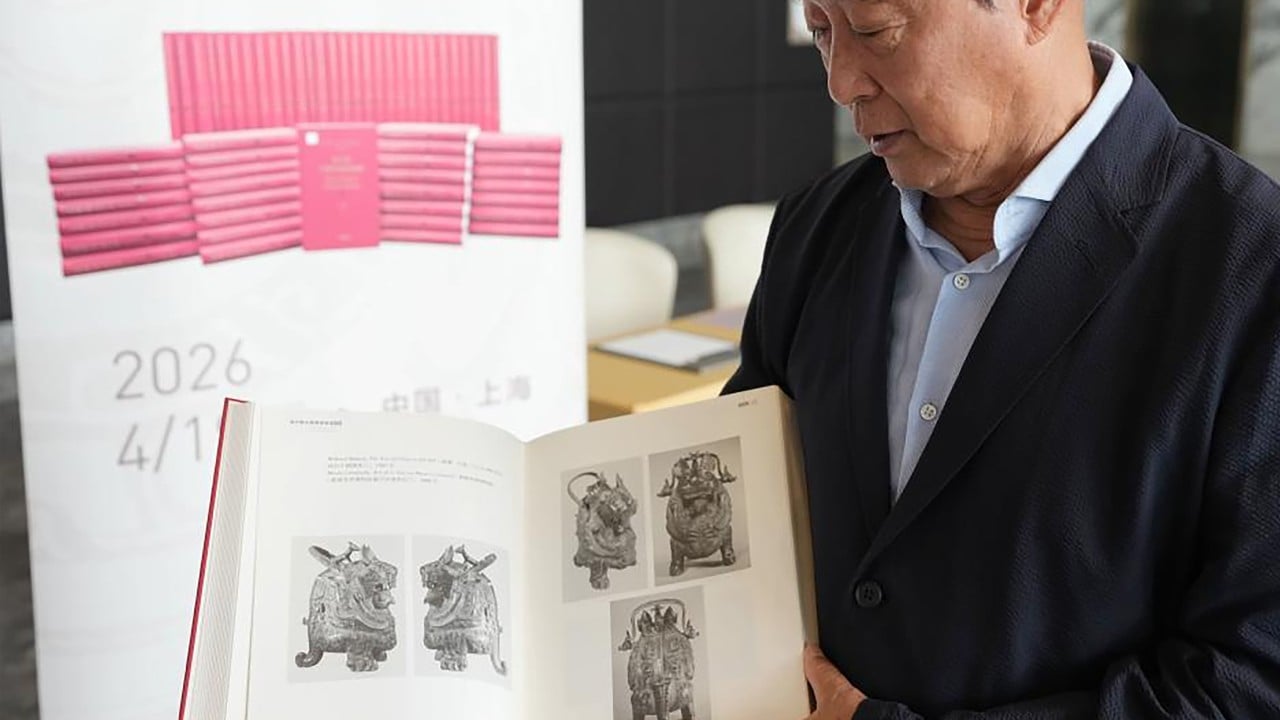
The Collection of Chinese Bronzes in Overseas Collections documents more than 23,000 ancient Chinese bronze vessels, weapons, chariot fittings and ritual objects now held in museums, private collections and auction houses across nearly 30 countries.
The 60-volume work was published in April by Shanghai Classics Publishing House and is the product of a 14-year investigation.
The Peking University study reveals seven times more relics held overseas than previously thought, creating what the report calls a crucial evidence trail.
The effort began in 2012, when China's National Cultural Heritage Administration asked Peking University to map the true scale of the country's dispersed bronzes.
Team members travelled to more than 10 countries to visit more than 260 institutions, scanned rare catalogues, trawled auction records and photographed objects that had rarely, if ever, been systematically recorded by Chinese researchers.
Lead editor and historian Zhu Fenghan, a Boya Chair Professor at Peking University, said in an article in the People's Daily last week that the aim was "to create archives for the cultural relics, to preserve evidence for history".
Distinct publishers with included, body-backed reporting in this cluster.
scmp.com
1 article · August 30, 2026
Follow any of these and your For You feed starts watching them — no settings page required.
build
A refactoring benchmark stops the best agent at 41.2%, and the tests are the story1 distinct publisher
build
The agent harness is the product: DeepSeek ships a runtime that routes to its rivals1 distinct publisher
science
Aging on a schedule: a mouse cell atlas argues for windows, not doses1 distinct publisher
build
Physics-only world models cannot predict people, and the fix costs six pipeline stages1 distinct publisher
Evidence-backed comparisons of source perspectives and observed adoption signals. Read the methodology
Which Builder, Operator, and Investor concerns the observed source mix emphasized—not a truth score.
Evidence, demonstrated adoption, hype gap, incentives, and confidence are assessed independently, each on its own current evidence. How these are measured.
Specific, checkable, unchecked
The particulars are the kind that could be verified: a named publisher, a named lead editor with his university chair, a named commissioning agency, a publication month. What is absent is anyone who has verified them. Both quotations come second-hand from Zhu Fenghan's own People's Daily piece, and the 23,000 figure rests on a 60-volume set that no independent reader in this coverage has opened.
In print, not yet in use
Two things have demonstrably happened: the volumes were published in April, and the lead editor promoted them in the People's Daily. Nothing in this reporting shows the catalogue being cited in a restitution claim, consulted by a foreign museum, or reflected in an auction listing. A 14-year survey has become a book; it has not yet become an instrument.
A reference work described as leverage
Between the documented object and the claimed consequence sits a gap. What exists is a catalogue. What the South China Morning Post says it is amounts to a toolkit for reclaiming heritage and a bid to shape global repatriation rules, a leap made in the newspaper's own voice with no legal analysis, no counterparty and no case attached. The scholarship is likely stronger than the framing; the framing is what travels.
Commissioned, published and publicised inside one system
Follow the chain: a state heritage agency ordered the survey in 2012, a state publishing house printed it, the Party newspaper carried the editor's framing of it, and Beijing has a live diplomatic interest in what the totals imply. Every actor with a hand in this benefits if the number is large and the injustice legible. That does not make the count wrong, but it does mean nobody in the chain is positioned to shrink it.
Probably solid, structurally untested
A 14-year academic survey producing 60 volumes is hard to fake and easy to check, which argues for trusting the core facts. But our reading rests on a single newspaper report whose key quotes are recycled from an official outlet, and the one comparison that gives the story its punch has no published baseline. Confidence sits in the middle because the ceiling here is set by how few independent eyes have been on it.