Invest1 publisher3 min readPublished
A $15M seed bets the AI data center bottleneck is welders, not chips
Three ex-SpaceX engineers have opened a robotic steel-skid plant in Cincinnati. The number that matters is not the cost per weld inch, it is how little of the build cycle welding actually occupies.
The Investor · Invest desk
Drafted by a language model from the sources cited here and checked against its claim ledger before publication. How we use AISend a correction
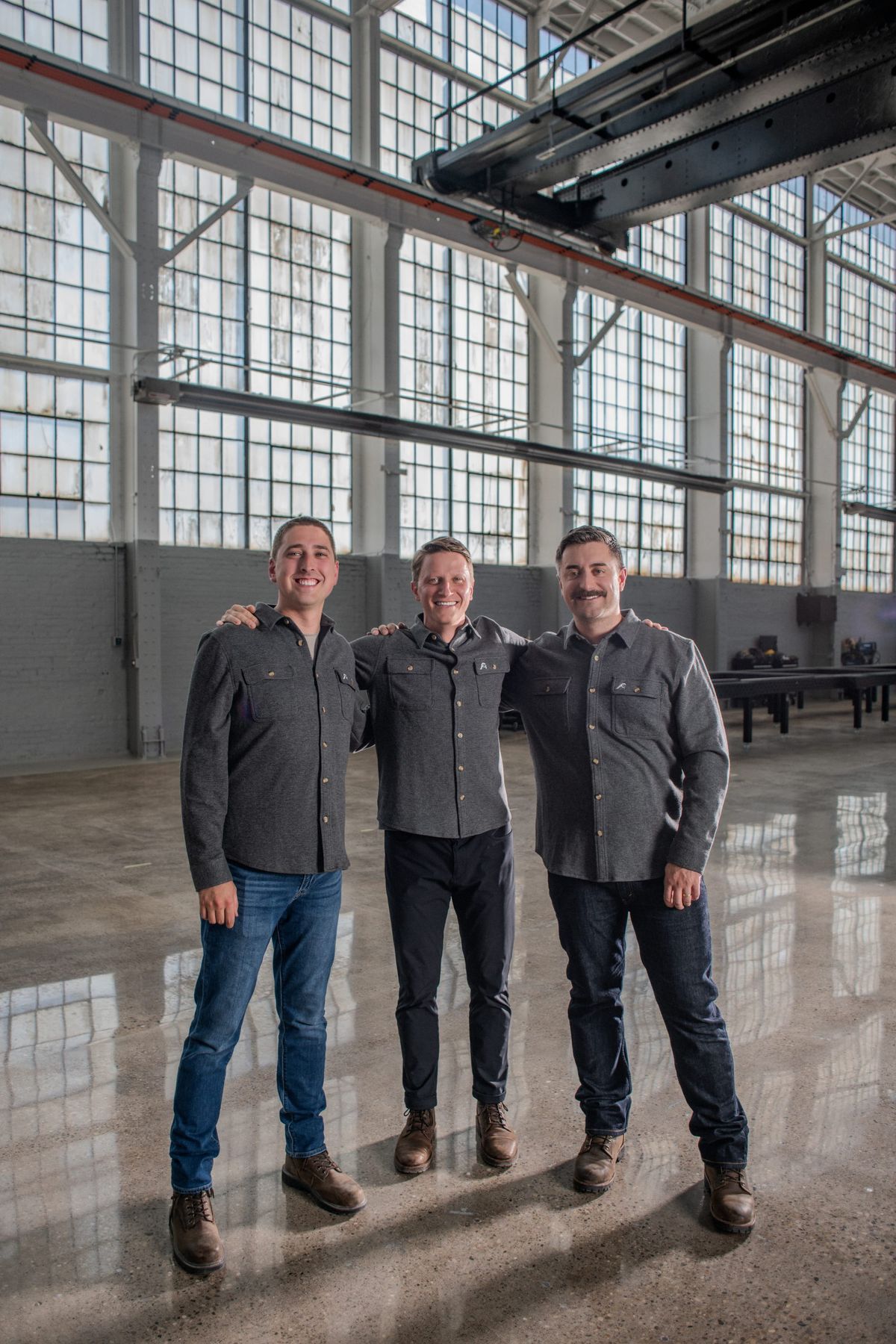
What happened
- Three former SpaceX engineers raised $15 million to open an automated steel-fabrication plant in Cincinnati, a startup named 1872 automating steel-skid fabrication.
- 1872 held a ribbon-cutting at its Factory One site on July 22, 2026.
- 1872 aims to sell steel components to companies building AI data centers and small modular nuclear reactors, both of which consume large amounts of fabricated steel.
- The three founders are Dan Summers (now CEO of 1872), Brian Mongilio and Michael Grant, all formerly of SpaceX; Summers led the team that integrated and fabricated the Raptor engines that powered the Super Heavy booster for Starship.
- Summers said the Raptor team paired software engineers with hardware engineers, and that this approach took Raptor from a first full-scale concept to production in three years, compared with a jet-engine development cycle he said can run past two decades.
Compiled by The InvestorSomething wrong?How this is made
Why it matters
Three former SpaceX engineers raised $15 million to open an automated steel-fabrication plant in Cincinnati under the name 1872, holding a ribbon-cutting at its Factory One site on July 22, 2026 [1][2]. The customers they are aiming at are builders of AI data centers and small modular nuclear reactors, both of which consume large volumes of fabricated steel [3].
The founders are Dan Summers, now CEO, Brian Mongilio and Michael Grant; Summers led the team that integrated and fabricated the Raptor engines used on the Super Heavy booster [4]. His pitch for the method is that pairing software engineers with hardware engineers took Raptor from first full-scale concept to production in three years, against a jet-engine development cycle he says can run past two decades [5]. The product is considerably less exotic: steel skids, the rectangular frames that serve as a moveable base for modular buildings [6]. Summers frames the low precision as the point, since a looser tolerance leaves margin for an automated system to err and still produce a usable part [7].
The labor case rests on one figure, and it is worth reading carefully. The American Welding Society projects the US will need 320,500 new welding professionals by 2029, driven by retirements and demand from data centers, chip fabs and shipyards [8]. The same source also describes that number as 320,500 unfilled roles [9], which is a different claim; a hiring requirement is not by itself evidence that the requirement goes unmet. Tighter immigration policy under the Trump administration is cited as an additional squeeze on welding-heavy sectors [10]. Summers puts the thesis plainly: "how do we build more things with a decreasing pool of skilled labor to do it with" [11].
The welding itself comes from a partnership with Columbus-based Path Robotics, whose arms do automated arc welding [12]. Path Robotics claims first-pass yields of 95% to 100% [13], arc-on time of roughly 70% versus 10% to 12% for human welders [14], and about $0.12 per weld inch against roughly $0.78 by hand, an 85% reduction [15]. That is a saving of about $0.66 per inch [1], and a duty cycle roughly six to seven times a human's [2]. Those are the vendor's own numbers, not independently measured here [13][14][15].
The more revealing disclosure is upstream. Welding a skid takes two to four hours, but assembling the cut components beforehand can consume four to five days [16]. On those figures welding is somewhere between about 2% and 4% of elapsed cycle time [3], which means the $0.12 per inch is a rounding error against the days the part spends waiting. Summers says as much: "the whole name of the game is how do we keep that machine fed" [17]. Hence the software, split into an "Architect" that turns customer design files into a manufacturing plan including pricing and sourcing [18], and a "Conductor" that moves material and coordinates robots, potentially self-driving vehicles and rail-mounted arms [19]. Summers says 1872 may settle at 80% autonomous operation if chasing the last 20% stops paying [20], with most of the fabrication process automated at the prototype factory by 2027 [21].
The round was led through private funds advised by The O.H.I.O. Fund, and 1872 says it ranks among the largest seeds in Ohio history [22]. The plant occupies the 1903 former David Hummel Building Company site on the Spring Grove Avenue corridor in Camp Washington [23], a district O.H.I.O. Fund founding partner Jill Meyer called one of Cincinnati's most important industrial areas for more than 150 years [24].
What to watch: named data center or SMR customers, and any throughput figure for the material-handling side rather than the welding cell. No revenue, backlog or unit volumes were disclosed [22]. The 2027 automation target is the first checkable date [21].