Published · 5d agoScience3 min read
Addis Ababa's soot baseline lands one year after Ethiopia banned combustion-engine imports
Ten NASA-funded monitors logged three years of black carbon in Ethiopia's capital. The peaks track rush hour and holidays, which is not what an annual average measures.
Written for builders.See today for builders
What happened
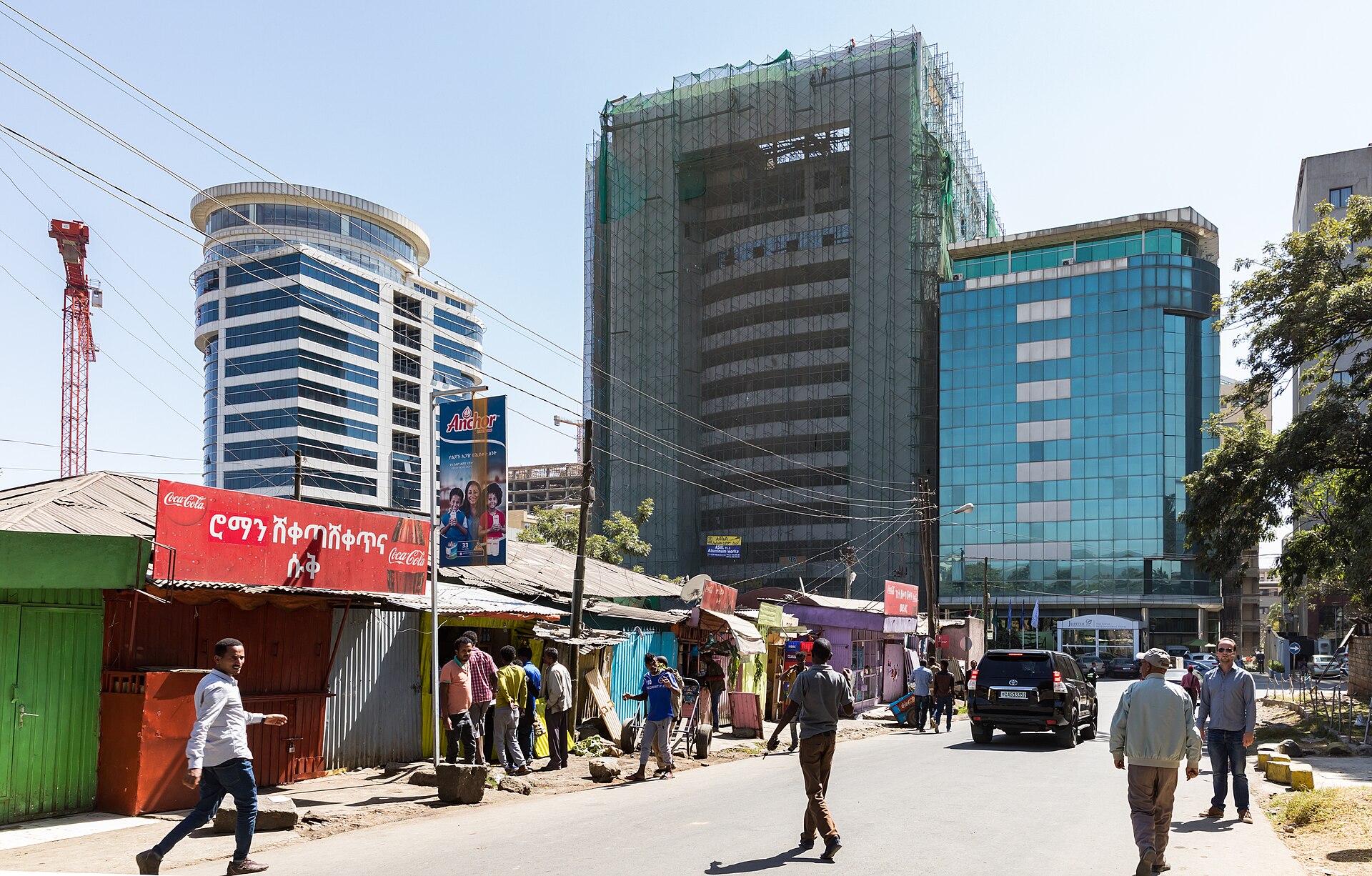
- Scientists analyzed data collected throughout Addis Ababa between 2022 and 2025 from 10 air-quality monitoring sites deployed by NASA's Multi-Angle Imager for Aerosols (MAIA) project, published in ES&T: Air.
- In 2024, Ethiopia became the first country in the world to ban the import of internal combustion engine vehicles, while cities have been adding bike lanes and electric vehicle infrastructure.
- The paper found Addis Ababa's three-year average PM2.5 concentration was 30 micrograms per cubic meter, more than three times the level of the U.S. EPA's health-based annual PM2.5 standard.
- If 30 micrograms per cubic meter is more than three times the EPA annual PM2.5 standard, that standard must be below 10 micrograms per cubic meter.
- MAIA ground sensor data cited in the paper indicate average black carbon levels in Addis Ababa were approximately four to nine times higher than those measured in the three U.S. metropolitan areas the mission monitors.
Compiled by The ScientistSomething wrong?How this is made
Why it matters
A NASA-funded sensor network has published three years of continuous fine-particle and black carbon measurements from ten sites across Addis Ababa, collected between 2022 and 2025 by the agency's Multi-Angle Imager for Aerosols (MAIA) project [1]. That record is now the reference point for a policy already in force: in 2024 Ethiopia became the first country in the world to ban imports of internal combustion engine vehicles [2].
The headline numbers are unflattering. The three-year average concentration of particulate matter 2.5 micrometers and smaller was 30 micrograms per cubic meter, which the paper puts at more than three times the U.S. Environmental Protection Agency's health-based annual standard [3]. Arithmetic on that comparison implies a U.S. annual standard below 10 micrograms per cubic meter [4]. Black carbon, the soot fraction produced by fires, diesel engines and other combustion, averaged roughly four to nine times the levels measured at MAIA's three U.S. sites in Los Angeles, Atlanta and Boston [5][6].
The more useful finding is structural rather than average. The measurements resolve how pollution moves through the day and the year, with increases tied to rush-hour traffic and to holiday celebrations [7]. An annual mean cannot see either. People are not exposed to 30 micrograms per cubic meter evenly across 8,760 hours; they are exposed to whatever the commute and the celebration produce, and the paper's contribution is that those episodes are now documented at ten locations rather than inferred. The source describes the pattern qualitatively, without published magnitudes for the peaks.
Two caveats sit on top of the baseline claim. First, the ban covers imports, not the vehicles already on the road [2], so the fleet turns over at the speed of scrappage, not legislation. Second, the ban arrived in 2024, inside the measurement window, leaving roughly one of the three recorded years on the far side of the policy [8]. This is a baseline with the intervention already partly folded into it.
Coverage is also thin by design. Ten monitors serve a greater urban area of nearly 6 million people [9], about one instrument per 600,000 residents [10], in a city that United Nations projections cited by NASA expect to pass 10 million [11] - more than 4 million additional residents combusting things [12]. Sina Hasheminassab, a coauthor and MAIA's deputy principal investigator at NASA's Jet Propulsion Laboratory, said this is, to the team's knowledge, the first long-term, multisite study of continuous PM2.5 and black carbon measurements in Ethiopia [13]. He also noted that many rapidly growing cities have limited long-term monitoring [13], which is the real reason ten sensors count as a dataset here.
The stakes are conventional and large: the 2025 State of Global Air Report, cited in the paper, attributes approximately 4.9 million deaths globally each year to PM2.5 exposure [14]. Particle composition varies by city, with dust dominating desert locations and sulfate near coal plants [15], so a local soot fraction is not a detail that can be borrowed from elsewhere.
What to watch: whether the ground record continues without interruption, since a baseline is only worth what the follow-up series is worth. The satellite half of MAIA, a JPL-built multi-angle camera intended to distinguish aerosol types by how they reflect light, is scheduled for launch by the Italian Space Agency no earlier than late 2027 [16][17]. MAIA also puts public health researchers on a space mission team for the first time at NASA [18], which means the eventual test is whether measured soot maps onto measured health outcomes in a dozen metropolitan areas, not whether import statistics fall.
Claim ledger
Ranked by verification strength, evidence, and original report placement.
- [1]
Scientists analyzed data collected throughout Addis Ababa between 2022 and 2025 from 10 air-quality monitoring sites deployed by NASA's Multi-Angle Imager for Aerosols (MAIA) project, published in ES&T: Air.
ReportedView cited source - [2]
In 2024, Ethiopia became the first country in the world to ban the import of internal combustion engine vehicles, while cities have been adding bike lanes and electric vehicle infrastructure.
ReportedView cited source - [3]
The paper found Addis Ababa's three-year average PM2.5 concentration was 30 micrograms per cubic meter, more than three times the level of the U.S. EPA's health-based annual PM2.5 standard.
ReportedView cited source - [5]
MAIA ground sensor data cited in the paper indicate average black carbon levels in Addis Ababa were approximately four to nine times higher than those measured in the three U.S. metropolitan areas the mission monitors.
ReportedView cited source - [6]
MAIA monitors a dozen metropolitan areas globally, including three in the U.S.: Los Angeles, Atlanta, and Boston.
ReportedView cited source - [7]
The measurements show how pollution changes by time of day and season, including increases associated with rush-hour traffic and holiday celebrations.
ReportedView cited source
Sources & coverage · 2 publishers
The reporting this story was synthesized from, earliest first. Every link goes to the original.
- nasa.govStephen Carney6d agoNASA Mission Studies Air Pollution Over Ethiopia
Additional citations
- Sina Hasheminassab, MAIA deputy principal investigator, NASA JPL
- 2025 State of Global Air Report, as cited in the paper