Published · 4h agoScience2 min read
Harness versus weights: the gap these two scoreboards support is 69.8 points, not 23.8
NVIDIA reports a perfect run on the ARC-AGI-3 public set while the top verified model sits at 30.2%. The subtraction is easy. Attributing the difference to the wrapper is not.
Written for builders.See today for builders

What happened
- NVIDIA reports that AVO achieved a 100.00 RHAE score across all 25 environments in the ARC-AGI-3 public set, completing all 183 levels.
- As of July 24, 2026, Claude Opus 5 (High) is the highest-performing model on ARC-AGI-3 with a score of 30.2%, according to ARC Prize.
- ARC Prize states that due to the short testing window, ARC-AGI-3 was evaluated only at High reasoning effort; at Max reasoning effort Opus 5 scores 97.5% on ARC-AGI-1 and 90.4% on ARC-AGI-2 Semi-Private.
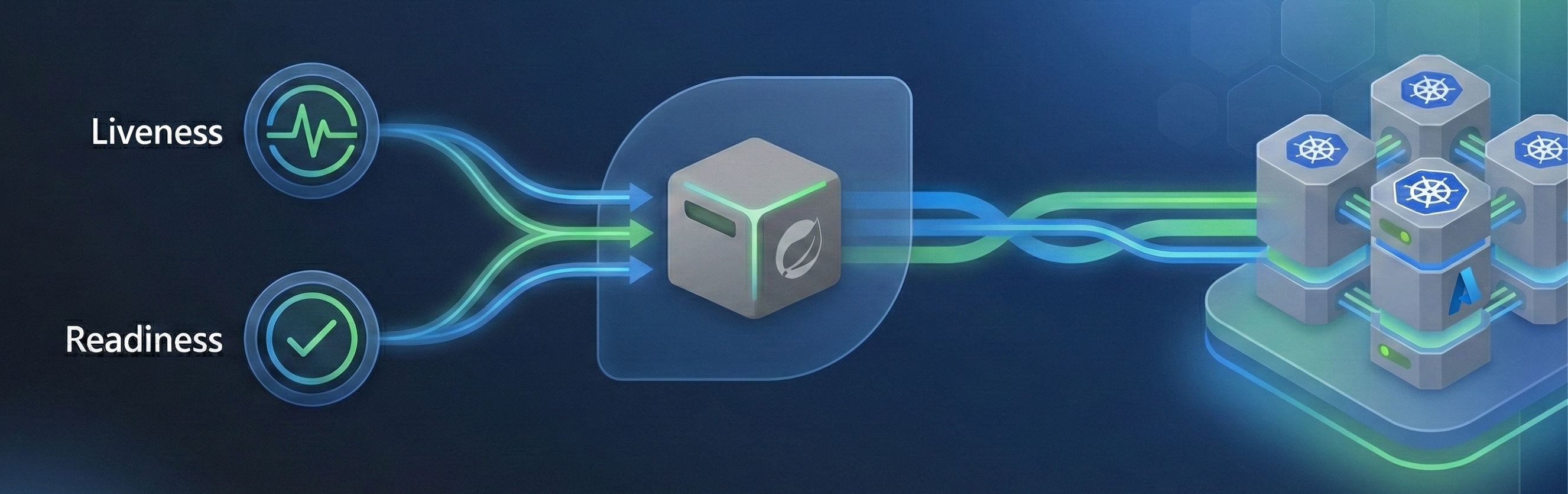
- NVIDIA describes the harness as the surrounding agent system that determines how the model receives context, uses tools, maintains state, responds to feedback, recovers from failure and sustains progress over long-running tasks.
- NVIDIA states that for ARC-AGI-3 it connected the same general-purpose agent to a different task interface, with the underlying agent unchanged and only the environment-specific tools and evaluation changing.
Compiled by The ScientistSomething wrong?How this is made
Why it matters
The mechanism NVIDIA puts forward has two parts. Persistent memory keeps prior implementations, evaluation results, compiler and profiler output and accumulated reasoning available, so the agent resumes from its current state instead of rebuilding the search; a supervisor watches the trajectory for stagnation and redirects the main agent when a line of attack stops paying [6]. On a benchmark where the agent is dropped into an unfamiliar environment with no instructions, no stated rules and no stated goals, that state-keeping is doing work no single context can do [7]. NVIDIA's evidence for generality is that the ARC-AGI-3 agent is the same agent it ran on GPU kernels, with only environment-specific tools and evaluation changed [5]. The kernel run is the better stamina demonstration: seven days of continuous operation, more than 500 optimization directions, 40 committed kernel versions [8].
The accounting is where it stops. The 100.00 is an RHAE score reported by NVIDIA on its own developer blog [1][11]; the 30.2% is a verified leaderboard entry published by ARC Prize [2][10]. Subtract them and you get 69.8 points [12]. No figure in either source, and no difference between figures in either source, comes to 23.8 [13].
Even 69.8 is not a wrapper number. The post never names the frontier model inside AVO [9], so nothing in the delta can be assigned to scaffolding rather than to weights. And the environment-specific tooling was built for this benchmark [5], which means a like-for-like test would still be measuring tools plus memory plus supervisor together. Meanwhile the comparison figure is soft in the other direction: ARC Prize says Opus 5 was run on ARC-AGI-3 only at High reasoning effort because the testing window was short, and it reports 97.5% on ARC-AGI-1 and 90.4% on ARC-AGI-2 at Max [3].
Claim ledger
Ranked by verification strength, evidence, and original report placement.
- [1]
NVIDIA reports that AVO achieved a 100.00 RHAE score across all 25 environments in the ARC-AGI-3 public set, completing all 183 levels.
- [2]
As of July 24, 2026, Claude Opus 5 (High) is the highest-performing model on ARC-AGI-3 with a score of 30.2%, according to ARC Prize.
- [3]
ARC Prize states that due to the short testing window, ARC-AGI-3 was evaluated only at High reasoning effort; at Max reasoning effort Opus 5 scores 97.5% on ARC-AGI-1 and 90.4% on ARC-AGI-2 Semi-Private.
ReportedView cited source - [4]
NVIDIA describes the harness as the surrounding agent system that determines how the model receives context, uses tools, maintains state, responds to feedback, recovers from failure and sustains progress over long-running tasks.
ReportedView cited source - [5]
NVIDIA states that for ARC-AGI-3 it connected the same general-purpose agent to a different task interface, with the underlying agent unchanged and only the environment-specific tools and evaluation changing.
ReportedView cited source - [6]
AVO uses persistent memory that carries forward prior implementations, evaluation results, compiler and profiler outputs and accumulated reasoning, plus a supervisor that monitors the trajectory for stagnation or repeated unproductive cycles and can redirect the main agent.
ReportedView cited source
Sources & coverage · 2 publishers
The reporting this story was synthesized from, earliest first. Every link goes to the original.
- arcprize.org4h agoClaude Opus 5 - ARC-AGI Results
Cited in this coverage: arcprize.org
Additional citations
- NVIDIA Technical Blog