Published · 4d agoProduct3 min read
Unitree opens at 1,100 yuan, and the humanoid cost floor moves to Hangzhou
Shares in the Chinese robot maker opened at roughly 7.3 times their offer price on Shanghai's Star Market. The number to plan against is not the valuation but the $2,700 robot dog.
Not a builder's beat, but builders have a standing stake in it.See today for builders
What happened
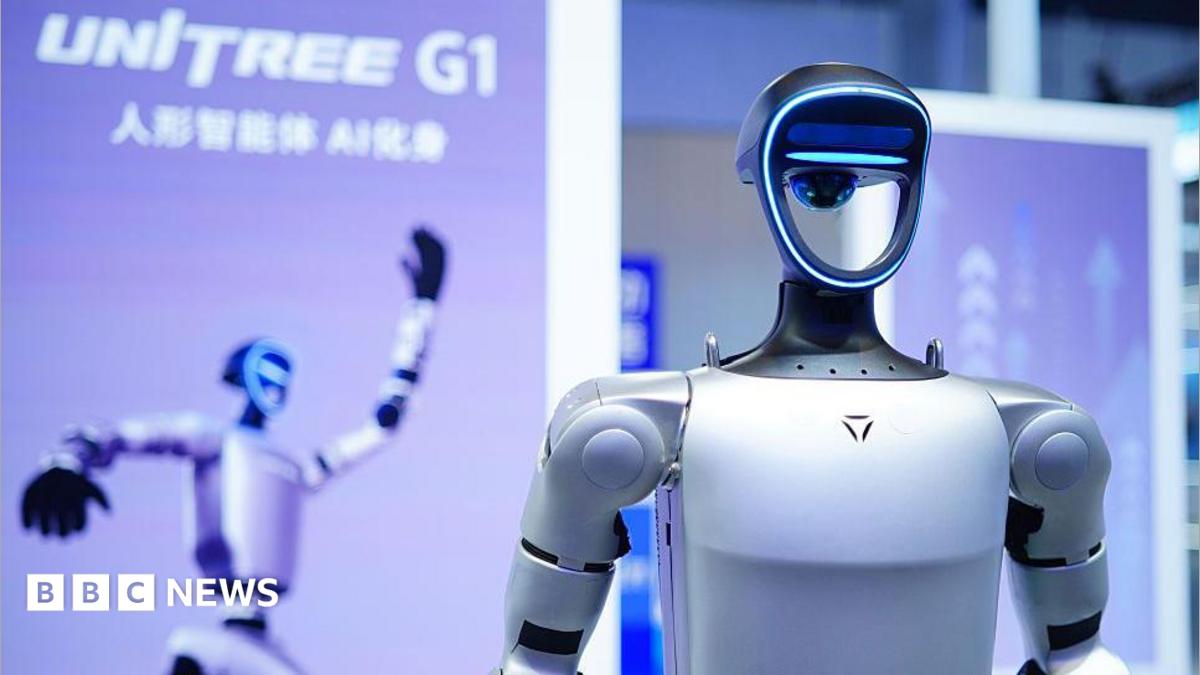
- Unitree Robotics made its stock market debut on Shanghai's tech-focused Star Market on Wednesday, with shares soaring by more than 600%. The Star Market is widely known as China's Nasdaq.
- In the IPO, Unitree's shares opened at 1,100 yuan (£120.60; $163.12), well above the 150.8 yuan offer price.
- The 1,100 yuan opening price is about 7.3 times the 150.8 yuan offer price.
- The BBC describes Unitree as the world's biggest humanoid robot maker.
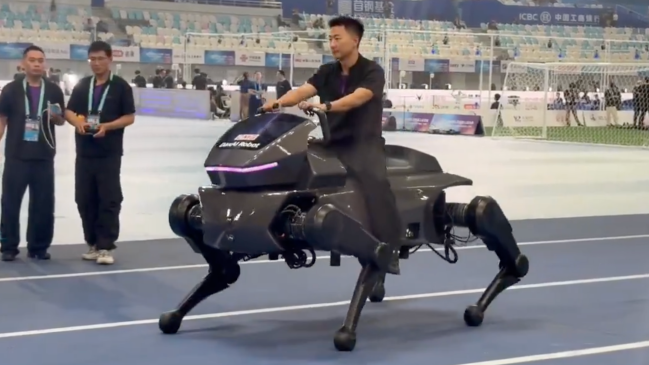
- Founded in 2016 and based in Hangzhou in eastern China, Unitree sells a wide range of devices from sensors and automated arms to four-legged and human-like machines.
Compiled by The Product DeskSomething wrong?How this is made
Why it matters
Unitree Robotics made its stock market debut on Shanghai's tech-focused Star Market on Wednesday, with shares opening at 1,100 yuan (about $163) against an offer price of 150.8 yuan, a rise of more than 600% [1][2]. That opening print is roughly 7.3 times the offer [4], and it tells operators less about Unitree's fundamentals than about how thoroughly Chinese capital markets now treat humanoid robotics as an industrial category with state sponsorship behind it.
The number that belongs in a procurement model is smaller. Unitree's robot dogs start at $2,700, against roughly $70,000 for Boston Dynamics' four-legged Spot [12], a gap of about 26 times [14]. Harold Soh, a researcher at the National University of Singapore, cautioned that the two are not directly comparable, since some Unitree dogs are much smaller, but said the price difference is large [13]. He also said US robots tend to have more user-friendly software, while the lower prices from Chinese manufacturers are difficult to ignore [11]. On humanoids, Unitree has been selling since 2023, and its child-sized G1 reached the market the following year at $13,500 [15], which is under a fifth of Spot's price for a two-legged machine [24]. Major US rivals, including Tesla, have yet to begin delivering competing products [16], even as Tesla, BYD and Amazon all work on two-legged machines [17].
The supply side is where the state backing shows. Unitree was founded in 2016 and is based in Hangzhou [6], in a region described as a golden cluster zone of robotics firms boosted by large government investments [7]. State-run China Daily reports the number of Chinese robotics firms more than tripled between 2020 and 2024 [8]. Fei Qin, an associate professor at the University of Bath, said Beijing treats the sector as a "strategic priority" and sees robots as one answer to an ageing population and a coming shortage of workers for physically demanding manufacturing [9]. Her framing is worth borrowing: "Robots are where AI leaves the screen and enters the economy" [10].
Some of the run-up was theatre. Unitree's G1 robots performed martial arts moves at China's Spring Festival Gala, broadcast on state television in February [18], and its machines are competing this week in the 2026 World Humanoid Robot Games in Beijing, an event with hundreds of teams running, playing football, opening boxes and sorting library books [20]. Robotics researcher David Hsu said the Gala showed a "full range of motions, live on stage, in a way we'd never seen before," and called it "an indication of a rise of an industry" [19]. Box-opening contests are not a factory duty cycle, and the BBC's description of Unitree as the world's biggest humanoid robot maker rests on unit volume in a market where volume is still small [5].
Two things to watch. First, whether the listing sets a valuation benchmark other manufacturers can raise against: Jack Pearson of RoboStrategy said it gives the public a rare chance to invest in the sector and could do exactly that [21], and he called it a turning point coming as the US curbs imports of foreign-made robots [22]. Second, the aftermarket. UBTech Robotics listed in Hong Kong almost three years earlier [23], and the useful comparison is not opening day but where these shares settle once delivery volumes have to justify them.
Claim ledger
Ranked by verification strength, evidence, and original report placement.
- [1]
Unitree Robotics made its stock market debut on Shanghai's tech-focused Star Market on Wednesday, with shares soaring by more than 600%. The Star Market is widely known as China's Nasdaq.
- [2]
In the IPO, Unitree's shares opened at 1,100 yuan (£120.60; $163.12), well above the 150.8 yuan offer price.
- [5]
The BBC describes Unitree as the world's biggest humanoid robot maker.
- [6]
Founded in 2016 and based in Hangzhou in eastern China, Unitree sells a wide range of devices from sensors and automated arms to four-legged and human-like machines.
ReportedView cited source - [7]
The Hangzhou region is home to a so-called golden cluster zone of robotics firms, which have been boosted by huge government investments.
- [8]
Government support helped drive a more than threefold increase in the number of Chinese robotics firms between 2020 and 2024, according to state-run China Daily.
Sources & coverage · 2 publishers
The reporting this story was synthesized from, earliest first. Every link goes to the original.
- bbc.co.uk4d agoChinese robotics giant Unitree soars in stock market debut
- gizmodo.comMike Pearl4d agoHumanoid Robot Maker Unitree Pops an Outrageous 629% in Trading Debut
Additional citations
- BBC
- China Daily, via BBC
- Fei Qin, University of Bath
- Harold Soh, National University of Singapore
- David Hsu